Get Full Government Meeting Transcripts, Videos, & Alerts Forever!
Get email alerts on the Fire Safety Ordinance topic
No spam. Unsubscribe anytime.
Habersham County accepts first reading of proposed fire-alarm ordinance after spike in alarm responses
Summary
County staff proposed a new Article 3 to Chapter 30 to address a recent increase in fire-alarm responses; commissioners accepted the item for first reading and asked staff to prepare notice materials and fee schedules before second reading.
Habersham County Fire & EMS presented a proposed ordinance on Jan. 27 to limit excessive alarm responses after a surge in alarm calls at several commercial and residential properties, and the commission accepted the proposal for a first reading.
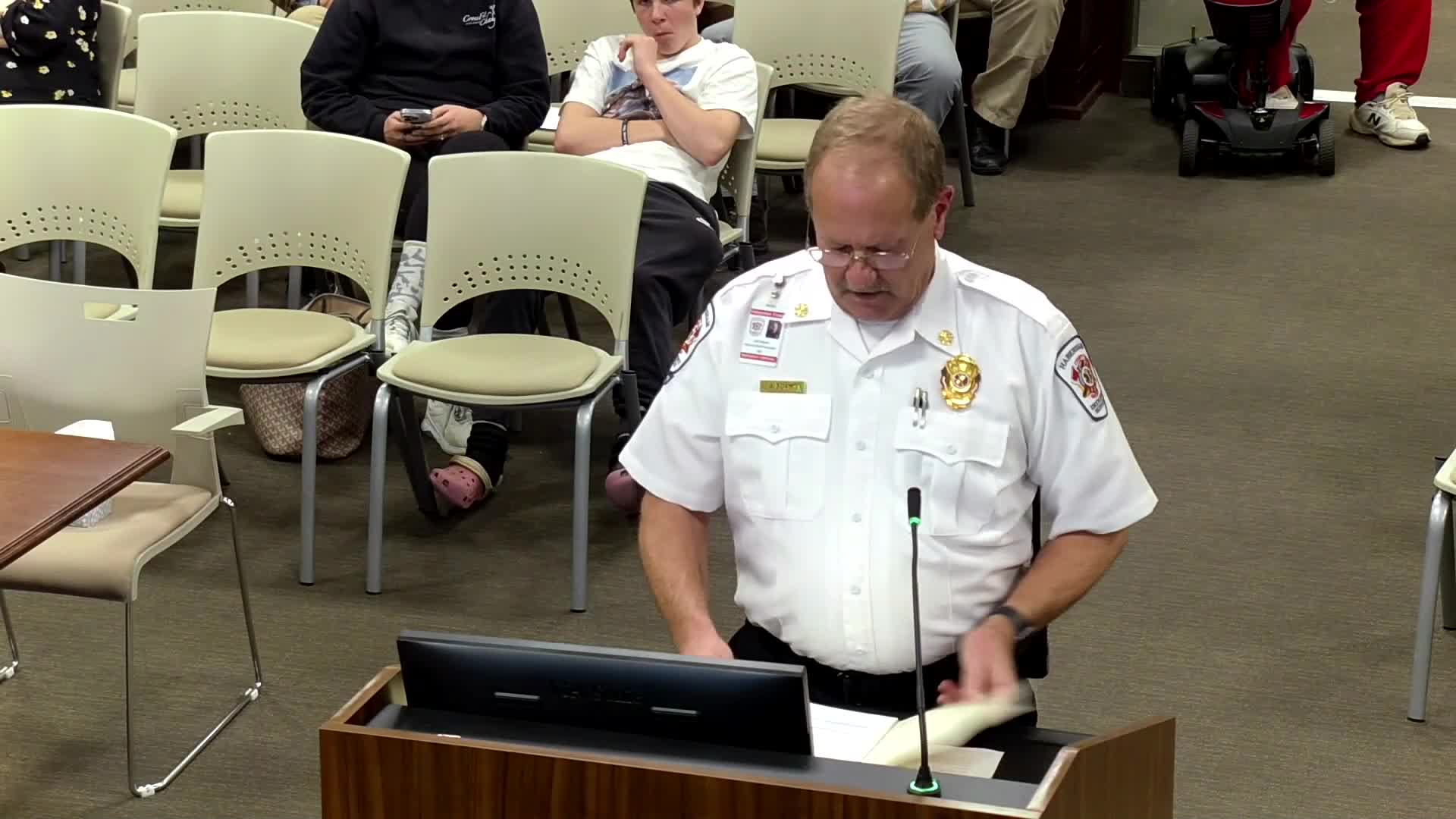
Fire & EMS (presenter Jeff Adams) told commissioners the county has seen a significant increase in alarm responses over the last three years — a rise of 209 alarms compared with previously reported figures (138 alarms in 2022 was cited) — and that some individual properties triggered alarms dozens of times in a single year; one site was cited as having about 60 alarm activations in 2024. Adams said many activations did not reflect a need for fire suppression but nonetheless tied up apparatus and staff, exposing personnel to risk and reducing available coverage.
The proposed ordinance would add Article 3 to Chapter 30 (Fire Prevention and Protection) and include administration and enforcement provisions, definitions, operation and maintenance standards, prohibitions on intentional false alarms, automatic-dialing device restrictions, inspection procedures, penalties for subsequent violations and an appeal process. Adams said staff would notify property owners if the ordinance is adopted and work with alarm companies and owners to reduce nuisance activations prior to assessing penalties. County attorney and staff told commissioners they modeled the draft on ordinances used in comparable Georgia counties.
Commissioners accepted the draft for first reading and asked staff to review the proposed penalty schedule and draft notification materials; the item will return for a second and final reading at a future meeting.
Ending Staff emphasized the ordinance’s intent is corrective (reduce unnecessary responses and costs) and not punitive, and commissioners directed staff to provide notice materials to alarm system operators and property owners before a second reading.