Get Full Government Meeting Transcripts, Videos, & Alerts Forever!
Get email alerts on the Public Safety topic
No spam. Unsubscribe anytime.
Habersham County takes first reading of new fire-alarm ordinance aimed at reducing excessive responses
Summary
Commissioners received a first reading of a proposed new Article 3 to Chapter 30 of the county code that would set operations, inspections, penalties and appeals for automatic fire alarms following an increase in alarm responses.
Habersham County officials on Jan. 27 gave first reading to a proposed new Article 3 (Fire Alarms) in Chapter 30 of the Habersham County Code of Ordinances intended to address a rise in non-emergency alarm responses at commercial and institutional properties.
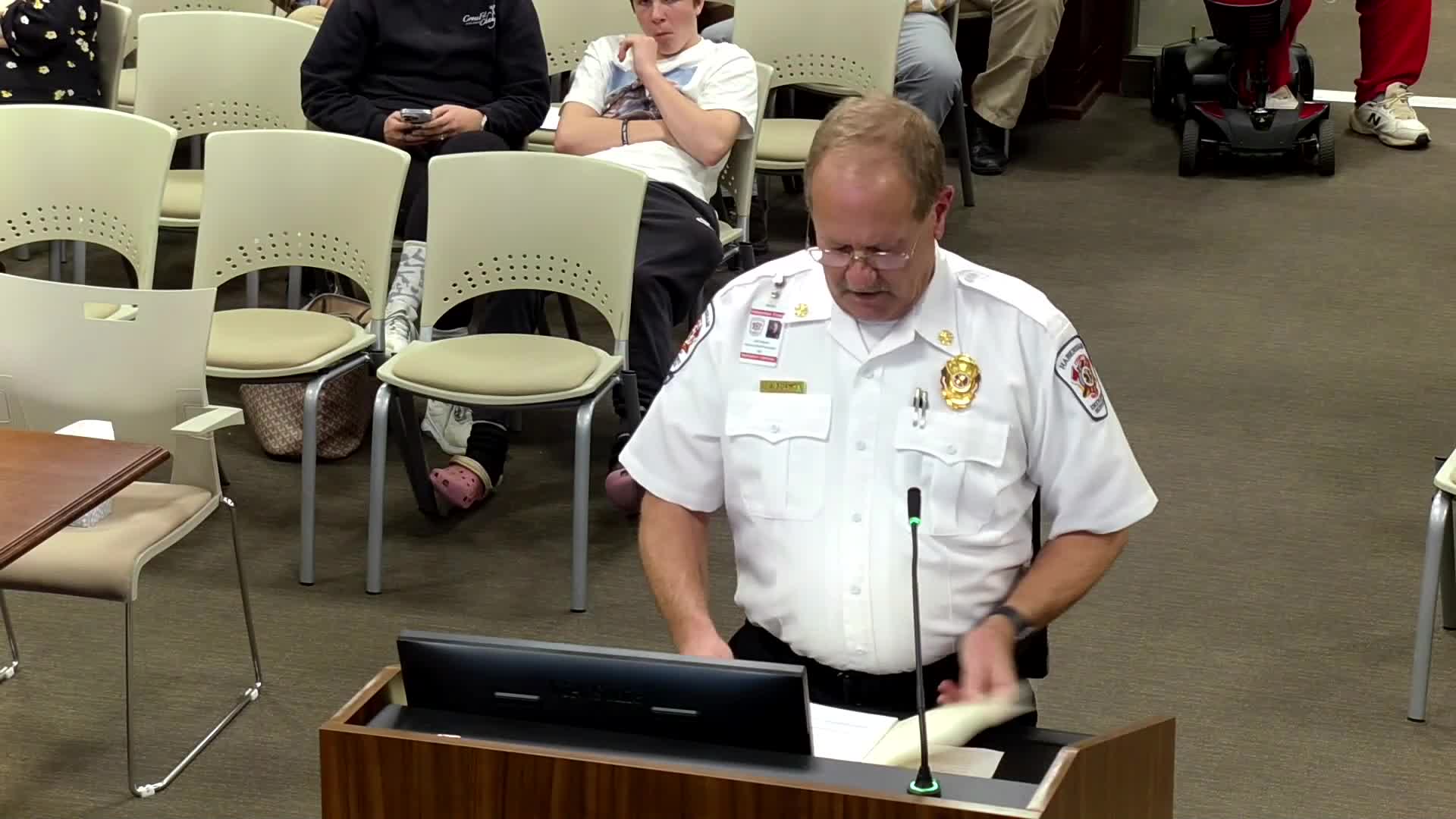
Jeff Adams, representing Fire and EMS, told the board the county has seen a marked rise in alarm responses and that some facilities generated dozens of triggers in a year. “There’s been an increase of 209 fire alarms in the past three years, up from 138 in 2022,” Adams said. He said the alarms functioned as designed but often did not require emergency response, which ties up trucks and personnel.
The proposed Article 3, as presented, would add definitions, operation and maintenance requirements, inspection standards, restrictions on automatic dialing devices, provisions for appeals, immunity language and penalties for excessive alarm responses. Adams said the ordinance is intended to provide county staff a mechanism to work with property owners and alarm companies to reduce repeat responses while still preserving safety. He said notice and assistance would be provided and that staff expected to finalize recommended penalty amounts and an ordinance fee schedule before second reading.
Commissioners asked whether the root causes were defective equipment, sensitivity settings or occupant behavior such as cooking. Adams said causes vary and that the fire department had been directed to provide notice to repeat responders; he also said the draft follows models used by comparable counties. The ordinance will return for a second and final reading at a subsequent meeting and staff said they would provide written notice and outreach to affected property owners during the interim.
At the Jan. 27 meeting the board voted to accept the ordinance on first reading and directed staff to return with a final draft and proposed fee schedule for the next meeting.