Get Full Government Meeting Transcripts, Videos, & Alerts Forever!
Get email alerts on the Blighted Property topic
No spam. Unsubscribe anytime.
Planning commission hears overview of blighted‑property and eminent‑domain process
Summary
Consultant Shannon Florio outlined the city's blighted property process on Feb. 18, explaining the roles of code enforcement, the Blighted Property Review Committee, the redevelopment authority and court proceedings for eminent domain, and describing new state lien rules intended to notify subsequent buyers.
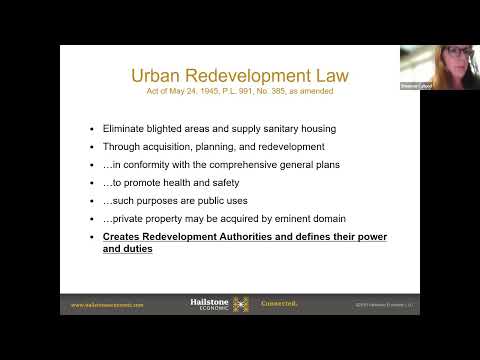
At a Feb. 18 Planning Commission workshop, consultant Shannon Florio gave a step‑by‑step presentation on the city's blighted‑property process and how the redevelopment authority may use eminent domain to return vacant, hazardous properties to productive use.
Flor io said the process begins with the city's code enforcement office issuing violation notices and can move to the Blighted Property Review Committee (BPRC) when owners fail to remedy conditions. "The BPRC has the ability to certify a property as blighted, and then the redevelopment authority gets involved," Florio said. Once certified, she said, the redevelopment authority must request a reuse recommendation from the planning commission before pursuing acquisition.
The nut of Florio's explanation was procedural: after BPRC certification, the redevelopment authority can seek a resolution to acquire the property and, if necessary, file a declaration of taking in county court. "You have to provide notice to the property owner, to anybody who has interest in the property," Florio said. She explained owners may file preliminary objections or otherwise contest the proceeding, and judges decide whether to permit the taking and set "just compensation." Florio described the appraisal and distribution schedule that follows court approval.
Flor io also described recent state changes intended to reduce reappearance of certified blighted properties in sales: the state law now permits filing a lien on the deed to give notice of certification so new owners receive constructive notice. "That way, when the property changes hands, you've given them the notice," she said.
Commission members pressed on enforcement challenges Florio described: missing or out‑of‑state owners, properties sold in cash transactions without title searches, and high demolition or stabilization costs for large industrial sites. "One of the biggest challenges is that the property owners are missing in action," Florio said. She gave an example: two properties at 638 and 640 Schuylkill that the redevelopment authority took by eminent domain two to three years ago; those parcels were auctioned and are now substantially improved, she said.
Flor io stressed eminent domain remains a tool of last resort. "If there's any way to resolve this without [eminent domain], you do that," she said, citing amicable acquisition, donation or negotiated purchase as preferable because court processes are time‑consuming and expensive. She also described the redevelopment authority's role as a developer of last resort, able to impose deed restrictions or deadlines to encourage timely rehabilitation.
Wayne Dealer, chairman of the Planning Commission, thanked Florio and asked the commission to request further briefings on additional blight‑remediation tools. Florio said she would share slides and return at a future meeting to review other legal mechanisms and practical options for local implementation.
Florio's presentation and the commissioners' questions underscored a practical tension commissioners must weigh: the expense and time of legal takings versus public safety and neighborhood impacts posed by long‑neglected properties.