Get Full Government Meeting Transcripts, Videos, & Alerts Forever!
Get email alerts on the Public Safety Fire Alarms topic
No spam. Unsubscribe anytime.
Commission takes first step on fire-alarm ordinance after spike in alarm responses
Summary
County staff presented a new proposed Article 3 to Chapter 30 to address repeated commercial and institutional fire alarms; commissioners approved the ordinance on first reading for further review and a second reading next month.
Habersham County commissioners accepted the first reading of a proposed ordinance to regulate fire-alarm responses after staff reported a sharp increase in alarm-related emergency responses.
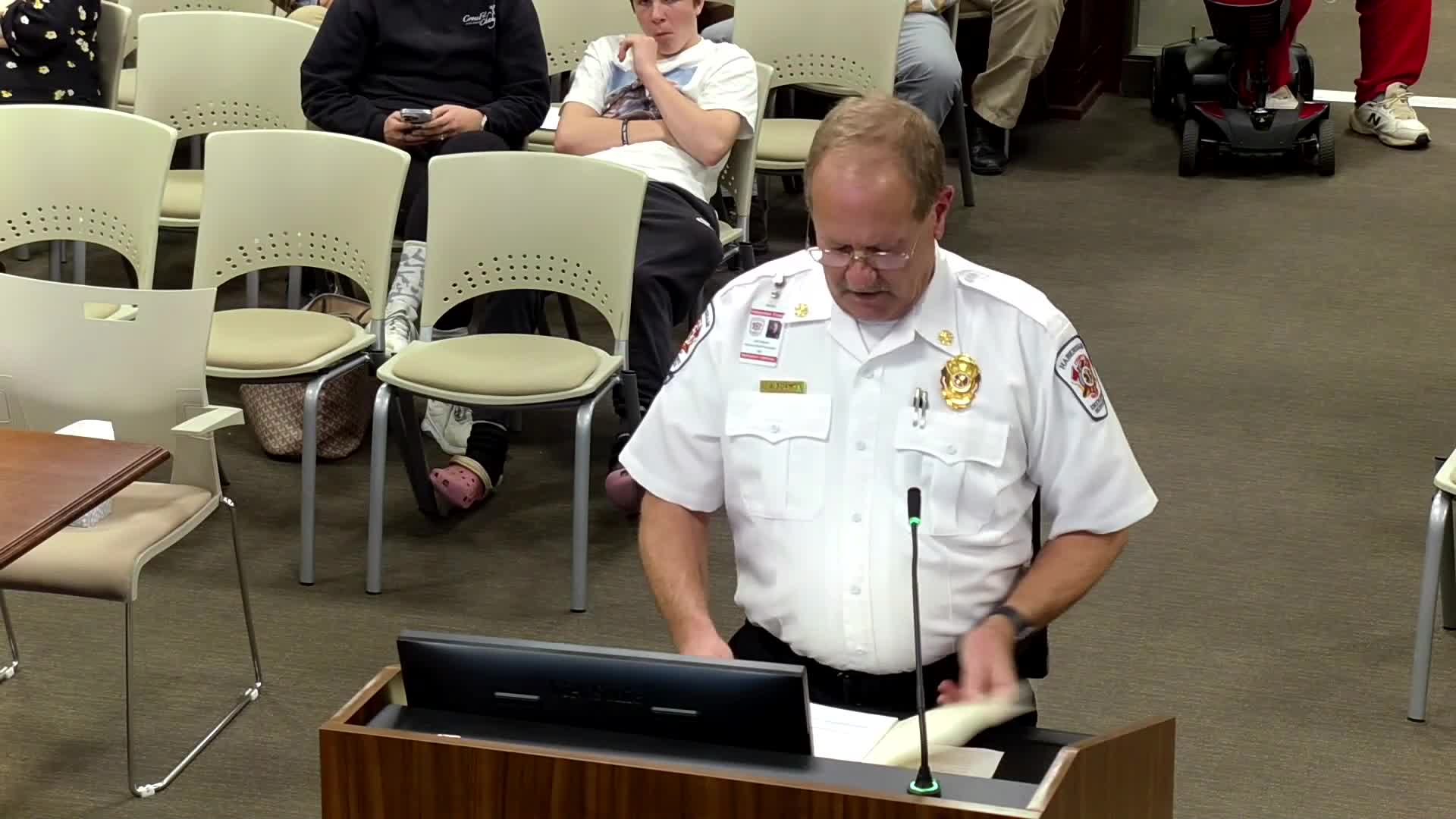
Fire & EMS staff told the commission the county has seen a 209-alarm increase over three years, citing one property that received roughly 60 alarm responses in 2024. The proposed Article 3 to Chapter 30 (Fire Prevention and Protection) would create enforcement mechanisms for excessive alarm responses, set maintenance and transmission standards, address intentional false alarms and define inspection and penalty processes.
Why it matters: County officials said excessive alarm activations divert emergency personnel and equipment from other calls and put responders and the public at risk. The ordinance aims to give staff tools to work with property owners and, where necessary, levy penalties for repeated unnecessary responses.
During discussion, commissioners asked how to balance enforcement and customer service: whether alarm problems are defective equipment, user error (for example, cooking triggers), or other causes. Staff said alarm companies and property owners remain the primary source for diagnosing causes, but that the county wants a mechanism to require equipment inspection or maintenance and to notify owners when alarms are excessive.
County staff noted the draft ordinance borrows elements from comparable county ordinances and that penalties and an appropriate threshold of “excessive” alarms were left for commissioners to weigh before a final vote. Commissioners approved the ordinance on first reading and directed staff to return with any edits for a second and final reading next month.