Get Full Government Meeting Transcripts, Videos, & Alerts Forever!
Get email alerts on the Police Oversight topic
No spam. Unsubscribe anytime.
Atlanta Citizens Review Board disputes AJC account, urges clearer MOU with APD and GBI and more investigators
Summary
The Atlanta Citizens Review Board told the City Council committee that it received no closed officer‑involved‑shooting or in‑custody‑death cases before a January article, explained why its investigative process waits for criminal investigations to conclude, and asked for staffing, pay and an MOU so it can begin investigations sooner.
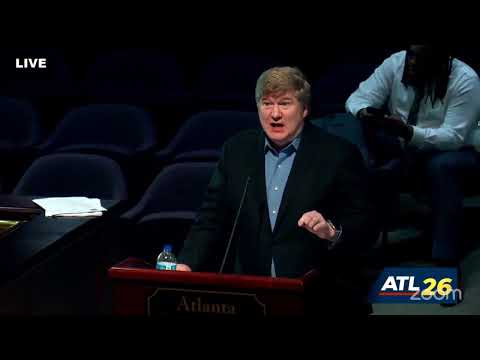
The Atlanta Citizens Review Board on Monday told the Atlanta City Council Public Safety and Legal Administration Committee that it did not ignore notifications of officer‑involved shootings and in‑custody deaths reported by the Atlanta Journal‑Constitution and defended its current process while urging faster, clearer interagency coordination and more staff and funding.
Executive Director Lee Reed said the board had received notification emails from the Atlanta Police Department but had not received closure notices that would trigger the board’s investigative process. "The answer is to the question is no, emphatically no," Reed said, responding to the committee’s resolution asking whether the board had failed to act. He told the committee that, after reconciling APD data, APD listed 29 open officer‑involved‑shooting or in‑custody‑death investigations; the ACRB had received three closed APD files on Feb. 10 — 25 days after the AJC story — and had two matters currently in its process.
Why it matters: the ordinance enacted in 2020 expanded the ACRB’s authority to review and hold public hearings on certain critical incidents. Reed and deputy director Sheena Robertson told council members that the board’s ability to investigate fully is constrained unless it has access to the criminal‑investigative materials gathered by APD, the Georgia Bureau of Investigation (GBI) or the Fulton County District Attorney’s Office. Robertson summarized the board’s process: APD notifies the board by email, the board logs the incident, it monitors APD’s investigation and requests APD’s file when APD reports its investigation closed; if the DA has a pending criminal investigation the ACRB waits for it to conclude "If they do and their investigation is still open, then our investigative process will not begin until the conclusion of their investigation," Robertson said.
Board officials and the committee discussed whether the ACRB should use subpoenas or start so‑called ground‑up investigations immediately after an initial notification. Reed said doing full scene‑level investigations would require a substantial, recurring budget increase and formal memoranda of understanding allowing immediate scene access and sharing of evidence. He cited Chicago’s civilian oversight model as a comparator and said, "If the agency personnel budget was 1% of the APD's personnel budget, the ACRB would need a budget of $2,450,000.00." Reed outlined expected costs for a hypothetical shooting team (investigators, manager, independent forensic, medical and use‑of‑force experts) and warned that without MOUs with APD, the GBI and the DA the board could begin with no evidence if it tried to do ground‑up work while criminal inquiries remained open.
Council members pressed for more concrete changes. Councilmember Isha Collins asked the board to clarify numbers and the distinction between notifications and reportable incidents; Reed and Robertson explained that APD had reconciled its notifications to remove incidents that did not meet the ordinance’s definition (death or serious bodily injury) and that the ACRB receives only incidents meeting that threshold. Councilmember Mills asked how often the ACRB issues subpoenas; Reed said the board could subpoena but that practical limits, staffing and relationships with investigative agencies shape how often it uses that power.
Peter Aman, the city’s chief strategy officer, said the mayor’s office and APD had begun work with the ACRB to draft a formal MOU that would specify notifications, timelines and data sharing. "That MOU is is important. We are working through that," Aman said, and added that APD changed an internal practice in August to start administrative (OPS) investigations earlier than it previously did, which could allow the ACRB to begin more work sooner.
On staffing and capacity, Reed said the board currently has one fully trained investigator and one in training, with four investigator positions authorized but only two filled; it has 14 authorized FTEs overall but funding only to staff nine positions. He told the committee ACRB assigned 116 complaints to full investigation in 2024 and currently has about 145 active complaint investigations. Reed said the agency has struggled to recruit qualified investigators at the then‑current salary level (about $50,000, later increased to $53,000) and requested that the council consider both higher salaries to attract experienced hires and a modest outreach budget (he proposed $50,000) to repair reputational damage from media coverage.
The board asked council to help secure: (1) an MOU with APD and the GBI to permit timely notifications and scene access or evidence sharing, (2) funding to hire and retain investigators and technical experts, and (3) continued partnership with APD on mediation and community engagement programs. Reed told the committee he would provide a more detailed list of needs and asked to return with an update within 30–40 days.
Committee members pressed APD and the mayor’s office to provide a clear list of which incidents are open or closed to remove confusion — several council members said APD had told the ACRB none of the listed incidents were closed, yet investigative records showed otherwise in at least one case. Chief Strategy Officer Aman asked staff to pursue a formal MOU and better process mapping and said the city would continue working to speed case flow while protecting the integrity of criminal investigations.
Ending: Reed and ACRB staff indicated willingness to return for a follow‑up briefing. Councilmembers and city staff asked ACRB to provide a written list of priorities and the committee directed staff to seek more information from APD about closed and open cases so the parties can reconcile differences in their counts and timelines.