Get Full Government Meeting Transcripts, Videos, & Alerts Forever!
Get email alerts on the Watershed Operations topic
No spam. Unsubscribe anytime.
Watershed management reports high vacancies, stepped-up collections effort and new command center
Summary
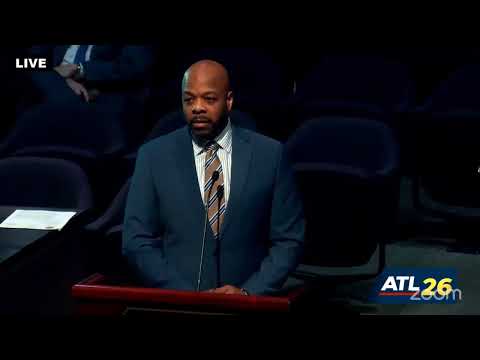
Interim Commissioner Al Wiggins told the City Utilities Committee the Department of Watershed Management (DWM) is stabilizing operations while addressing high licensed-operator vacancies, stepped-up collections work, an expanding leak-detection program and a completed command center that will operate year-round.
Interim Commissioner Al Wiggins told the City Utilities Committee on April 11 that the Department of Watershed Management’s second-quarter report (covering Oct.–Dec. 2024) showed stable finances but continuing operational pressure from licensed-operator vacancies and recent retirements.
Wiggins said staffing “has improved since approximately June of last year” but that the Office of Water Treatment and Reclamation is carrying what he described as a 72% vacancy rate for positions that require specialized operator licenses. He said the department lost about 31 employees in the period reported, 18 of them by retirement.
The staffing picture was the core of a broader update that covered training, revenue, meter installations, leak detection and field operations. Wiggins credited DWM University, led by Chief Administrative Officer Don Williams, with training 497 employees across compliance, safety and job-specific courses during the quarter. He said year-to-date actual water and sewer receipts totaled about $46,000,000 and that the department expects end-of-year collections to align with projections.
Deputy Commissioner Jonathan Williams told the committee the apparent drop in monthly collections is partially a function of a more aggressive budget baseline: “We took an extremely aggressive approach to the budget this year,” he said, adding that collections themselves are flat compared with the prior year and that the department expects to finish the year slightly above last year’s totals. He said the department is adding staff and technology to collection efforts, including 15 people dedicated to outbound calls, and new online payment-plan tools.
Council members pressed for clearer, more frequent reporting on collections. Council member Hillis asked for monthly charts showing calls made, collections recovered and cutoffs; Hillis said, “I just wanna see some more progress there.” Jonathan Williams and Wiggins agreed to provide more frequent metrics and to track the performance of newly onboarded contractors and staff.
Wiggins described operational metrics: DWM installed about 648 meters in the quarter (a 34% increase), established roughly 4,000 accounts, issued about 523,000 bills, cleaned roughly 3,400 catch basins and repaired about 469 hydrants. He said the department treated about 9,000,000,000 gallons of drinking water and about 16,000,000,000 gallons of treated water during the period reported.
Wiggins highlighted the department’s leak-detection pilot: the program recorded about 1,600 device sessions and identified 50 leaks prioritized for major repairs. He said the leak-detection effort is “on track to save about 68,000,000 gallons” and estimated savings at “a little bit over 460,000 gallons per day.”
Wiggins also announced the department’s new command center is complete and operational. “The command center has been completed. It has been very useful,” he said, describing how it helped coordinate responses to recent storms and how it will be converted to a 24/7 operations center.
Council members asked for more detail on compliance and spills. Wiggins reported 4,400 inspections in the quarter, 2 NPDES violations, and 14 public sanitary sewer overflows that contributed to 42 public sewer spills in the period; he said the department would provide location details and a heat map in the next report. A request to reinstate service-level-agreement (SLA) reporting was granted; Wiggins said SLAs were paused while the department transitioned from paper-based processes to an electronic system and that SLAs will return in the next quarterly report.
On capital work, Wiggins said DWM manages about 94 projects totaling roughly $1,100,000,000, with consent-decree projects a major portion of that portfolio. He told the committee the department is onboarding a new asset-management system to record inspection cycles, condition assessments and related documents.
Council members urged closer scrutiny of hydrant repairs and road restorations after utility cuts. Wiggins said memoranda of understanding with ATL DOT and other internal coordination efforts are in draft and will be submitted for review in the coming quarter.
Several council members raised the department’s readiness for large events in 2026. Wiggins said the department has been preparing with contractors, spare supplies and targeted protection for “critical infrastructure” and expects DWM to be prepared for the World Cup period.
The committee closed the discussion by asking that future quarterly reports include more granular, frequently updated collections metrics, a spill-location heat map, SLA data and a status briefing on the RM Clayton odor-control study and related upgrades.
Ending: Wiggins concluded by thanking staff and naming recent retirees; he offered to return with additional requested detail at the next quarterly update.