Get Full Government Meeting Transcripts, Videos, & Alerts Forever!
Get email alerts on the Foreign Aid Soft Power topic
No spam. Unsubscribe anytime.
Witness tells subcommittee USAID 'became a racket'; calls for reform of soft-power programs
Summary
A witness testified that U.S. soft-power tools, including USAID and the U.N., have drifted from strategic interests and require reevaluation and reform to better serve national security goals.
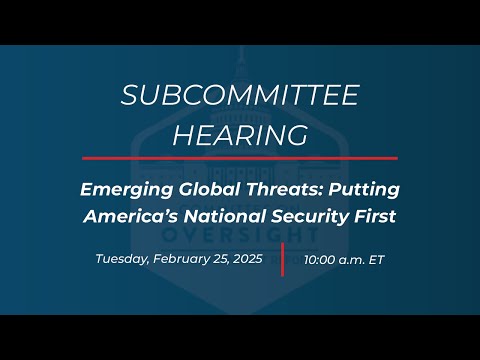
Megan Mops, director of the Center for American Safety and Security at the Independent Women's Forum, told the House Oversight and Reform Subcommittee that U.S. soft-power instruments need overhaul and better accountability.
Mops said decades of poorly targeted foreign-aid spending and bureaucratic waste have weakened U.S. influence and given authoritarian competitors propaganda advantages. “USAID became a racket,” she testified, adding that incentives in the aid bureaucracy had prioritized dollars obligated over outcomes achieved.
Why it matters: Mops argued soft power complements military strength in ways relevant to national security — for example, by building independent media in vulnerable states or funding infrastructure to counter Chinese influence. She also said some U.S. funding, by supporting culturally controversial projects, can be counterproductive in certain societies and can be exploited by adversaries for disinformation.
Mops criticized the United Nations as “paralytic” and suggested Congress consider reassessing U.S. support. Members asked about specific USAID projects and grant amounts later in the hearing; Representative Crane cited several small grants and cultural programs (e.g., $1.5 million for DEI work in Serbia, $70,000 for a musical in Ireland, $47,000 for an opera in Colombia) as examples raised during questioning. Mops and other witnesses said waste and corruption exist and called for focused reforms rather than elimination of all aid programs, while also noting ongoing humanitarian needs.
What remains undecided: The hearing included calls for oversight and reform, but no formal legislative actions were taken. Members indicated interest in further review of specific USAID programs and in defining performance metrics for soft-power spending.
Ending: Committee members signaled bipartisan interest in oversight; witnesses emphasized aligning soft-power spending with strategic national-security objectives while protecting humanitarian assistance.