Get Full Government Meeting Transcripts, Videos, & Alerts Forever!
Get email alerts on the Infrastructure Cell Towers topic
No spam. Unsubscribe anytime.
Residents press commission after new small‑cell poles go up in Pass‑a‑Grille
Summary
Neighbors and business owners urged the city to seek more control after several small-cell wireless installations and replacements of utility poles in Pass‑a‑Grille; city attorney said state law limits what cities may prohibit but design and registration rules are available.
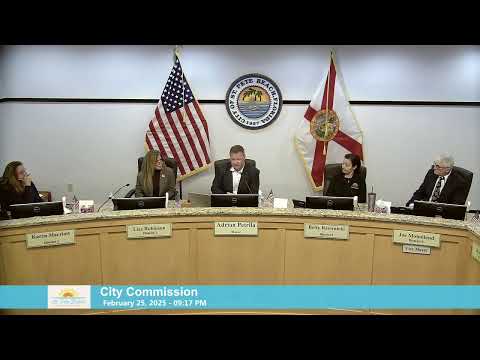
Pass‑a‑Grille, St. Pete Beach — Dozens of residents at Tuesday’s commission meeting urged the city to act after several small‑cell wireless antennas were installed or proposed in the Pass‑a‑Grille neighborhood, saying they were not notified and worried about health, property values and design.
"When I saw that 5G tower go up at Hurley Park, I cried," resident Lauren Monas told commissioners, adding she and more than 230 petition signers want records and explanations about the installations.
City Attorney Ralph Brooks told the commission federal authorities regulate health and radiation standards and that a 2017 Florida law limits cities’ ability to deny or charge fees for small‑cell wireless installations in the public right-of-way. "The FCC is in charge of the medical impacts," Brooks said, and the state law "preempt[s] local governments from saying no to small cell wireless communication facilities in the city's right of way," he said. Brooks said the city can require registration, proof of insurance, construction bonds, proof of FCC authorization and design controls within the limits permitted under state law.
Commissioners and staff said they had asked applicants to reduce pole heights and equipment size to the extent the state statute allows, and they pledged to review local design standards. Several commissioners and residents urged the city to pursue legislative change in Tallahassee and to press federal regulators if health and safety standards are revisited.
Residents, including physicians and business owners, urged the city to use the historic‑preservation review and other local design standards where possible. The meeting record showed the Historic Preservation Board had provided input on the designs and that staff had sought reduced profile and shorter replacements where permitted.
Staff reported there are roughly 25 small‑cell installations in the city under recent rounds of applications, with additional installations along Gulf Boulevard and Blind Pass Road approved by state or state/transportation review. Several of the utilities' current proposals are equipment placed on replacement street poles owned by the local utility; staff said the state preemption limits the city's leverage for replacement poles but allows design controls where the ordinance and statute permit.
The commission asked the city attorney and staff to examine the municipal code and return recommended updates on design standards, disclaimers and registration requirements to the commission. Several residents urged the city to contact state legislators and the local congressional delegation to ask for changes to the statutory preemption and for updated federal guidance.
Speakers quoted in this article spoke during the Feb. 25 City Commission meeting in St. Pete Beach.