Get Full Government Meeting Transcripts, Videos, & Alerts Forever!
Get email alerts on the Land Use Shipping Containers topic
No spam. Unsubscribe anytime.
Hendry County staff outlines draft standards for residential shipping containers; board asks for maps and acreage limits
Summary
County planning staff presented options to regulate shipping containers in rural residential areas, proposing facades, screening, placement rules, limits on stacking and anchoring standards; commissioners asked staff to map lot sizes and consider acreage thresholds and overlays for Pioneer.
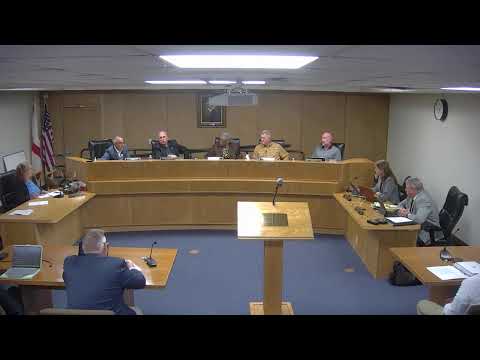
Hendry County Planning staff on Feb. 25 briefed the Board of County Commissioners on how the county could regulate shipping containers used for storage or as accessory structures in rural residential areas, proposing standards on appearance, screening, placement and anchoring while cautioning against unintended consequences such as clandestine habitation.
Ryan Alexander, director of Planning and Community Development, told the board current county rules allow temporary storage containers during moves or while constructing a home, typically removed by the time a certificate of occupancy is issued. The staff memo reviewed approaches other jurisdictions use and offered a set of recommended conditions if the board wants to permit shipping containers more broadly in rural residential (RR) zones.
Key staff suggestions included requiring containers to be maintained and painted to match the residence or otherwise have a finished facade; prohibiting visible shipping-label signage or rusted exteriors; requiring screening from the right-of-way using landscaping or decorative fencing; and placing containers behind the primary residence so they are not in front yards. Staff also recommended limiting stacking, requiring ground-level placement, and applying accessory-structure setbacks and anchoring consistent with the Florida Building Code.
Alexander said some zoning districts already prohibit containers as residences (for example, Montura and Wheeler Estates forbid shipping containers or Quonset huts as dwellings), and the county could treat containers as accessory structures in RR but not in other zoning categories. He warned that changing rules for RR would apply countywide to all RR parcels unless the board first created a specific overlay for places such as Pioneer.
Commissioners asked staff to produce a map of lots that meet potential acreage thresholds (examples discussed included 1.25 acres and 2 acres), and to show where a countywide allowance would have effect. One commissioner suggested starting with a minimum lot size before allowing a permanent container; another urged screening language that addresses corner lots and sightlines so that containers do not sit directly on main roads or obstruct visibility.
County staff and public-safety representatives also raised enforcement concerns. Commissioners and staff noted that when containers are later used for illegal or unsafe habitation, code officers and fire officials must respond; Chief Hester (referenced in the discussion) said code enforcement can act when unauthorized habitation is reported. The board discussed measures to make illegal habitation easier to detect, such as noting exterior air-conditioning or window-unit installations that would suggest living occupancy and trigger an inspection.
No formal ordinance was adopted at the meeting. Staff was directed to return with maps showing parcel sizes meeting suggested thresholds and with draft language addressing facade, screening, placement, stacking, anchoring and enforcement provisions for board consideration at a future meeting.