Get Full Government Meeting Transcripts, Videos, & Alerts Forever!
Get email alerts on the Future Fund topic
No spam. Unsubscribe anytime.
House rejects bill to end employer contributions to state future funds after contentious debate
Summary
House Bill 11 86, which would have phased out employer contributions to the state's Future Fund and redirected oversight, failed on the floor after a lengthy debate over past grants, transparency, and economic-development practices.
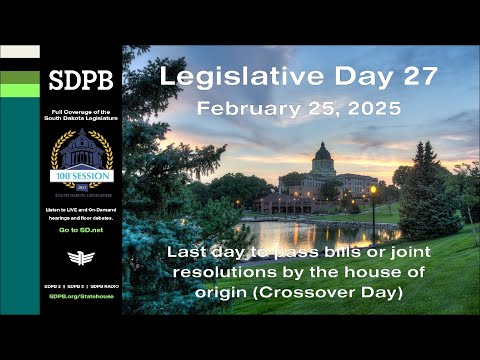
A proposal to stop employer contributions to South Dakota's Future Fund and to curtail future spending authority failed on the House floor on Feb. 25, 2025.
Representative Kristi May, the bill's sponsor, described the measure as a fiscal and oversight fix to curtail what she called unaccountable awards from the Future Fund. "This fund needs to go away," May said during debate, arguing that recent grants were made without sufficient transparency or legislative oversight.
Supporters said the Future Fund had been used in ways that circumvented legislative debate; Representative Reimer and others cited specific grants they said lacked adequate reporting or produced little return. Opponents said the fund has supported successful economic development projects, workforce training and technical-college equipment purchases, and warned that removing employer contributions would remove a useful tool for recruiting and retaining employers.
Representative Weems faulted the bill as an attack on the state's ability to move quickly to support business recruitment, while Representative Rayfield recounted investments tied to Ellsworth Air Force Base and the Sanford Underground Research Facility that he said were enabled in part by Future Fund financing.
Floor debate also included detailed numbers: sponsors and opponents referenced roughly 13 distinct subfunds housing close to $100 million in total, and cited examples of individual grants that drew criticism, such as a $5 million award to a private company that did not proceed with its project. Critics of the bill warned that eliminating employer contributions would remove a long-standing tool intended to support economic development and job creation.
When the House voted, the motion failed: 32 ayes, 38 nays. Representative May's motion to reconsider the loss was later brought up but did not change the outcome when put to the full chamber on a subsequent vote. Members indicated they may pursue oversight changes, reporting requirements, or legislative fixes instead of eliminating the fund outright.
Speakers quoted here are listed in the speaker roster below. The House vote occurred Feb. 25, 2025.