Get Full Government Meeting Transcripts, Videos, & Alerts Forever!
Get email alerts on the Committee Rollup topic
No spam. Unsubscribe anytime.
Utah House Health and Human Services Committee advances multiple health, kratom and homelessness bills; 340B protections, Medicaid pharmacy changes and kratom‑s
Summary
The committee voted unanimously to pass or favorably recommend several bills including protections for the federal 340B program, changes to kratom oversight, a Medicaid pharmacy payment change, creation of a homelessness ombudsman, and technical fixes to death‑certificate and reporting rules.
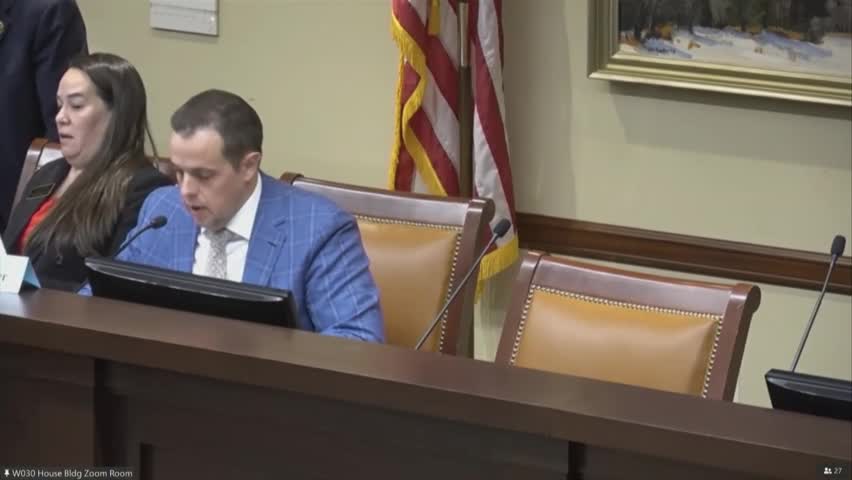
The House Health and Human Services Committee on Feb. 19 considered a packed agenda and voted unanimously to advance a package of health, pharmacy, kratom and homelessness measures to the next step in the legislative process. Lawmakers moved bills addressing medical examiner death certificates and cremation permits, repealing obsolete DHHS reports, strengthening state protections for the federal 340B drug‑pricing program, adding a premarket review for certain kratom combination products, changing the Medicaid pharmacy payment model, creating an ombudsman for homeless‑services complaints, requiring annual federal‑guidance reporting, and making technical homeless‑services fixes.
Why it matters: The bills touch several statewide systems — medical examiner procedures and fees, how safety‑net health providers capture discounts through the 340B program, drug‑safety oversight for kratom products, how the state pays for medications for Medicaid enrollees, and new oversight and reporting aimed at homelessness services. Committee members and stakeholders described fiscal impacts, programmatic consequences for safety‑net providers and pharmacies, and public‑safety and consumer‑protection concerns during testimony.
HB 493 (death certificates, medical examiner forms) Representative John Ward (sponsor) described a bill to require upgrades to the online death‑certificate form so providers receive real‑time prompts when their entries are likely to trigger medical examiner review. “If a provider fills out the certificate in a way that will cause the medical examiner's office to have to review it, the form itself will have some prompts,” Ward said. Sponsors said the change aims to reduce unnecessary medical examiner reviews — currently required by statute when cremation is requested — and thereby reduce delays and costs families face when cremation permits are held pending review. The committee adopted the first substitute and voted to recommend the bill favorably (motion passed unanimously).
HB 482 (department reporting repeals) Representative Monson presented a clean‑up bill to repeal outdated or duplicative Department of Health and Human Services reports; Paul Ray, DHHS director of legislative affairs, said many items slated for repeal are available on public dashboards and that repeal will free staff time for higher‑value reports. The committee adopted the first substitute and placed the bill on the committee consent calendar (motion passed unanimously).
HB 519 (state protections for the federal 340B program) Representative Eliason explained the bill would prohibit pharmaceutical manufacturers from restricting covered entities’ ability to access 340B pricing through contract pharmacies. Testimony from University of Utah President Taylor Randall and health systems and community health center representatives stressed large revenue losses to safety‑net providers after manufacturers restricted contract‑pharmacy participation: “Since 2020…some drug manufacturers have restricted 340B pricing for contract pharmacies. That has cut the University of Utah's 340B savings by over $70,000,000 annually,” Randall said. Opponents (PhRMA’s Kyle Piccola) said the bill conflicts with federal law and risks exacerbating diversion and middle‑man capture of 340B savings. Supporters argued federal audits and state court rulings in other states allow states to protect covered entities. The committee voted to pass HB 519 with a favorable recommendation (motion passed unanimously).
HB 509 (kratom amendments, first substitute as amended) Representative Daley Provo presented changes to the Kratom Consumer Protection Act (KCPA), including a Department of Agriculture and Food‑run premarket review for kratom products that are compounded or combined with other ingredients. The sponsor said the change responds to evolving product formulations that combine kratom with other substances and may present safety risks. Supporters (American Kratom Association, Association for Utah Community Health) urged science‑based regulation and funding for enforcement; industry trade groups and botanical/dietary‑supplement representatives (American Herbal Products Association, Global Kratom Coalition, MIT 45) opposed a state premarket approval regime as inconsistent with federal dietary‑supplement law and warned of practical and scientific uncertainties. The committee adopted the first substitute, adopted a House Amendment 1 to clarify the agency appeals process, and voted to pass the amended substitute with a favorable recommendation (motion passed unanimously).
HB 409 (Medicaid pharmacy delivery model / PDL and payment) Representative Bolander outlined a legislative change implementing a state fee‑for‑service pharmacy payment model for the Medicaid population covered by accountable care organizations (ACOs) after a Milliman study recommended savings. The bill sponsor cited total projected savings (state and federal) in the tens of millions. Pharmacy owners, the Utah Pharmacy Association and many independent pharmacists testified in favor, saying the current ACO/PBM arrangements create administrative burdens and reduce pharmacy access. Health system witnesses and payers urged caution and proposed a hybrid preferred‑drug‑list approach to preserve care coordination and redundancy in case of system outages. The committee adopted a sponsor amendment and passed HB 409 as amended with a favorable recommendation (motion passed unanimously).
SB 78 (homeless‑services ombudsman) Senator Plumb presented SB 78 to create an ombudsman within the Office of Homeless Services to receive complaints, collect data and provide oversight for services to people experiencing homelessness. The sponsor said the office will help surface patterns, hold providers accountable and protect state investments. Service‑provider witnesses and advocates supported the bill as a means to improve transparency and accountability. The committee voted to favorably recommend SB 78 (motion passed unanimously).
HB 527 (federal guidance reporting) Representative Abbott presented a narrow bill requiring DHHS and the State Board of Education to report to relevant committees and the Federalism Commission on federal guidance and interpretations they receive. The committee voted to recommend HB 527 favorably (motion passed unanimously).
HB 505 (homeless services revisions) Representative Eliason presented technical fixes to the state’s homelessness mitigation funding and clarified enforcement of no‑camping rules on state property; the League of Cities and Towns expressed support for the clarifying changes. Some advocates urged removal of a proposed criminal penalty for camping on state property; sponsors said the bill contains technical clarifications and a second substitute that addresses stakeholder requests. The committee adopted the second substitute and voted to recommend the bill favorably (motion passed unanimously).
Votes at a glance: Every motion reported on the transcript was adopted by the committee and the chair announced the motions passed unanimously; relevant bills were moved forward either to the floor, to the consent calendar (HB 482), or to further legislative processing as noted above.
Next steps: Each bill advanced out of committee will appear on subsequent House or Senate calendars for consideration and floor votes. Where the committee approved substitutes and amendments, those amended versions will be the basis for further floor debate.
Ending note: Committee discussion frequently invoked statutory limits and federal oversight (notably in the 340B and kratom debates). Stakeholders requested additional clarifications or implementation timelines in several bills; sponsors said they expect continued stakeholder discussions before floor consideration.