Get Full Government Meeting Transcripts, Videos, & Alerts Forever!
Get email alerts on the Comprehensive Plan topic
No spam. Unsubscribe anytime.
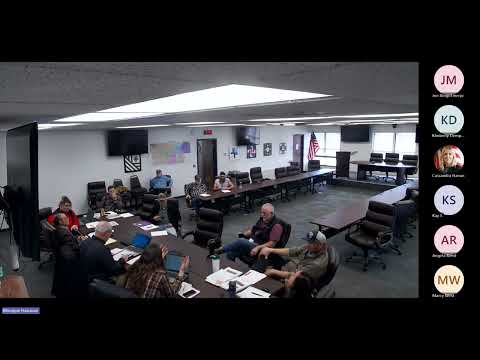
Vernon County planning commission adds objective on PL 566 dams, approves comprehensive-plan edits and forwards draft to county board
Summary
The Vernon County Planning Commission on a voice vote added a new implementation objective asking the county to collect more information on PL 566 flood-control dams and approved a package of edits to the draft comprehensive plan for forwarding to the county board.
The Vernon County Planning Commission on a voice vote added a new implementation objective asking the county to "encourage the continued gathering of information and data on the PL 566 dams to assist with future decisions about these structures," and approved a package of edits to the draft comprehensive plan that county staff will forward to the county board for final action.
Commissioners and staff spent the longest portion of a three-hour discussion on how and where to reference the series of federal PL 566 flood-control dams in the draft comprehensive plan. Members agreed to include a descriptive paragraph in the plan’s existing-conditions material and to add a specific implementation objective under the sustainability/resiliency or utilities and community facilities elements directing continued data collection and stakeholder engagement on the PL 566 dams and related watershed studies.
The item drew repeated clarification that the county has accepted federal planning and design funding for a multi-phase effort tied to a planned environmental impact statement (EIS) and a preferred alternative presented in that EIS; commissioners emphasized the county still retains discretion during subsequent design and implementation phases. Commissioners debated whether language in the plan should be directional (e.g., ‘‘support the EIS preferred alternative’’) or more neutral. Several members urged the document avoid committing the county to a final outcome and instead call for continued study, engagement with watershed groups, and coordination with the Flood Mitigation Alliance and other experts.
As settled at the meeting, the new objective reads in substance: encourage continued gathering of information and data on PL 566 dams relevant to decisions to be made as to the future of these structures. Commissioners said that short, neutral language lets the plan acknowledge the issue, points readers to ongoing studies, and preserves the county board’s ability to act later if required.
The commission also voted to add background language and two board resolutions into the draft plan’s existing-conditions summary by incorporating text from the Land and Water Conservation Plan and referencing Resolutions 38 and 39 (the resolutions authorizing participation in the planning and design phases discussed at the meeting). Members requested that the county conservationist or planning staff prepare the actual paragraph and cite the resolutions and the EIS where appropriate.
Beyond the dams, commissioners approved a number of editorial and policy clarifications recommended in public comments and by committee members. Notable changes the commission approved during the meeting include: replacing the phrase “walkable communities’’ with wording stressing accessibility (to cover walking, rolling, and cycling), changing references to “trails” to “shared-use trails” where appropriate, clarifying that county parks and trails are distinguished from other regional trail systems, and directing staff to replace the cellular-coverage map with the state Public Service Commission’s broadband/coverage dataset in the plan appendix. Commissioners also asked staff to date several rapidly changing data tables (for example, licensed child-care providers) and to cite source agencies for maps and statistics placed in the plan.
How the commission handled the PL 566 material reflected two recurring points in discussion: (1) the comprehensive plan should document the county’s present circumstances and ongoing studies (existing conditions) and (2) the plan’s implementation section may direct further study and coordination without predetermining a policy outcome. Several commissioners and participants said that the Flood Mitigation Alliance, watershed groups and federal agencies (including NRCS) are already engaged and that the county should both acknowledge those efforts and coordinate with them.
Votes at a glance - Add objective directing continued gathering of information and data on PL 566 dams (consensus declared; objective recorded as Goal 2 Objective 3). Outcome: approved (consensus). No roll-call recorded. - Insert language from the Land & Water Conservation Plan and reference Resolutions 38 and 39 in the draft plan’s existing-conditions section. Motion seconded; voice vote. Outcome: approved. - Approve the suite of edits discussed during the meeting and forward the draft comprehensive plan to the county board for formal adoption. Motion made and seconded (second by Kaye); voice vote. Outcome: approved and forwarded to the county board.
What’s next Staff and the county conservationist will prepare the precise wording and citations the commission requested, swap in the PSC broadband map for the cellular-coverage graphic, add the Land & Water Conservation Plan excerpt and the two resolutions to the existing-conditions text, and circulate a final version to commission members. The commission voted to forward the revised draft to the Vernon County Board for its consideration; the county board will review the plan and, if it approves, will adopt it by ordinance or resolution according to county procedures.
The commission recorded no roll-call tallies during the meeting; all formal actions were adopted by voice vote or declared consensus.
Reporting note: The planning commission discussion and motions recorded here are based on the meeting transcript. The commission repeatedly distinguished items that are informational or advisory (existing conditions or references to outside studies) from items that would require future formal decisions by the county board (implementation choices, design approvals, or decommissioning actions).