Get Full Government Meeting Transcripts, Videos, & Alerts Forever!
Get email alerts on the Health Care Clinic Contracts topic
No spam. Unsubscribe anytime.
Vernon County reviews Neighborhood Family Clinic billing after clinic costs exceed budget
Summary
County HR and finance staff reviewed six months of Clinic billing, discussed unclear coding and double-billing of prescriptions, and directed staff to draft a contract specifying which preventative services the county will not reimburse for county employees.
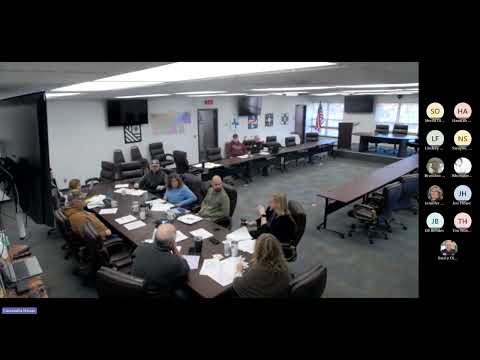
Vernon County officials spent more than an hour on Jan. 8 reviewing invoices and policy options for services provided at the Neighborhood Family Clinic, after 2024 clinic charges exceeded the county’s budgeted amount.
County HR staff presented July–November visit categories from the clinic and said the county’s total 2024 payments to Neighborhood Family Clinic were $87,002.82, roughly $12,000 above the $75,000 the county had set aside. Tricia (staff member) said the county wants clearer rules about which services the county will pay for and recommended a written agreement with the clinic to reduce future billing surprises.
Why it matters: County leaders said the Neighborhood Family Clinic operates as a supplemental option for staff but overlaps with health insurance coverage the county already provides (referred to several times in the meeting as the county’s “Quartz” plan). Commissioners expressed concern that the county is paying for services that employees can obtain without county funding through their primary insurance, including routine immunizations and preventive screenings.
Discussion and evidence: Participants walked through categories the clinic reported — office visits, vaccines, X-rays, labs, in‑house tests and minor procedures — and compared them to the county’s health plan coverage. Tricia proposed asking the clinic to confirm, line-by-line, which items on the county list are already covered by insurance so the county can carve those items out of a contract. Mary (board member) asked Tricia to identify how many of the clinic visits were truly preventative screening visits, and several board members suggested county staff obtain further itemized reports to estimate the portion of costs that could be avoided by directing employees to their primary insurer.
Committee members also raised operational issues: a county employee was charged twice (once for an office visit, later for a prescription), prompting questions about billing practice and whether prescriptions picked up on a different date should be treated as part of the original visit. Tricia said she receives consolidated invoices that list names, dates and a single amount per line and can ask the clinic for more detail to explain duplicate charges.
Short-term direction: The committee asked staff to contact Neighborhood Family Clinic to (1) request a clearer match between clinic line items and items covered by the county’s health plan; (2) ask whether the clinic will accept contract language that instructs them not to bill the county for services covered by an employee’s primary insurer; (3) clarify how prescriptions are billed (and whether the clinic will avoid creating a second office-billing instance when a prescription is provided on a later date); and (4) report back with draft contract language and any data showing how much of the $87,002.82 was for preventative services that insurance would normally cover. Tricia and Cassie (staff members) were asked to have a call with the clinic and return a proposed draft to the committee.
Points of disagreement and practical concerns: Some board members warned that strict exclusions could constrain the clinic’s ability to deliver incidental care (for example, taking a blood pressure reading while treating a separate concern). Others said the county should shift clarity and some responsibility to employees — educating them about which services the county will not pay for — as part of any contractual change. Several members asked staff to assess whether county workforce reductions since mid‑2024 will reduce usage in 2025 and thereby change budget needs.
Next steps and follow-up: Staff will seek the requested data from Neighborhood Family Clinic, draft contract language that would carve out services the county will not reimburse, and bring the draft back to the committee. The committee agreed to start with clarifying and restricting preventive items (such as immunizations already covered by the county insurance plan) and to consider longer-term structural options — including reassessing the county’s insurance approach — later in 2025.
Ending: Committee members framed the draft agreement as a near-term effort to stop repetitive or duplicative billing while leaving broader financing reforms and any potential move to self‑insurance for a later, more detailed review.