Get Full Government Meeting Transcripts, Videos, & Alerts Forever!
Get email alerts on the Property Rights topic
No spam. Unsubscribe anytime.
House Business Committee backs bill letting sole owners sell homestead property without spouse's signature
Summary
The House Business Committee voted to send House Bill 150 to the floor with a "do pass" recommendation after debating whether the measure, aimed at preventing spouses from blocking sales of property owned in one spouse’s name, could leave a nonowning spouse with unpaid claims to proceeds or temporary housing insecurity.
The House Business Committee voted to send House Bill 150 to the floor with a do-pass recommendation after a public hearing and questions from committee members on the measure’s effects on community property and potential unintended consequences.
Representative John Shirts, sponsor of the bill, told the committee that the measure is intended to protect owners who bought property before marriage. “House bill 150 is a pro property rights bill,” said Representative John Shirts, who represents the Western Treasure Valley, District 9. Shirts said the bill would allow a spouse who owns property in their sole and separate name to sell it when the other spouse is unreachable or refuses to sign, while leaving community-property rights unaffected.
Bob Rice, president of the Idaho Land Title Association, testified in support and said the current rule can block sales and refinancing in practical situations. “It does prove to be an impediment for people to refinance and sell properties in situations where there’s a divorce, when one spouse cannot be located,” Rice said, describing cases in the Magic Valley and eastern Idaho where a spouse leaves the country and cannot be found.
Nut graf: Committee members questioned whether a unilateral sale could leave a nonowning spouse homeless or without recovery from community contributions. Sponsors and the title-industry witness said existing community-property and divorce remedies would preserve claims on proceeds or equitable liens, and that the bill simply aligns the homestead-signature rule with the statutory definition of sole ownership.
Committee members pressed on how community-property law would interact with a unilateral sale. Representative Harris asked when property becomes community property; Rice answered that property acquired during marriage is presumptively community property, while separate property includes assets acquired before marriage or by gift or bequest. Rice added that if a nonowning spouse contributed community funds to improvements or mortgage payments, they could have a claim on proceeds: "the community is going to be entitled to compensation for all the community funds that went into the improvements to pay the mortgage," he said.
Members also raised scenarios in which a nonowning spouse lives in the residence. Representative Birch asked whether a unilateral sale could leave the nonowning spouse homeless; Rice said such an outcome is possible in theory but uncommon and would generally trigger further court actions—divorce or eviction proceedings—that would determine monetary claims and occupancy rights.
The sponsor emphasized the bill does not change community-property entitlements or the homestead exemption amount; it changes only who must sign the homestead conveyance. Shirts told the committee the change is a narrow fix to a recurring title-insurance problem: "this is just to hopefully have a small fix to a problem that's encountered by our land title folks on a weekly basis." The committee received one written opposition entry recorded for the public file; no one appeared in person to testify against the bill.
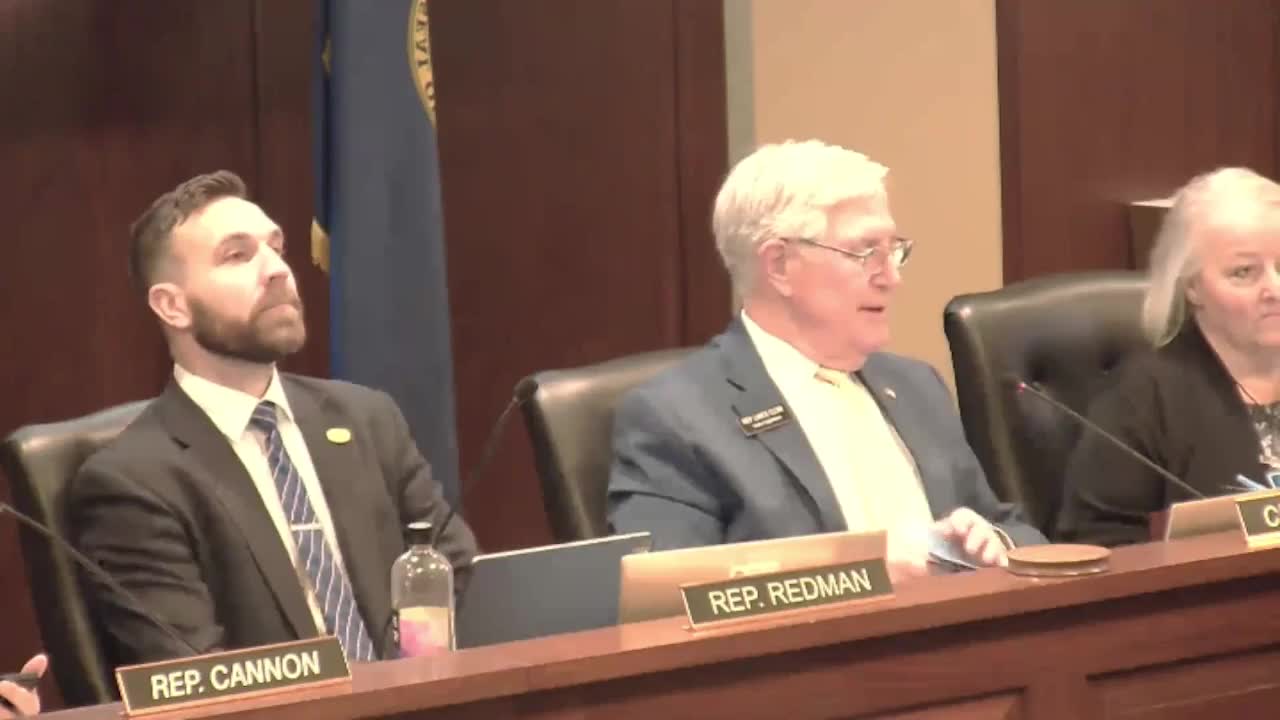
Representative Jordan Redmond moved to send House Bill 150 to the floor with a do-pass recommendation; the motion passed by voice vote. The record shows members reserved the right to change their votes when the bill reaches the floor.
Ending: The committee advanced the bill to the full House; committee members said they expect remaining property and family-law remedies to address proceeds and occupancy disputes that may follow a unilateral sale.