Get Full Government Meeting Transcripts, Videos, & Alerts Forever!
Get email alerts on the College Budget topic
No spam. Unsubscribe anytime.
North Idaho College reports 15% enrollment surge, warns EWA formula cuts $446,800 from base budget
Summary
North Idaho College told JFAC that enrollment has increased sharply but the Enrollment Workload Adjustment (EWA) produces an ongoing reduction of $446,800; college leaders asked for capacity funding for nursing, welding and cybersecurity and said accreditation status has moved from show-cause to probation.
Kevin Campbell, a budget and policy analyst with the Legislative Services Office, presented an overview of North Idaho College’s base budget and said the college’s FY 2026 materials show an ongoing EWA-driven reduction of $446,800.
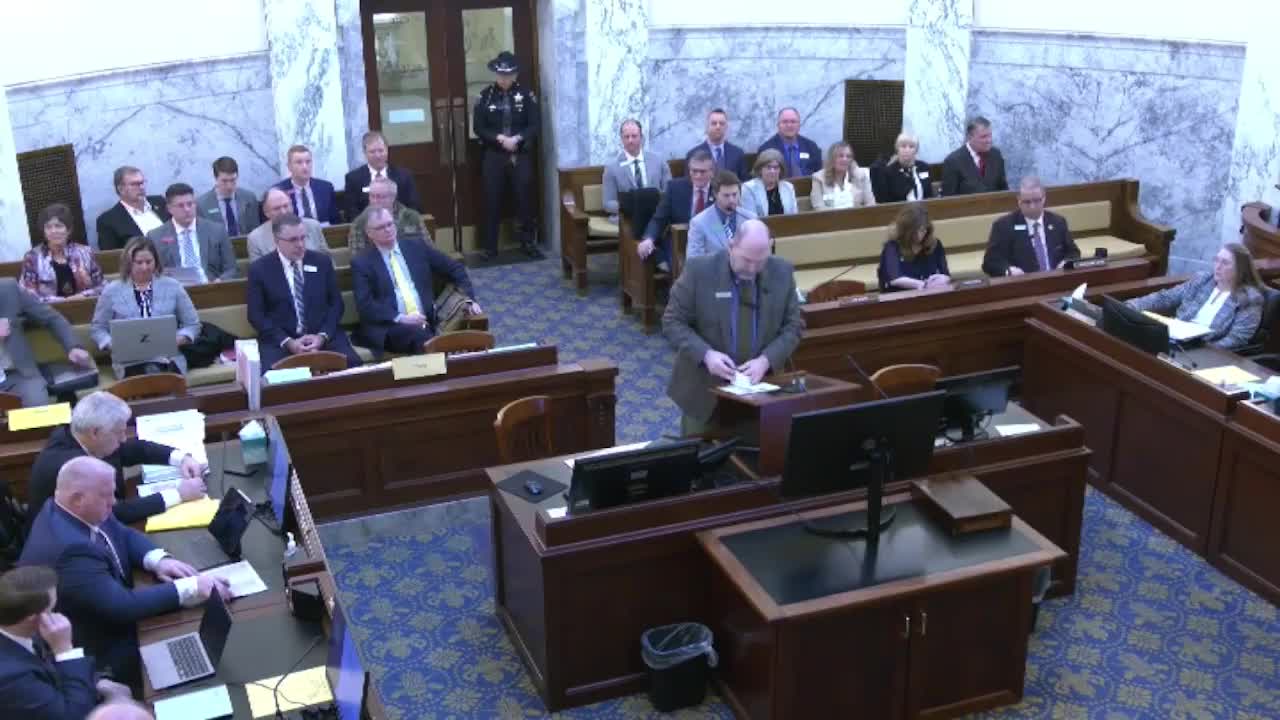
North Idaho College President Dr. Nick Swayne told the Joint Finance-Appropriations Committee that the college has seen a reversal of a long enrollment decline: fall 2024 enrollment rose about 15.5% and, he said, “we have 571 new students on campus this spring alone.”
Swayne and other NIC leaders told legislators the EWA formula’s use of a multi-year trailing average caused the college to lose funding even as enrollment turns upward. “The challenge with EWA is that it’s a trailing average,” Swayne said. He said the formula penalized NIC in the current budget year despite the recent growth and called the reduction “a big bite” for a college with ongoing capacity and staffing needs.
College testimony described program-specific capacity constraints. Swayne said NIC seeks additional nursing faculty to expand intake: the nursing program typically admits 40 students per semester and the college seeks to grow to about 60 students per semester (a roughly 50% increase) but must meet external clinical-accreditation requirements that typically mandate about a 10-to-1 student-to-instructor ratio for clinical supervision. The college requested five nursing positions to support that expansion; NIC leaders said the amount of salary and benefits tied to each faculty hire is roughly $100,000 when fully loaded.
Swayne also described demand in welding and cybersecurity. NIC seeks a welding instructor to expand first-year capacity; he said employers regularly hire strong first‑year welding students before they complete the two-year credential, which complicates program completion rates. On cybersecurity, Swayne said the college’s annual cyber-protection costs rose from roughly $250,000 to more than $500,000 because of increased threats and mitigation needs following local incidents.
On accreditation, Swayne said NIC had been placed on show cause in February 2023 but, as of the night before the hearing, had been removed from show‑cause and placed on probation. “As of last night, we are officially off show cause and in under probation,” he said.
Committee members asked about taxing authority and satellite campuses. Swayne said NIC’s taxing authority covers Kootenai County and described outreach sites in Sandpoint, Rathdrum and Post Falls; he said many student services are available at the Sandpoint outreach center.
No formal vote or committee action occurred during the presentations; NIC’s requests and the EWA treatment will be considered as part of JFAC’s budget deliberations later in the process.
Ending note: NIC asked the committee to consider holding the college harmless from the EWA reduction during the current budget cycle and to support targeted capacity funds for nursing, welding and cybersecurity.