Get Full Government Meeting Transcripts, Videos, & Alerts Forever!
Get email alerts on the College Budget topic
No spam. Unsubscribe anytime.
College of Southern Idaho requests $475,700 enrollment adjustment as freshman class jumps 20%
Summary
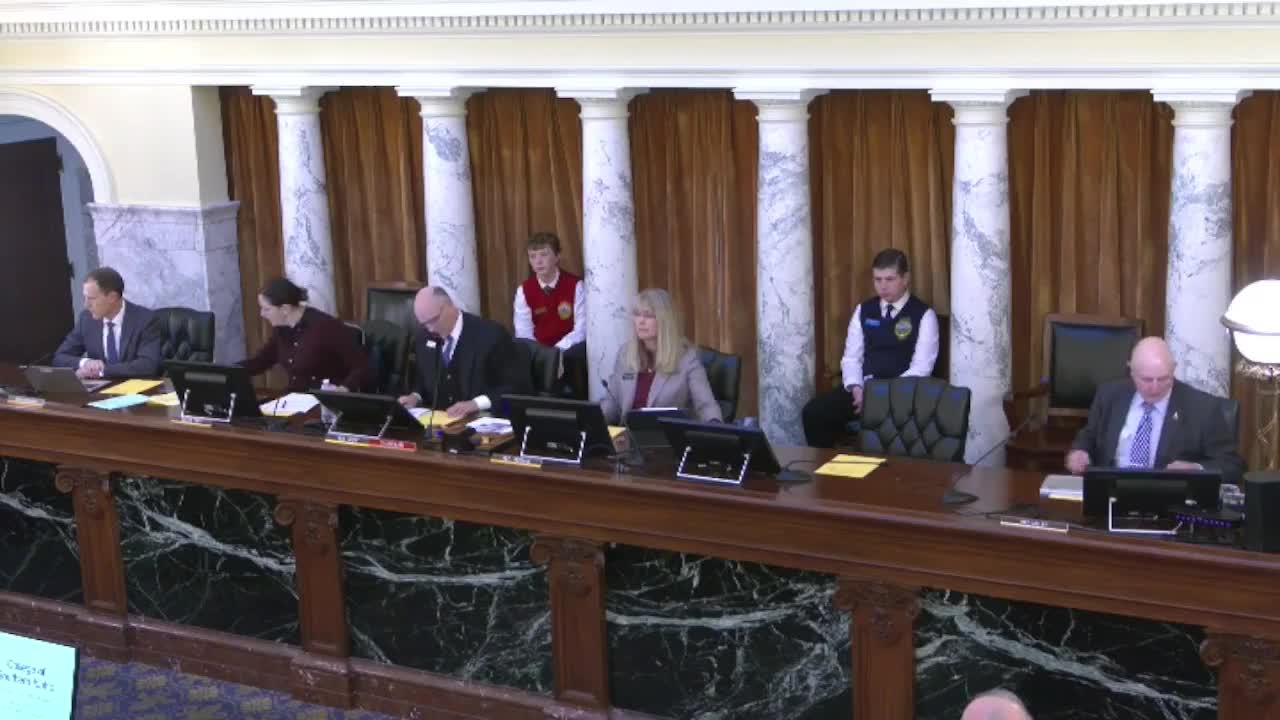
At a Joint Finance-Appropriations Committee hearing, the College of Southern Idaho told legislators it needs $475,700 for an enrollment workload adjustment after a 20% freshman enrollment increase and other capacity pressures tied to Idaho Launch and workforce programs.
Kevin Campbell, a budget and policy analyst with the Legislative Services Office, told the Joint Finance-Appropriations Committee that the College of Southern Idaho is seeking $475,700 as its FY 2026 enrollment workload adjustment.
The request comes as President Dr. L. Dean Fisher told the panel CSI experienced a 20% growth in its freshman class in fall 2024, excluding dual-credit enrollments, and has added roughly 3,800 students since fall 2021.
Campbell framed the budget request in statutory and budgetary context, noting that Idaho community colleges trace to the Junior College Act in Title 33, Chapter 21 of the Idaho Code and that appropriations to community colleges are made to a single trustee line rather than by object category. He said CSI typically spends its full state appropriation and that the college’s single appropriation in 2024 was reported as $18,600,000.
Fisher told the committee the enrollment spike was driven in part by Idaho Launch participation. “Last fall and the fall of ’24, we had 579 Launch recipients matriculate to the College of Southern Idaho,” Fisher said, and added that the growth was not limited to dual credit. He said sustaining that growth will require more instructional capacity and infrastructure.
Fisher outlined operational needs behind the $475,700 request. He told members the college intends to hire five additional instructors with those funds to reduce class sizes and clear wait lists; he estimated each new faculty member serves roughly 150 students per year and said five hires could allow the college to serve about 750 additional students. “I would estimate about 750 students,” Fisher said.
Committee members pressed on where hires would be placed and how capacity needs intersect with career and technical education. Fisher said the five instructors in CSI’s enhancement request would be general-education faculty to support a larger freshman cohort while the governor’s proposed CTE funding would support trade and program-specific expansion.
Fisher also flagged other resource needs: compensation adjustments to better match regional community-college pay, clinical and instructional space for programs with off‑campus clinical requirements, and one-time infrastructure needs. He said CSI’s regional pay lag—he cited roughly a 12% gap versus peer community colleges—would cost on the order of $400,000 to materially narrow. “We are below the ladder for faculty pay compared to K–12,” Fisher said.
On program-specific wait lists, Fisher gave radiologic technology as an example: the program admits about 15 students per year but he said the waiting list reached 84. Nursing and other clinical programs similarly face constraints in clinical space and faculty that limit enrollment even when employer demand exists, he said. Fisher said CSI runs welding cohorts from early morning into the evening in multiple sites to stretch capacity.
Fisher recommended the committee support the governor’s proposed capacity-building funding for CTE and the one-time $15 million for learning-space infrastructure included in the governor’s supplemental proposal. He also highlighted student-success work at CSI, including an 85% fall-to-spring retention rate that he contrasted with a national average of about 60% and the college’s efforts to reduce student textbook costs through open educational resources.
No formal committee action or vote was taken during the presentation; analysts and college leaders answered questions and the committee moved on to other institutions.
Ending note: Committee members indicated they will consider community college budget requests later in the JFAC agenda this week.