Get Full Government Meeting Transcripts, Videos, & Alerts Forever!
Get email alerts on the Historic Preservation topic
No spam. Unsubscribe anytime.
Titusville unveils 'Joynerville and Beyond' report to document African American history
Summary
The City of Titusville and Stantec presented 'Joynerville and Beyond,' a history and preservation plan documenting the city's African American community, summarizing oral histories, mapping historic sites and recommending signage, legacy-business recognition and further grants.
The City of Titusville presented "Joynerville and Beyond," a report documenting the city's African American history, at a Feb. 25 special recognitions and presentations meeting. The project was produced by Stantec with a grant from the State of Florida Division of Historical Resources, Kim Hender, senior historian with Stantec, told council.
"The main goal of this project was to learn about the important places in the history of the African American neighborhood," Hender said, describing research, a public workshop and oral-history interviews used to reconstruct the neighborhood's physical and social history.
The report traces the neighborhood's origins to the 1870s, identifying Andrew and Miley (Miley) Gibson as early African American residents who filed a plat named Joynerville in 1879 and who established businesses and a school. The railroad's arrival in 1885 brought workers who settled in the area and by the 1910s a Black business district developed on South Street; the report says that district was largely demolished in the mid-1960s for a courthouse annex. Stantec said it created a historic-assets map, provided GIS data to the city and documented both surviving properties and sites known only from community memory.
The project included community outreach: a public workshop in April 2024 drew 34 attendees who helped identify significant sites; Stantec recruited 21 interview participants in three months, and conducted five individual interviews and one group interview with three participants. Recommendations in the report included an interpretive-sign program, walking-tour brochures, a dedicated website, a legacy business recognition program, and education-oriented oral-history projects tied to local schools. Hender said the report also recommended local designation through the city's historic preservation ordinance as the most effective legal tool for resource protection, while noting designation would not always prevent alteration or demolition but would require review by the preservation board.
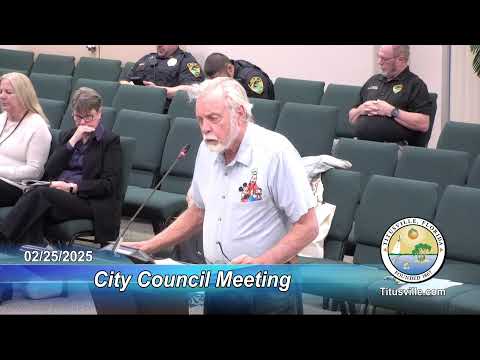
Vice Mayor Cole praised the report and said she distributes copies during Black History Month presentations. Members of the public urged the council and preservation board to pursue grants and further recognition. Tony Schifelow, a member of the Historic Preservation Board and a resident of the target area, asked the board to seek grants and said the report was timely. Resident Lynn Golden said she and family members are collecting photographs and artifacts and asked the city to consider a local historical building or a wall on South Street to mark the former business district. A city staff member clarified that the demolition of a privately owned property known as the Warren House proceeded after a property-owner-led review and certificate-of-appropriateness process and was not a City Council directive.
Hender said the final report was submitted to the State Historic Preservation Office and presented to the city's preservation board in September; stakeholders and community feedback have been positive. The presentation emphasized staging interpretive materials at Campbell Park, pursuing additional grants for surveys and archeology, digitizing archives, and partnering with local museums or libraries to house collections.