Get Full Government Meeting Transcripts, Videos, & Alerts Forever!
Get email alerts on the Early Learning Development topic
No spam. Unsubscribe anytime.
Committee reviews early learning, developmental disability services and childcare funding; SWITC and STAR certification discussed
Summary
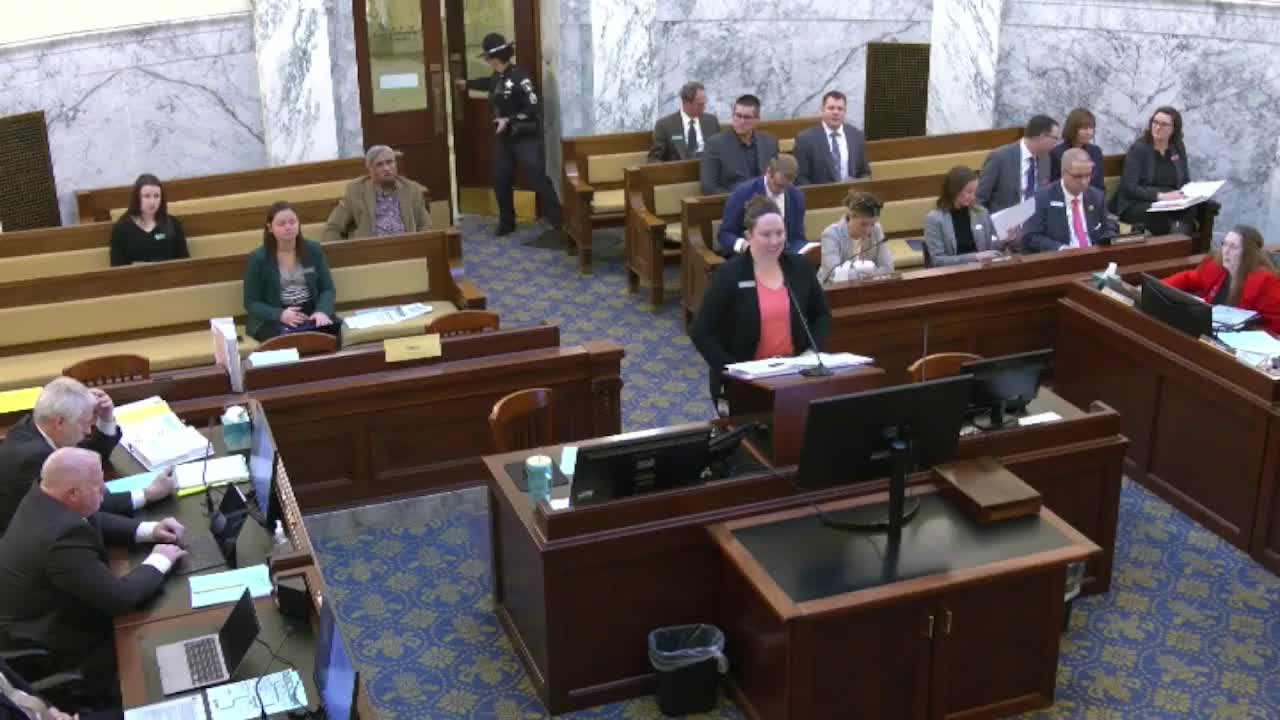
Legislative analysts and Department of Health and Welfare officials briefed the Joint Finance and Appropriations Committee on Feb. 20 about services for the developmentally disabled (to be retitled Early Learning and Development), funding requests for the Idaho Child Care Program and operations at the Southwest Idaho Treatment Center (SWITC).
BOISE — The Joint Finance and Appropriations Committee heard Feb. 20 about the Department of Health and Welfare’s services for people with developmental disabilities and the state’s child‑care subsidy program, including one‑time and ongoing requests the governor recommended for the Idaho Child Care Program (ICCP).
Alex Williamson, budget and policy analyst with Legislative Services, said the division historically budgeted as Services for the Developmentally Disabled will be rebranded Early Learning and Development under the reorganization approved earlier in the session. Williamson said the division was authorized about 306.71 full‑time positions and reported 38.71 vacancies, with several positions held under internal review to manage personnel costs.
Williamson summarized recent supplementals and base changes, noting extended employment services moved into the division in fiscal 2023 and that the Southwest Idaho Treatment Center (SWITC) previously received one‑time funding for construction and crisis patient treatment. Fiscal 2024 expenditures for the division were about $37.6 million, with a notable share for personnel and operating costs.
The governor’s recommendation includes a series of child‑care investments: Williamson said the recommendation would allocate $15,000,000 one‑time (as part of available Child Care and Development Block Grant carryforward funding) in installments over three years and an ongoing $4,200,000 request for the ICCP.
Senators and representatives questioned facility and program specifics. Senator Cook asked why SWITC requested a walk‑in cooler in the permanent building fund; Lisonbee Tate, who oversees Early Learning and Development, said buying food in bulk for multiple state facilities could cut food costs and that a walk‑in cooler would let State Hospital West and SWITC share bulk purchases and reduce overall food expenditures.
The committee also discussed START certification (a clinical model used for intensive crisis support). Williamson noted a $249,200 one‑time request described as year three of four for STAR/START certification; Deputy Director Allison Tate and other staff said the training and certification process has taken longer than initially represented, but they reported early operational gains and said the department would provide a progress report to the committee this summer. Officials said START‑trained teams at SWITC have successfully transitioned some long‑term residents to less‑intensive settings in recent weeks.
Committee members asked about federal funding risks. Director Adams said most developmental‑disability services are budgeted in Medicaid and that the administration is monitoring federal policy but has not identified an immediate funding loss; the department said it has exit strategies for non‑entitlement programs. On ICCP enrollment and prior pauses, Adams described corrective actions the department took in the previous year to keep the subsidy program within the appropriation and said enrollment resumed in January after temporary pauses and program adjustments.
No formal committee votes are recorded in the transcript. Department staff committed to provide the START progress report and follow‑up details on ICCP and SWITC operations.