Get Full Government Meeting Transcripts, Videos, & Alerts Forever!
Get email alerts on the Behavioral Health topic
No spam. Unsubscribe anytime.
JFAC approves multiple behavioral-health supplementals, authorizes transfer exemptions for mental-health budgets
Summary
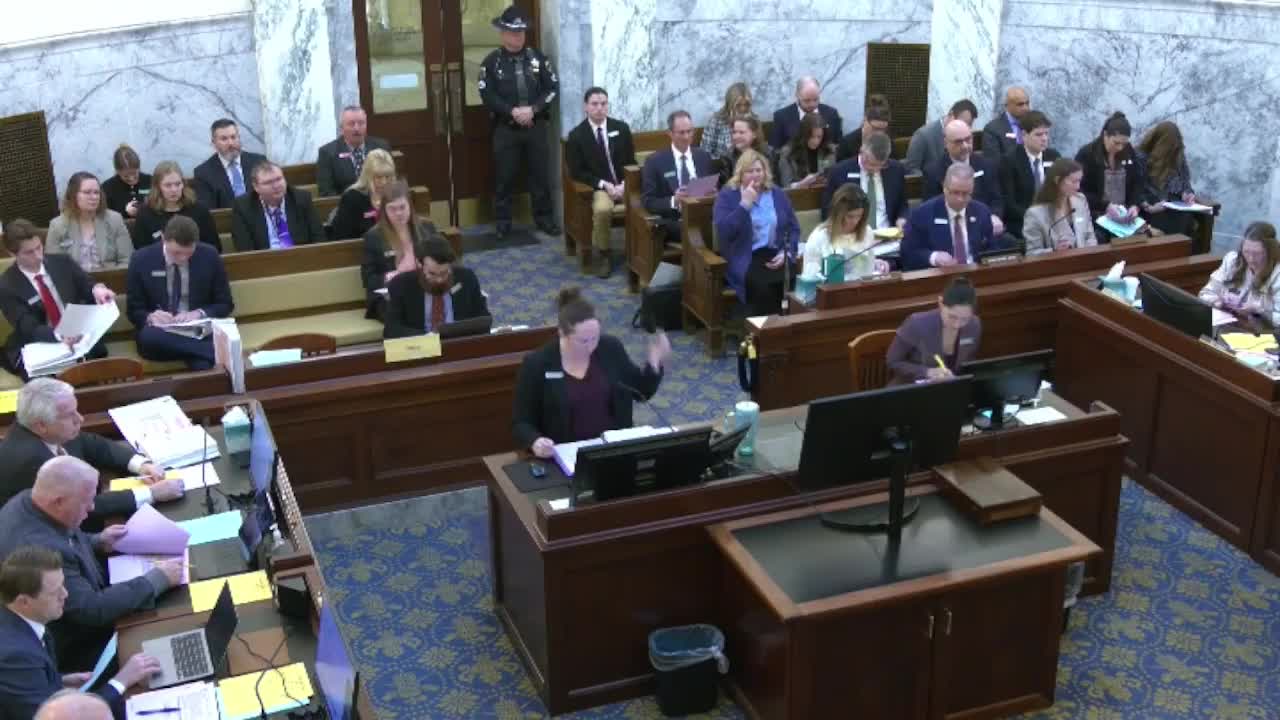
The Joint Finance-Appropriations Committee on Friday approved a package of supplemental appropriations and fund shifts for behavioral health programs, authorizing federal grant carryovers for the Idaho Behavioral Health Plan and new one-time general-fund support for community hospitalization costs.
The Joint Finance-Appropriations Committee on Friday approved a package of supplemental appropriations and fund shifts for behavioral health programs, authorizing federal grant carryovers for Idaho’s behavioral health plan and new one-time general-fund support for civil commitment and community hospitalization costs.
The supplements included a $6,743,800 one-time appropriation from the Cooperative Welfare Federal Fund to implement the Idaho Behavioral Health Plan (IBHP) contract, and a $2,663,500 one-time general-fund addition for civil-commitment expenses in the community hospitalization program. The panel also approved smaller federal and dedicated-fund adjustments for ongoing IBHP implementation in FY 2026.
The package matters because the requests reflect both unspent federal grant awards tied to IBHP go‑live delays and immediate cost pressures on the state psychiatric hospitals and community hospitalization providers. The committee also adopted language that temporarily exempts the Division of Mental Health Services and the psychiatric hospitalization division from statutory limits on transfers between expense classes so the agencies can move funds between personnel and operating expenses while federal and grant funding flows are clarified.
Alex Williamson, budget and policy analyst with the Legislative Services Office, told the committee the items “all roll up into one enhancement bill for behavioral health,” and that some federal grant appropriations had expired because go-live delays prevented timely spending.
Key actions approved: - Idaho Behavioral Health Plan (FY2025): one-time add of $6,743,800 from Cooperative Welfare Federal Fund for IBHP contract implementation (approved; committee vote: 15 ayes, 5 nays). - Mental Health Services (FY2026): federal grant increase of $261,400 for IBHP-related implementation (approved; committee vote recorded as majority in favor). - Psychiatric hospitalization — community hospitalization (FY2025): one-time add of $2,663,500 from the Cooperative Welfare general fund for civil-commitment expenditures (approved; committee vote: 19 ayes, 1 nay total reported). - State Hospital West (FY2025): reclassification shifting $2,206,900 from federal funds to Cooperative Welfare Dedicated Fund to reflect forecast and revenue changes (approved unanimously by the committee during the roll call vote reported in the transcript). - State Hospital South (FY2025): net fund reclassification — $1,000,000 from the Cooperative Welfare general fund and $3,859,700 from Cooperative Welfare dedicated funds, offset by a $4,859,700 reduction in Cooperative Welfare federal funds (approved; unanimous committee vote reported). - Substance Abuse Treatment and Prevention (FY2026): dedicated/federal fund reallocation (net zero) adjusting personnel and trustee/benefit lines (approved; committee vote: 14 ayes, 6 nays).
Committee members repeatedly authorized temporary statutory language (cited in the hearing as Idaho Code §67-3511) allowing Mental Health Services and psychiatric hospitalization to transfer trustee & benefit payments and personnel costs in accordance with that code section. The committee also approved language aimed at protecting the state in the event federal funds are reduced or rescinded, requiring agencies to report and (where possible) revert state matches or supplanted state spending.
Discussion and context Committee members pressed agency analysts on two recurring concerns: whether federal grant money was reaching direct-care workers and whether recent rate increases for personal caregivers led to higher pay for employees or merely larger overall program costs. Senator Wintrow and other members asked for follow-up reporting so lawmakers could see how prior rate increases translated into worker compensation. Lawmakers also debated whether programs such as LIHEAP or Alzheimer’s grant programs are best housed in Health and Welfare or moved to energy or aging authorities.
Several members expressed concern about siloing of mental-health funding (children’s services vs. adult services) and the ability to maintain a continuum of care as people age out of children’s services.
What happens next The committee’s due-pass recommendations will go with the bills and language through the remainder of the legislative process. The committee asked agency staff for follow-up reports on direct-care workforce impacts and the distribution of prior rate increases to confirm whether intended salary impacts reached frontline workers.
Ending note The committee approved the behavioral-health package amid repeated procedural votes and adopted statutory transfer exemptions and reporting requirements intended to give agencies flexibility while preserving legislative oversight.