Get Full Government Meeting Transcripts, Videos, & Alerts Forever!
Get email alerts on the School Zone Speed Enforcement topic
No spam. Unsubscribe anytime.
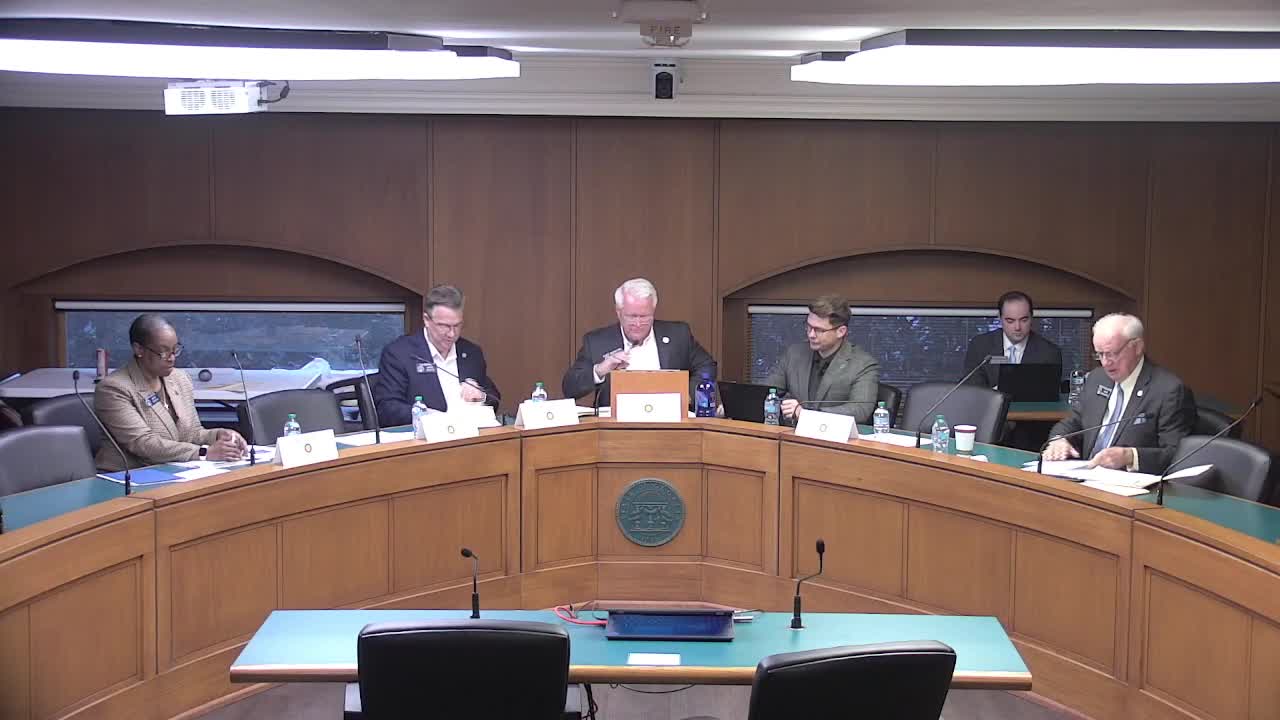
Georgia Senate subcommittee hears testimony on school‑zone speed cameras, due process and contract terms
Summary
A Georgia Senate subcommittee heard detailed testimony from municipal officials, police chiefs and vendors about the operation, safety effects, contract terms and due‑process procedures for automated speed‑enforcement cameras used in school zones.
A Georgia Senate subcommittee heard testimony from municipal officials, police chiefs and private vendors on automated speed enforcement in school zones, focusing on program operations, public‑education steps, vendor contracts and citizens’ due process.
The discussion matters because the technology is being used by cities across Georgia as a force multiplier for traffic safety, but senators and witnesses disagreed on guardrails such as operating hours, signage, who reviews citations and how citation revenue is spent.
Mayor Patty Garrett, mayor of the City of Decatur, described why her city deployed school‑zone cameras. “Our community safety is really our top priority in using these cameras,” Garrett said, and she told the panel Decatur is a compact city of roughly 25,000 people and has prioritized walkability and Safe Routes to School programs. Decatur’s police chief, Scott Richards, said the city placed cameras at five school‑zone locations after a study showed high rates of speeding and that the cameras and public education together produced substantial reductions in speeding during the pilot and early enforcement phases.
Chief Richards said Decatur’s program timeline included a five‑day baseline speed study, a public‑information phase starting Sept. 30, 2024, a 30‑day warning period beginning Oct. 14 and live enforcement beginning Nov. 13, 2024. He told senators the initial five‑day study recorded 22,443 speeding events in the five school zones; that fell to 7,491 during the public‑information phase (a 66.6% reduction), decreased a further 2,284 during the 30‑day warning period (a 23.2% reduction) and dropped again after enforcement began. “Overall, since the program has been in effect, speeding has reduced 92% as a result of the program,” the chief said.
Witnesses described typical operational details that legislators pressed on. Decatur reported 10 schools and 22 school‑zone segments; the five camera locations were selected based on need and four of the five sit on state routes. Decatur described school enforcement windows such as elementary‑school times of 7:20–8:20 a.m. and 2:50–3:50 p.m., and a middle‑school window of 7:45–8:45 a.m. and 3:45–4:45 p.m. Committee members repeatedly asked whether cameras operate only during posted school‑zone hours; Decatur and other chiefs said they limit automated enforcement to the school‑in‑session windows the local ordinances and permits specify.
Vendors described hardware, data flow and quality controls. Mark Fraser, national director of sales for Blue Line Solutions, said the company uses lidar devices and that those units “measure speed to an accuracy of about 99.9999%.” He described a workflow in which a camera’s speed data and images are transmitted to the vendor’s processing center, which checks license‑plate registration information through a national database and returns packets to the local agency for review before mailing citations. Fraser said the cameras perform an internal self‑check about every 35 minutes and the vendor maintains a camera network operations center that monitors device health.
Senators pressed on vendor contracts and revenue. Multiple vendors and municipal witnesses described arrangements where vendors install and own equipment and share citation revenue; senators repeatedly asked about the common 65/35 or 35/35 splits mentioned in testimony. Decatur witnesses said the city currently receives a portion of fines and that the city has reserved those funds for public‑safety expenses, but several senators and mayors warned against treating citation receipts as a stable recurring revenue source because successful enforcement typically reduces violations — sometimes sharply — over time.
The committee also questioned how citations are vetted and how citizens can contest them. Chiefs from Decatur, Hamilton and Conyers said a post‑certified officer reviews every automated citation in an online portal before it is mailed; officers can dismiss citations for listed reasons such as unreadable plates, mismatched tag data or operation outside posted school hours. Chief Scott Freeman of Conyers described upgrading warning beacons and signage, using door‑hanger outreach and other community education before activation. Witnesses said contested citations are handled in municipal court; an officer familiar with the system or the equipment’s calibration may testify in court and vendors provide a court packet that includes calibration and metadata.
Senators pressed for practical guardrails: required warning signage and beacons, limits on operating hours, clear rules about when municipal staff may dismiss citations, and better public notice and alternatives for residents without reliable internet access. Several witnesses said many jurisdictions run cameras only during arrival and dismissal windows — typically 30 minutes before and after class start or up to the hour windows some cities use — and that local ordinances determine the precise schedule and signage placement in coordination with the Georgia Department of Transportation’s permitting process.
Multiple witnesses and trade representatives asked the committee to allow local authorities flexibility to tailor hours and enforcement to local conditions while building in transparency and due‑process protections. DJ Waller of the Georgia Municipal Association said the association favors keeping automated enforcement available as a local tool and “doesn’t want it taken away.” Vendors and local chiefs offered speed‑study data and other technical material to the subcommittee for further review.
No formal votes or committee actions were taken during the hearing. Committee members asked vendors and agencies to provide GDOT and local speed‑study data and to clarify vendor contract terms and the specifics of who reviews and may dismiss citations.
The subcommittee’s discussion highlighted the tradeoffs legislators must weigh: local police and municipal officials say cameras augment limited staffing and significantly reduce measured speeding in school zones; senators expressed concern about revenue dependency, transparency, lawful notice and robust, accessible procedures for contesting tickets. The panel requested additional technical and operational materials from vendors and agencies for follow‑up consideration. The hearing concluded without a vote on draft language.