Get Full Government Meeting Transcripts, Videos, & Alerts Forever!
Get email alerts on the Vaping Regulation topic
No spam. Unsubscribe anytime.
Senate committee advances bill to regulate vape products; advocates and retailers clash at hearing
Summary
Sen. Yeager’s bill to create a Department of Revenue vape product registry, tighten ID checks and restrict non‑FDA‑approved products passed the Commerce & Labor Committee after contested testimony from vape‑industry advocates and small retailers.
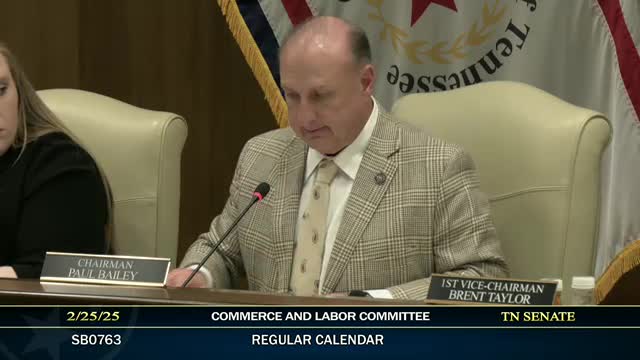
The Senate Commerce & Labor Committee moved forward Senate Bill 7‑63, a wide‑ranging proposal to regulate the retail sale of nicotine‑vapor products, after heated testimony from both independent vape retailers and public‑health advocates.
Sponsor Senator Frank Yeager said the bill is aimed at removing illicit, often foreign‑sourced vaping products from Tennessee’s market, tightening universal identification requirements and creating a state‑maintained product registry on the Department of Revenue website to help enforcement. An amendment adopted in committee narrowed and clarified technical points and added an explicit list‑and‑registry mechanism for products that are approved by the U.S. Food and Drug Administration or are currently awaiting FDA review.
Proponents: Senator Yeager and representatives for law‑enforcement and some public‑safety groups told the committee they want clarity for enforcement and a central product registry so investigators and retailers can identify lawful products quickly. Yeager said the bill is designed to stop illicit imports he described as “poisoning children” and to give district attorneys and juvenile judges better tools to address youth addiction.
Opponents: Several small retail owners and industry advocates opposed the bill in testimony. Danny Gillis of the Tennessee Smoke Free Association and Terry LivZee, owner of Knoxville Vapor, said the measure would effectively push many independent vapor shops out of business and argued the bill would favor large, tobacco‑company products. Gillis told the committee the proposal would close about 700 stores and cost roughly 2,200 jobs (figures given in testimony; not independently verified). LivZee said her stores have helped thousands of smokers quit and warned that removing flavored and open‑system products from the market could push adult consumers back to combustible cigarettes or illicit products.
Other stakeholders: Emily Leroy, executive director of the Tennessee Fuel and Convenience Store Association, told the committee convenience stores support universal carding for vape sales and said a registry and tax framework would give retailers clarity about which products are legal to sell.
Key policy points discussed - Universal carding/ID: The amendment tightens ID checks for vape sales and extends the age‑look‑threshold to 50 for discretionary carding in the tobacco statute (retailers would card unless the purchaser appears to be at least 50 years old). - Product registry: The bill requires the Department of Revenue to maintain an online directory indicating which vapor products have FDA authorization or pending applications; retailers would be able to consult the registry for compliance. - Enforcement and penalties: The measure includes civil penalties for sales of unlisted or non‑compliant products and a wholesale tax structure for vapor products (the transcript and fiscal note were discussed by witnesses; industry witnesses disputed some fiscal assumptions).
Committee action: The committee adopted the sponsor’s technical amendment and advanced the bill to the Finance Committee. The vote on the final motion was 7 in favor, 1 opposed (Senator Sutherland voted no).
Ending: Supporters framed the bill as a focused enforcement and product‑control measure intended to protect youth; opponents said the bill would harm small businesses and limit adult access to harm‑reduction products. The bill now moves to Finance for further consideration.