Get Full Government Meeting Transcripts, Videos, & Alerts Forever!
Get email alerts on the Scope Of Practice Anesthesia topic
No spam. Unsubscribe anytime.
Committee rejects change to Georgia anesthesia law after debate over patient safety and rural access
Summary
The House Regulated Industries Committee on Jan. 12 voted down a substitute to House Bill 251 that would have removed the statutory requirement that anesthesia be “administered under the direction and responsibility of a duly licensed physician,” replacing it with a coordination standard.
The House Regulated Industries Committee on Jan. 12 voted against a substitute to House Bill 251 that would have removed the phrase “administered under the direction and responsibility of a duly licensed physician” from Georgia law and replaced it with a defined “coordination” standard for anesthesia care.
The substitute drew sustained testimony from anesthesiologists, nurse-anesthetists, nurses and legislators about whether the change would expand access in rural Georgia or introduce confusion about who has final authority during an intraoperative emergency.
Representative Mark Newton, an emergency department physician, told the committee that patients and staff “deserve to know that there’s one person in charge” during a crisis and warned that the substitute’s wording risked “introduc[ing] confusion” about who makes final decisions. “The responsibility, the direction means somebody’s got to make the final decision,” Newton said, arguing that clear lines of command are especially vital in acute care hospitals.
Jett Toney, representing the Georgia Society of Anesthesiologists, told members the substitute would have statewide effect and is broader than prior, rural-focused legislation. “This bill is very different than the legislation that was considered last year in special subcommittee. This bill has statewide effect,” Toney said, urging members to review materials in the committee packet comparing training pathways for anesthesiologists and nurse anesthetists.
Dr. Steve Swayne, a retired physician anesthesiologist who practiced at Emory Saint Joseph’s, testified that the physician-led anesthesia care team is “the safest mode of anesthesia practice” and warned lawmakers: “You simply cannot eliminate ‘administered under the direction and responsibility of a duly licensed physician’ and expect the same ability to successfully respond to and appropriately intervene in anesthetic urgent and emergent situations.”
Advocates for certified registered nurse anesthetists (CRNAs) and advanced practice nurses said the substitute would help preserve services where physician anesthesiologists are scarce. Tim Davis, director of government affairs for the Georgia Nurses Association, told the panel, “In many health systems, there is no anesthesiologist available in those communities,” and urged members to consider the viability of surgical services in underserved areas.
Matt Oxford, president of the Georgia Association of Nurse Anesthetists, noted that “36 states have already changed their legislation to remove direction or supervision within their legislation” and that CRNAs are the primary anesthesia providers in many rural Georgia counties. He and other advocates said removing the statutory physician-direction language would align Georgia with other states and support access to routine procedures.
Committee members also debated an amendment from Representative Carpenter that would have preserved the existing physician direction requirement in a list of metro counties (Bartow, Clayton, Cobb, DeKalb, Fulton, Gwinnett and Henry) while applying the coordination language outside those counties. Carpenter described the amendment as an attempt to target rural access issues while maintaining the current standard in metro areas. The amendment failed on a committee voice/show-of-hands vote.
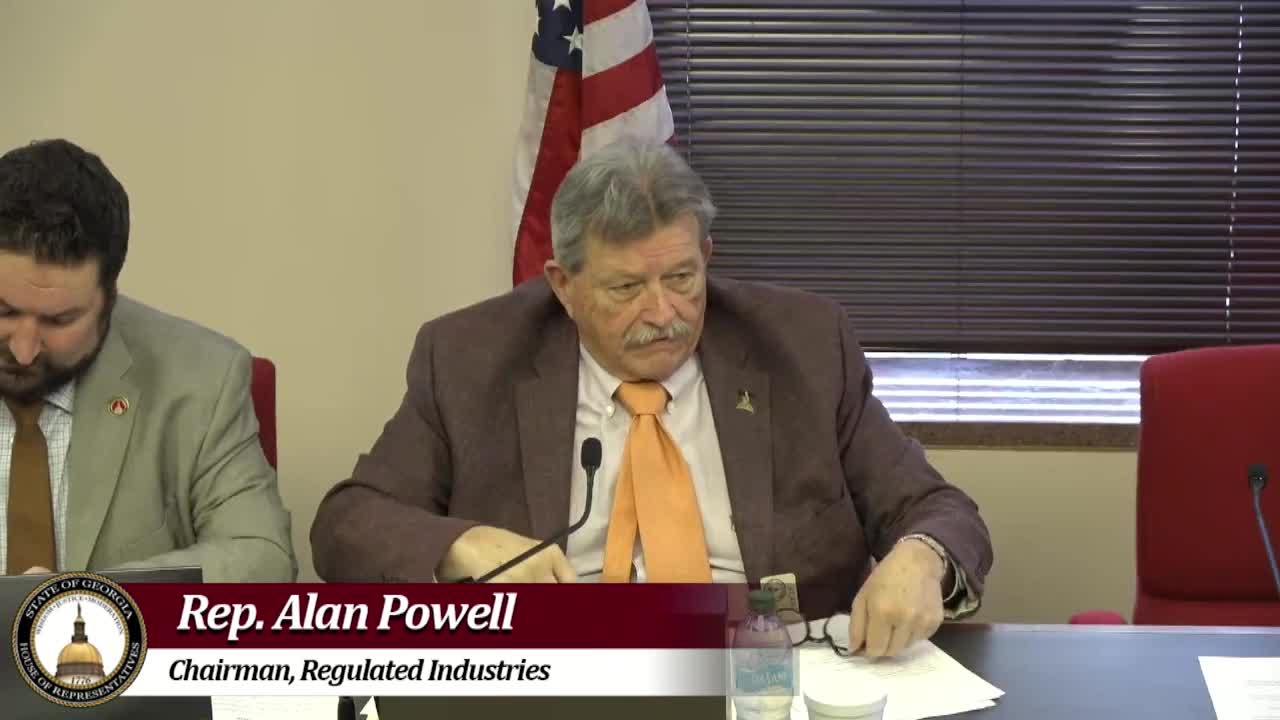
Representative McDonald moved to pass the substitute; the motion was seconded. After discussion and a recorded show-of-hands, the committee voted that the bill did not pass. The chair closed the meeting and urged members to continue working on broader solutions to statewide health-care workforce challenges.
Action taken: The committee voted to reject the substitute to House Bill 251. No committee referral or further action on the substitute was recorded in the transcript.
The hearing included extended back-and-forth about training differences between anesthesiologists, CRNAs and anesthesiologist assistants, the limits of telemedicine for supervising anesthesia, and local examples cited by testifiers — including a referenced move by an anesthesia vendor in Columbus that some speakers said replaced a physician-led group with a CRNA‑heavy staffing model. Testimony included both clinicians recounting individual adverse events and associations citing multi‑state policy differences; members repeatedly requested data but heard largely anecdotal and organizational evidence during the session.
The chair adjourned the meeting after the vote and remarked that broader policy work will be required to address rural access and workforce shortages across Georgia.