Get Full Government Meeting Transcripts, Videos, & Alerts Forever!
Get email alerts on the Public Health Vaping topic
No spam. Unsubscribe anytime.
Hearing: bill would create state registry to limit sale of unauthorized disposable vapes; industry and retailers support registry mechanism
Summary
Representative Gaines proposed a state vape-product registry to clarify which disposable and other vaping products are legally authorized in Georgia. Supporters argued the registry will help retailers and enforcement; public-health and anti-diversion concerns were raised in committee testimony.
Representative Gaines introduced House Bill 577, a bill to create a state registry of vapor products authorized for sale in Georgia. The bill would require product registration and a per-product fee (committee discussion referenced a $1,000 registration fee) and would provide a mechanism for the Department of Revenue to enforce the registry and remove unauthorized products from the market.
Why it matters: Committee members and witnesses said the unregulated influx of disposable vaping devices — many manufactured overseas and often marketed toward young people — has created a market where retailers cannot readily tell whether a product is legal. Backers said a registry would bring clarity, allow retailers to verify products quickly and improve enforcement. Witnesses from the Georgia Association of Convenience Stores and Georgia Retailers supported the registry as a way to protect responsible retailers and consumers. Lawmakers and some witnesses also noted the bill’s administrative cost for enforcement and that some enforcement resources would be needed at the Department of Revenue.
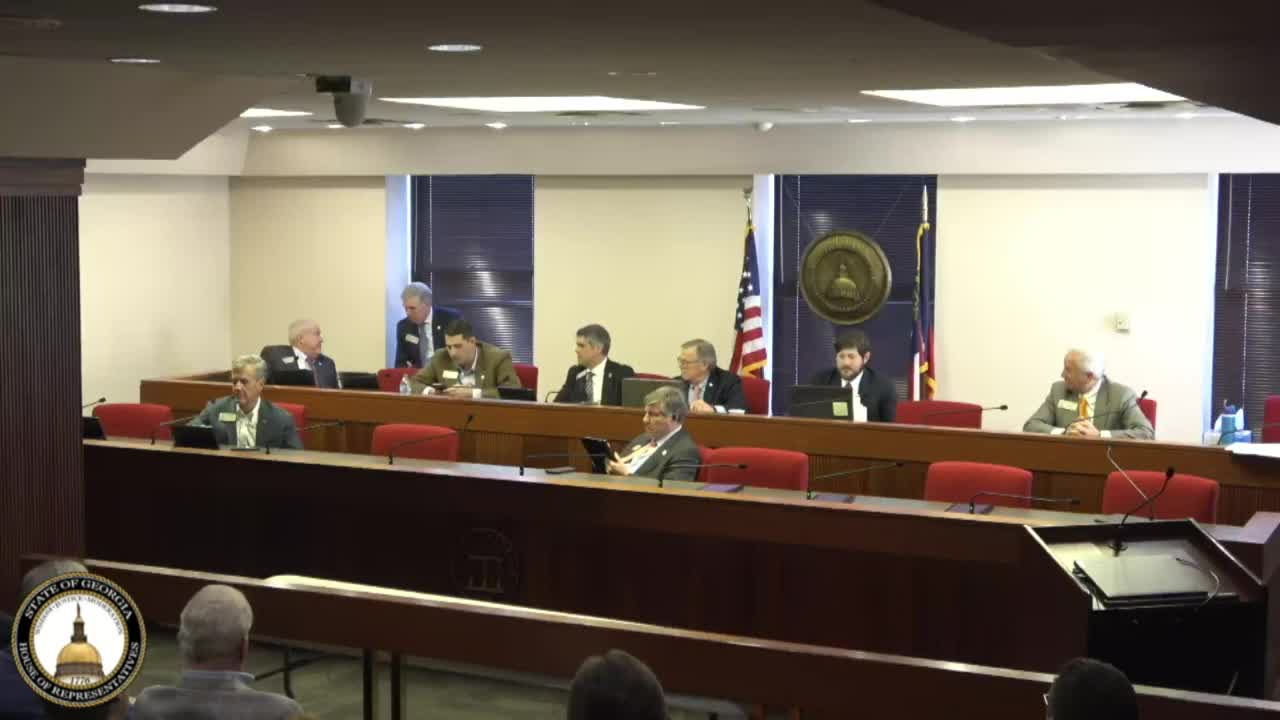
Public testimony: Ben Cowher (Georgia Retailers) and Angela Holland (Georgia Association of Convenience Stores) testified in favor, describing high compliance among responsible retailers and arguing the registry would improve transparency and enforcement. Committee members asked about enforcement mechanics, expected registry size and whether registration costs would cover administrative expenses.
No committee vote was taken in this hearing; the bill was presented for discussion and public testimony.