Get Full Government Meeting Transcripts, Videos, & Alerts Forever!
Get email alerts on the Disaster Relief topic
No spam. Unsubscribe anytime.
First hearing: bill would let homeowners set aside tax-preferred 'catastrophic savings' for disaster deductibles
Summary
Representative Lumsden presented a model-based bill to let homeowners create state-tax-preferred catastrophic savings accounts for future disaster deductibles; legislators asked about account mechanics, rollover, inheritance and links to federal treatment.
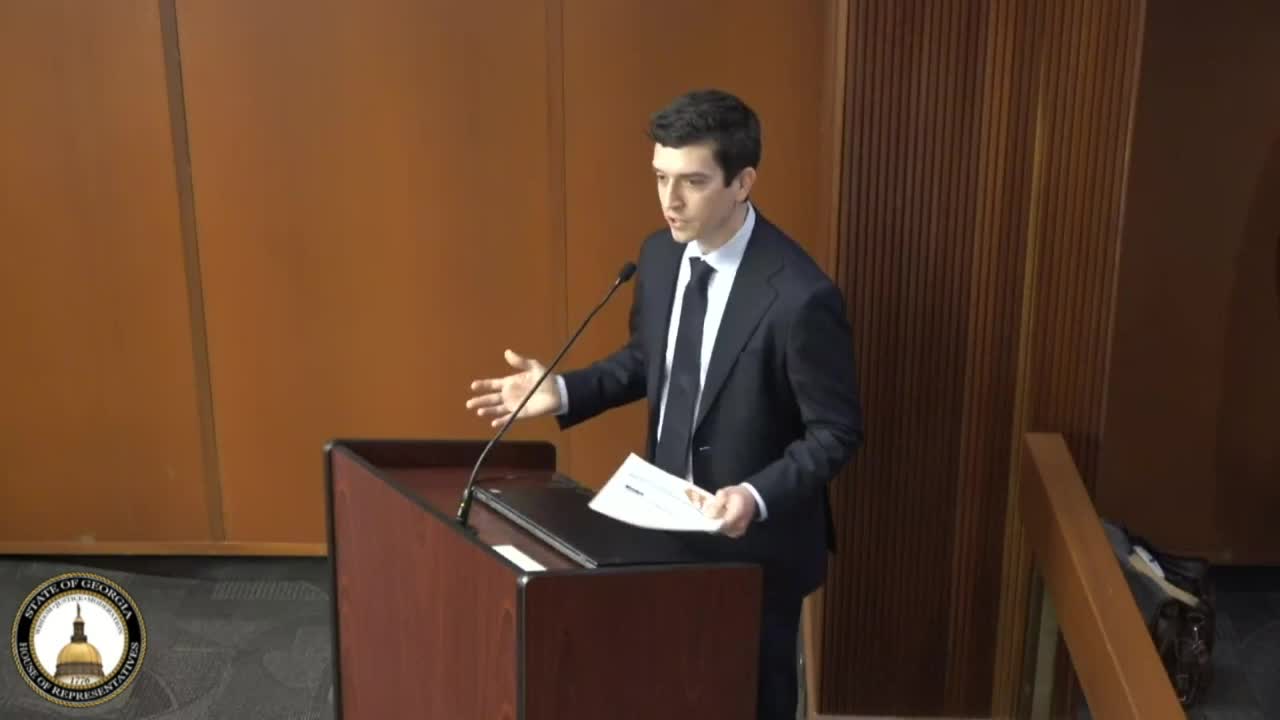
Representative Lumsden introduced House Bill 511, a model piece of legislation from the National Conference of Insurance Legislators (NCOIL) that would allow individual homeowners to reduce their Georgia taxable income by contributions to a designated "catastrophic savings account" used to cover an insurance deductible after a declared catastrophic event.
Under the draft language discussed in committee, qualifying homeowners could designate a savings or money-market account as a catastrophic savings account and claim a state income-tax reduction up to specified amounts: taxpayers whose homes have insurance deductibles of $1,000 or less could reduce taxable income by up to $2,000; taxpayers with higher deductibles could reduce taxable income by up to twice the deductible amount or a cap of $25,000, whichever is less. Uninsured homeowners would be eligible for a higher maximum reduction (the substitute referenced a cap up to $250,000 subject to fair-market-value limits).
Committee members asked whether account earnings would be tax-free, what happened at death or if the funds were withdrawn before a catastrophe, and whether the state should permit a broader set of investment vehicles like health savings accounts allow. The author confirmed the model treats the accounts as savings or money-market accounts and that interest earned in the account would not be taxed while in the account; withdrawals for non-catastrophe purposes would remove the tax preference, the author said.
No committee vote occurred; the measure was discussed as a first hearing and lawmakers and staff indicated questions about potential federal interactions and practical administration should be addressed in future sessions.