Get Full Government Meeting Transcripts, Videos, & Alerts Forever!
Get email alerts on the Civil Rights Transgender topic
No spam. Unsubscribe anytime.
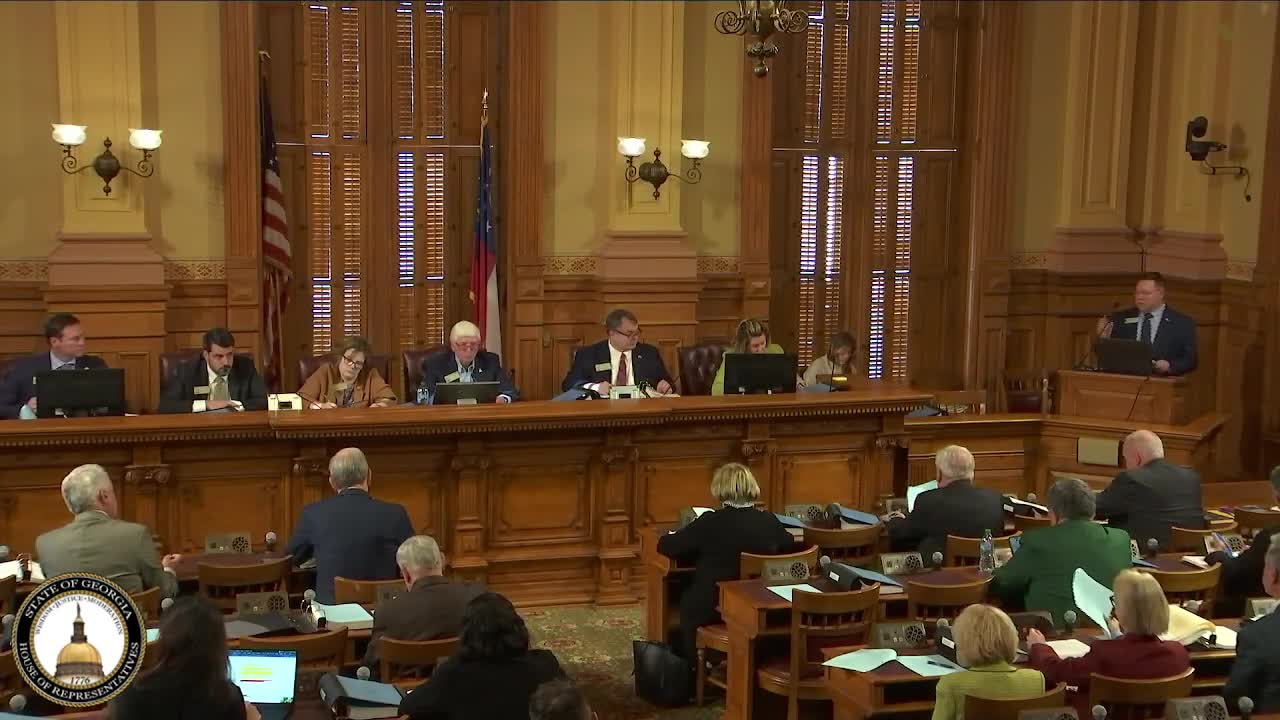
Contentious debate over HB 267, the ‘Riley Gaines Act,’ and its effects on hate‑crimes code
Summary
The committee discussed House Bill 267, titled the Riley Gaines Act, which would replace the word “gender” in code with a defined statutory term and restrict access to certain female‑designated athletic spaces; members questioned whether the changes would unintentionally narrow hate‑crimes protections for transgender victims.
The author presented House Bill 267, the Riley Gaines Act, saying it would codify a Georgia High School Association rule and a recent executive order, protect female athletes’ changing spaces and teams, and replace the word “gender” in code with a defined statutory term.
“We're actually defining [sex] in the bill,” the author said, explaining the measure would make references throughout Georgia code consistent. The author said the change would improve clarity and believed it would not weaken hate‑crimes enforcement; “we don't believe that it does impact the hate crimes legislation,” the author said.
Multiple lawmakers and a former prosecutor pressed the author on whether the bill’s replacement of the term would undercut prosecutions of hate crimes against transgender people. One committee member said he had a letter from legislative counsel suggesting the change could affect the hate‑crimes statute. The author said he had not seen such an opinion and that legislative counsel typically weighs in on format rather than substantive legal effects.
A former prosecutor who said he has prosecuted crimes against transgender victims argued that attacks are carried out “because they are transgender,” and warned that removing “gender” from the hate‑crimes statute could leave transgender people less protected. The author responded he did not intend to weaken hate‑crime prosecutions and argued that defined statutory terms would reduce ambiguity.
Other lawmakers asked whether the bill’s changes were limited to athletics; the author said the bill replaces the term across Georgia code and affects about 45 code sections in the proposal. The author said committee discussion had considered consistency in statutory language and that some committee members had asked for input from prosecutors, but no prosecutor testimony was in the subcommittee or full committee hearing according to the author.
The excerpt ends after discussion; the transcript does not show a committee vote on HB 267 within the provided segment.