Get Full Government Meeting Transcripts, Videos, & Alerts Forever!
Get email alerts on the Higher Education Financial Aid topic
No spam. Unsubscribe anytime.
Senate committee advances bill to expand tuition-equalization grants to additional private four‑year colleges
Summary
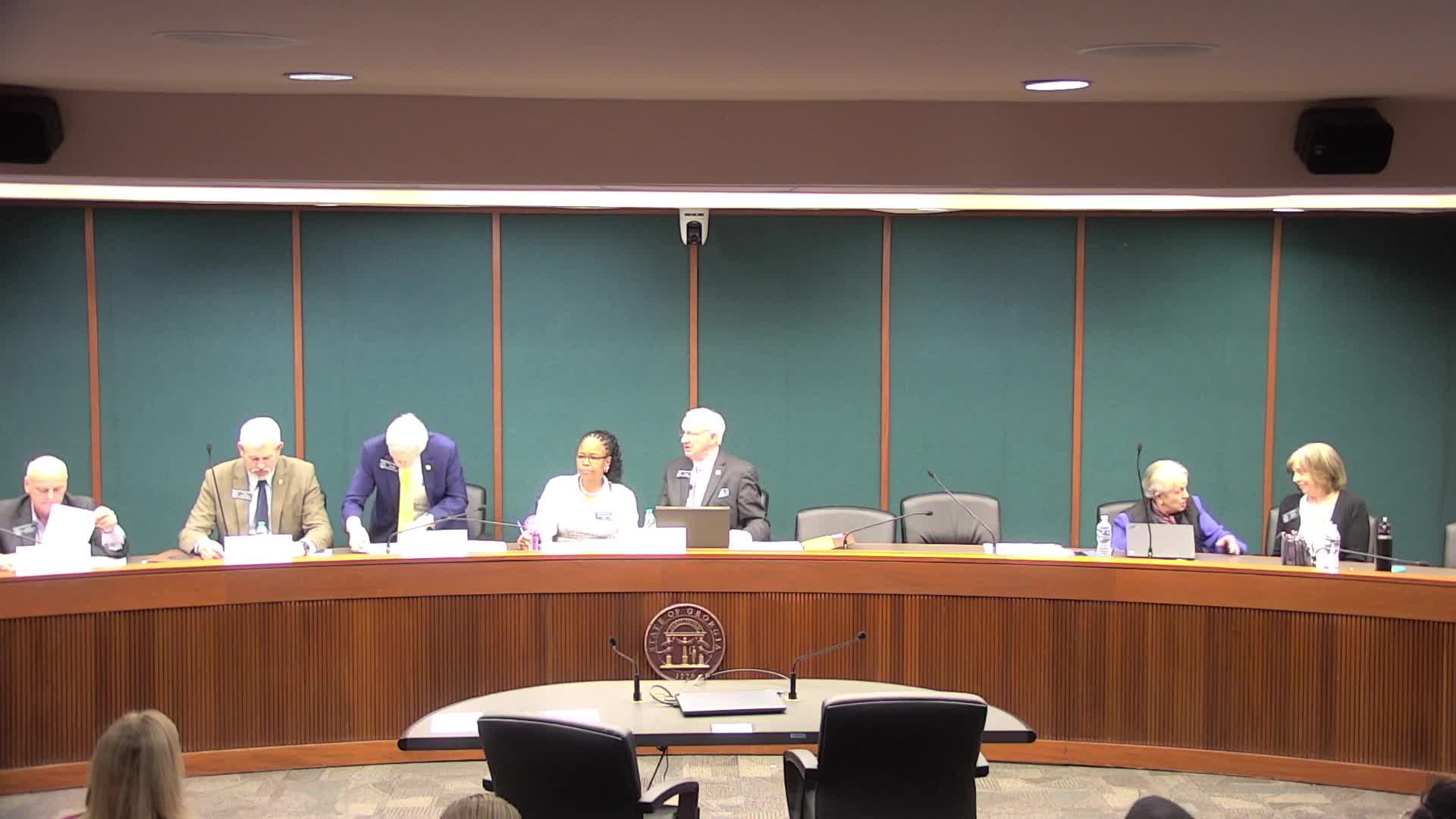
Senators on the Georgia Senate Higher Education Committee voted to pass Senate Bill 149 (LC 492116), which would change eligibility for the Georgia Tuition Equalization Grant program to allow students at certain newly qualifying private four‑year colleges to participate.
Senators on the Georgia Senate Higher Education Committee voted to pass Senate Bill 149 (LC 492116), which would change eligibility for the Georgia Tuition Equalization Grant program to allow students at certain newly qualifying private four‑year colleges to participate.
The bill would add a Southern Association of Colleges and Schools Commission on Colleges (SACSCOC) Level VI accreditation requirement for newly eligible institutions and permit additional four‑year private institutions to receive grant aid under the Georgia Tuition Equalization Grant (GTEG) program. "As Georgia grows, it only makes sense that we support quality educational options for our best and brightest here at home," Senator Hickman said while presenting the measure.
The GTEG program, created in 1971, is a non‑needs‑based scholarship that currently provides $550 per semester or $367 per quarter, and the bill’s supporters said the current appropriation recommended by the governor for FY 2026 would accommodate the change. Lynn Riley of the Georgia Student Finance Commission told the committee the commission’s fiscal review indicates the proposal could allow more than 1,700 additional students to participate in GTEG-related programs, including completion and dual‑enrollment grants.
Committee members asked whether the Level VI SACSCOC accreditation requirement is new and whether it would affect current recipients. Senator Hickman and Riley said the Level VI language is being added for the new classification and that it would not remove current TEG recipients from eligibility because, to their knowledge, no currently eligible private for‑profit institution holds a SACS Level VI classification.
There was no public testimony in opposition. Senator Beach moved the committee to give the bill a "do pass" recommendation; Senator Hufstedler seconded. The committee recorded five votes in favor and one opposed (Senator Moore). The motion carried.
If enacted as written, the bill would retain existing institutional eligibility standards while allowing specific newly qualifying four‑year private institutions to participate, subject to the SACSCOC Level VI accreditation requirement and available appropriations.
Votes at a glance: Senate Bill 149 (LC 492116) — Committee motion: do pass; mover: Senator Beach; second: Senator Hufstedler; committee tally: yes 5, no 1 (Senator Moore); outcome: approved by committee.