Get Full Government Meeting Transcripts, Videos, & Alerts Forever!
Get email alerts on the Veterans Benefits Administration topic
No spam. Unsubscribe anytime.
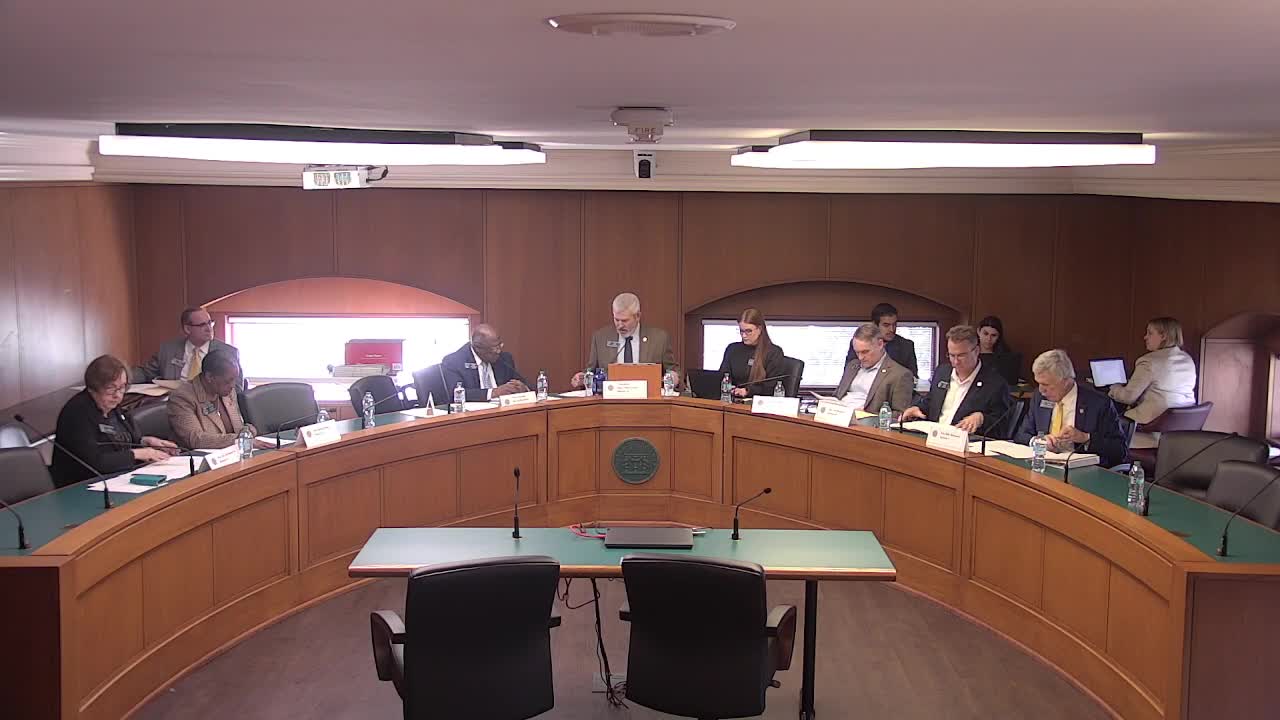
Committee hearing on SB73 examines regulation of paid VA-claims companies; no committee vote
Summary
Senate Bill 73, presented in committee as the "Safeguarding American Veteran Empowerment Act," drew extensive testimony on whether Georgia should regulate paid private firms that help veterans file or pursue Department of Veterans Affairs (VA) disability claims. The committee did not vote on the measure and the chair said he would return the bill for further work.
Senate Bill 73, presented in committee as the "Safeguarding American Veteran Empowerment Act," drew extensive testimony on whether Georgia should regulate paid private firms that help veterans file or pursue Department of Veterans Affairs (VA) disability claims. The committee did not vote on the measure and the chair said he would return the bill for further work.
The bill’s sponsor described the proposal as a mix of consumer protections and preserved choice for veterans. Benjamin L. Tipton, a retired Army major and special projects officer with Veterans Guardian VA Claim Consulting, told the committee, "We have a 90 percent success rate" and that his firm averages "85 days for a veteran to receive a decision," and detailed the industry practice he said the bill would codify (no upfront fees, contingency fees tied to increases, HIPAA-compliant handling of data). He said Veterans Guardian has assisted "over 4,370 veterans in Georgia in the last 7 years" and estimated an annual federal economic impact to Georgia of about "$34,000,000."
Why it matters: The bill would touch how veterans obtain assistance after military service — a moment many veterans and witnesses described as a time of high need. Supporters said private firms fill gaps left by understaffed veteran service organizations (VSOs) and slow VA processing; opponents warned the state could enable predatory practices and run afoul of federal accreditation rules.
Committee testimony split along familiar lines. Witnesses in favor included Ashley Berry, senior vice president of communications for the National Association for Veterans Rights, who said Georgia has "more than 673,000 veterans, yet there are only 145 VSO representatives" and urged protections that preserve veterans’ choice and add transparency. Several veterans described personal hardship and credited paid firms with producing faster results after years of unsuccessful appeals; Chris Fagan said Veterans Guardian took him "from 50% to 90%" after years of attempts and that the help prevented the loss of his home.
Opposition came primarily from accredited VSOs and their representatives. Charles Dobbins, state adjutant for the Veterans of Foreign Wars in Georgia, said the VFW "stands against this bill" and argued many of the companies the bill would permit are already out of step with Title 38 federal rules; he warned that the state should not "allow it to get started in the first place." Mark Demers, chief development officer at the Georgia Department of Veterans Service and an accredited representative, outlined the VA accreditation categories (VSOs, lawyers, claims agents) and emphasized that accreditation is individual-based. He said accredited representatives generally handle claims free through VSOs and that the VA’s fee system for paid representation is typically limited to back-pay appeals.
Key contested points raised in committee
- Fee structure: The bill would permit contingency fees capped by an industry-standard formula that witnesses described as "five times a veteran’s monthly increase" (example given repeatedly by witnesses). Supporters said that formula is industry practice and often amounts to a single one-time fee (for example, a $500 monthly increase multiplied by five equals a $2,500 one-time fee); opponents countered that the same formula can generate much larger sums in higher-rated cases and compared it to the VA-regulated fee schedules for attorneys and accredited claims agents (commonly described in testimony as 20% of awarded back pay for attorneys/agents).
- Accreditation and federal law: Several witnesses said current VA rules do not permit private firms to be accredited as a firm; accreditation is conferred to individuals under Title 38. Benjamin Tipton described ongoing federal lobbying to change that rule; opponents and Department of Veterans Service staff warned the state cannot override federal accreditation law and that this bill could create conflicts with Title 38.
- Presumptive-period and timing: Witnesses explained a 365-day presumptive window after separation during which service connection is easier to establish; the bill would prohibit companies from charging for assistance during that first year unless a veteran signs a waiver acknowledging the circumstances. Testimony emphasized that filing timing affects effective dates and potential back pay amounts.
Committee action and next steps
After several hours of testimony and questioning, committee leadership decided not to take action on SB73 at this meeting. The chair stated that committee members would "sit down and go through it and see what we can do going forward and then maybe bring it back at a later time." The record shows extensive direction to staff and senators to continue negotiations and to coordinate with federal representatives working on accreditation and penalty provisions.
Context and background
Supporters framed SB73 as consumer-protection legislation that would ban upfront fees, require contingency fees, prohibit deceptive solicitation, mandate HIPAA-compliant data handling, require written disclosure that free VSO options exist, and direct fines for violations to the Georgia Department of Veterans Service. Opponents questioned whether state-level rules can or should license a business model that federal rules currently treat differently, and warned of the potential for exploitation of veterans who lack resources or knowledge.
The committee record includes multiple personal accounts describing long delays, complicated appeals, and veterans who said paid assistance was their last viable option. Several witnesses asked the legislature to couple any authorization with explicit accreditation or minimum-qualified-personnel requirements.
Ending: The chair declined to move the bill to a committee vote at this session and asked parties to continue work on compromise language and federal coordination before returning the measure to committee.