Get Full Government Meeting Transcripts, Videos, & Alerts Forever!
Get email alerts on the Education Scholarships topic
No spam. Unsubscribe anytime.
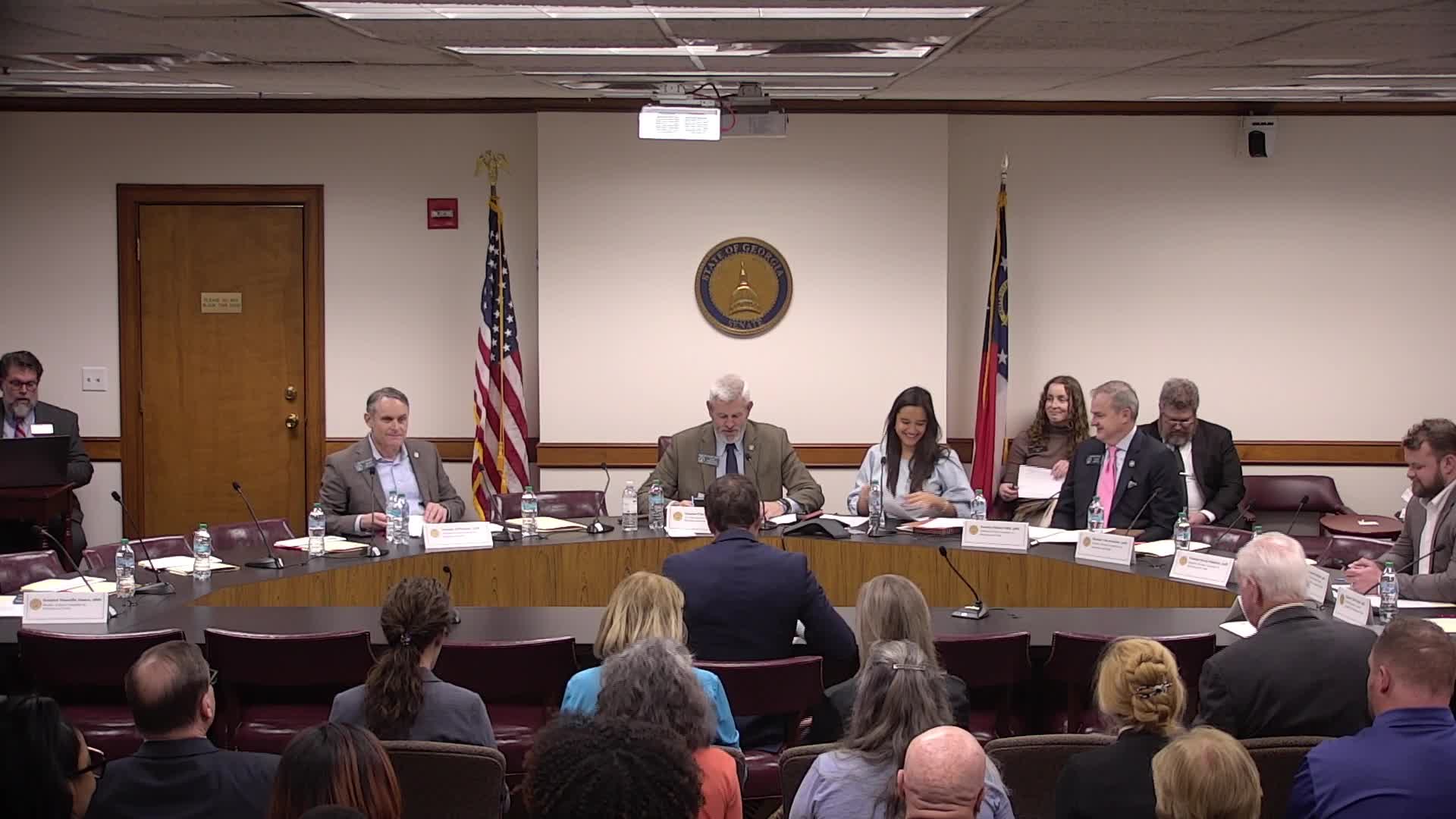
Senate committee advances bill to expand Georgia Promise scholarship eligibility to foster parents’ biological and adopted children
Summary
The Senate Education and Youth Committee voted to advance a bill that would let biological and adopted children of families who fostered within the last 10 years receive priority for the Georgia Promise Scholarship; foster children themselves remain excluded under the legislation.
Senate members advanced Senate Bill 152 on a committee substitute after a roughly 30-minute discussion that centered on expanding eligibility for the Georgia Promise Scholarship to biological and adopted children of families who have served as foster parents within the last 10 years.
The bill’s sponsor, Senator Dolezal, told the committee SB 152 "rewards those families who have taken care of the most vulnerable children, in the state of Georgia" by creating "preferred positioning in the Georgia Promise Scholarship program." He said the measure exempts certain existing eligibility conditions—such as residency in a bottom-25% attendance zone for some applicants—but retains requirements that recipients be Georgia residents for at least one year and meet legal-status rules tied to the HOPE scholarship. The legislation also bars simultaneous receipt of other state-funded scholarships such as the Georgia special needs scholarship or the GOAL scholarship and requires parents to sign the program agreement.
Committee members questioned whether the bill should include children placed in foster care. Senator Hatchett, among others, said the bill does not move foster children to the front of the line because the scholarship functions as an education savings account (ESA) that requires parents to apply for reimbursements and manage approved expenses; committee discussion stressed the temporary and often unstable placements that characterize foster care as the main reason foster children were not included. Senator Dolezal said adopted children of foster parents and biological children would be eligible, but foster children themselves are not moved ahead under this bill.
Public commenters included Robert Aycock of the Professional Association of Georgia Educators, who asked committee members to allow the existing program to be fully implemented before reopening eligibility and suggested additional transparency requirements for participating private schools. Two foster parents, Whitney Booth and Lila Womack, described long-term fostering and adoptions in their families and told the committee that access to private or hybrid schooling through a Georgia Promise Scholarship would ease substantial financial burdens and better meet trauma-related educational needs. Booth told senators her family placed a now-adopted daughter in private school after public-school supports proved insufficient: "There are no fall of her own. It affects how she is successful in social settings, particularly in school settings," she said, describing repeated anxiety and emergency care needs that led her to change settings.
Committee members also discussed program mechanics: the scholarship is capped at 1% of the state QBE allotment; the governor’s budget included $120,000,000 for the upcoming period and a 10-year sunset was mentioned in committee discussion. The bill’s sponsor said the addition would not expand the overall number of scholarships beyond the current cap; if the program is oversubscribed, eligible children added by the bill would receive priority in lieu of other applicants.
After discussion the committee approved the committee substitute for SB 152 (LC492264S). The motion carried after a roll-call-style hand vote recorded by the chair; five members raised hands in favor, five opposed, and the chairman cast the deciding affirmative vote, moving the bill out of committee.
The bill now proceeds to further consideration by the Senate. The committee recorded no formal amendment to change the exclusion of foster children; several senators said they wished to work on language to address that population but did not offer an amendment during the hearing.