Get Full Government Meeting Transcripts, Videos, & Alerts Forever!
Get email alerts on the Restaurant Industry Challenges topic
No spam. Unsubscribe anytime.
Georgia Restaurant Association briefs committee on workforce, rising costs and regulatory inconsistency
Summary
The Georgia Restaurant Association and restaurant operators described staffing, insurance and permitting challenges facing restaurants across Georgia and urged lawmakers to consider targeted changes to reduce costs and regulatory inconsistency.
ATLANTA — The Georgia Restaurant Association presented to the House Small Business Development Committee on Oct. 12, outlining the industry’s size and a set of operational challenges including rising food and insurance costs, inconsistent local inspections and permitting delays.
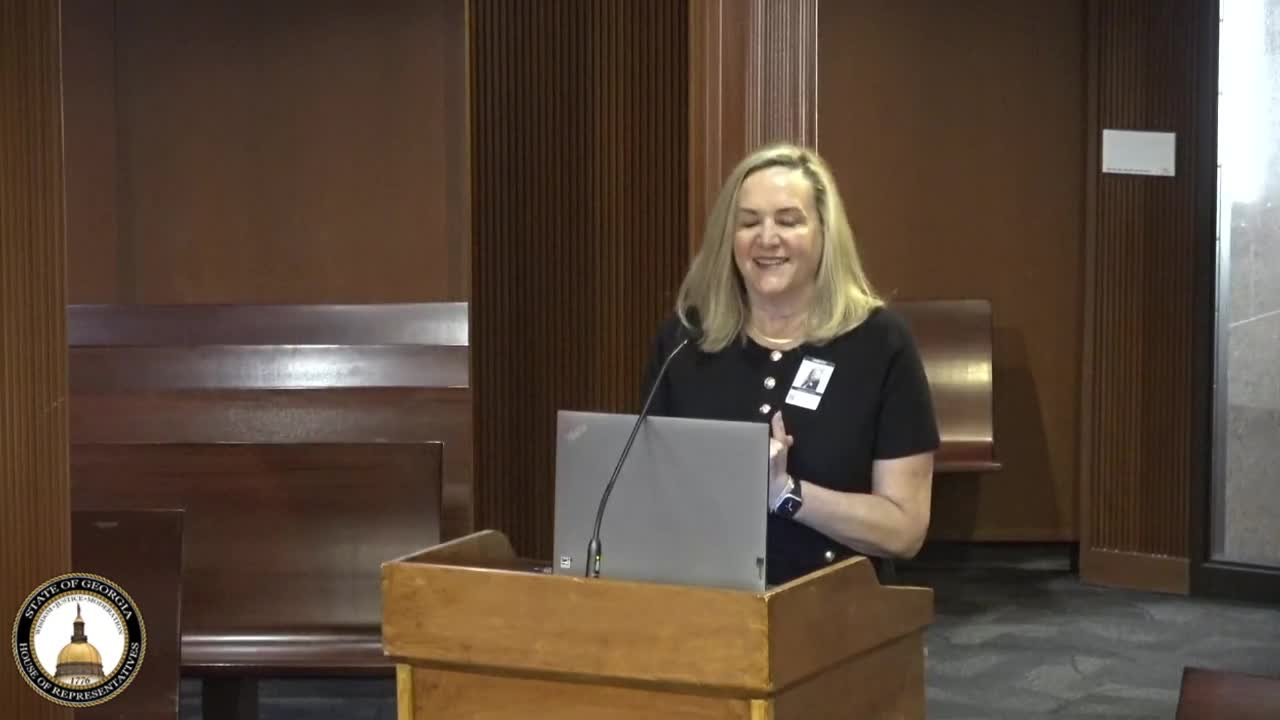
Stephanie Fisher, president and CEO of the Georgia Restaurant Association, told committee members the state had about 23,000 restaurants in 2023 and employed roughly 500,000 people, with 70% of restaurants classified as small independents. "As most of you know, the Georgia Restaurant Association serves as the voice of Georgia restaurants in advocacy, education, and awareness," Fisher said.
Operators described concrete costs and regulatory problems. Joseph Shaw of H Restaurant Group said food-price volatility is acute: "A 30 dozen eggs . . . will cost you about $250," he said, and noted suppliers warn of tariff-driven price changes. A Legacy Restaurant Partners executive described experience growing from a small to a regional operator and emphasized workers' compensation and insurance costs as significant burdens; she said accidents happen and that restaurants must navigate benefit rules and claim procedures.
Restaurant speakers also described inconsistent health-department and permitting inspections across jurisdictions. Shaw described a permitting episode in which an inspector’s calculation led to a $150,000 change-order for a grease trap that later proved unnecessary; other operators said differing interpretations by local inspectors create unpredictable costs and delays for new and expanding restaurants.
Committee members and presenters discussed potential next steps, including legislative study or targeted fixes at the state level to address inconsistent enforcement and regulatory barriers. Committee leadership encouraged the association to propose specific legislative remedies and to work with local representatives on problem cases where state officials can intervene.
The committee chair said members would welcome concrete proposals and acknowledged the committee’s interest in measures that might ease administrative burdens on small restaurant employers. The meeting ended after questions and a short adjournment.
The restaurant presentation followed a lengthy hearing on House Bill 250 (PEO legislation); committee leadership paused HB 250 for additional stakeholder discussion and then heard the association’s annual presentation.