Get Full Government Meeting Transcripts, Videos, & Alerts Forever!
Get email alerts on the Federal Funds Oversight topic
No spam. Unsubscribe anytime.
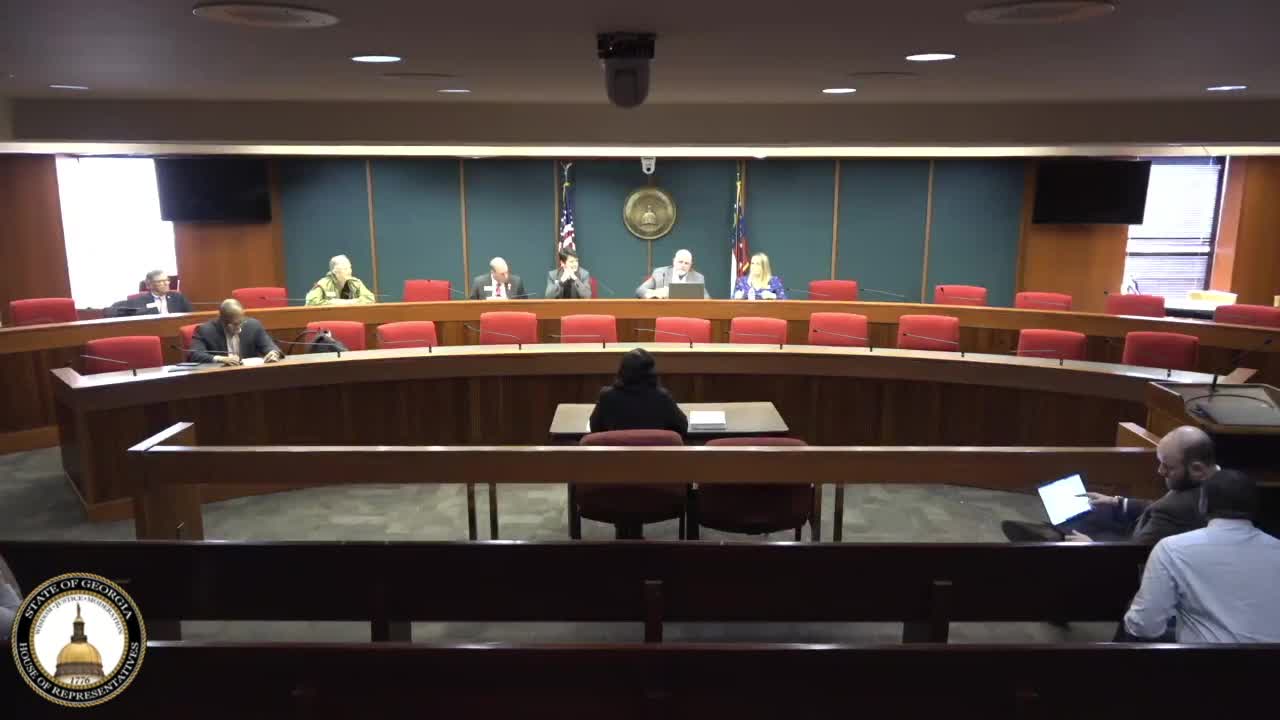
Georgia lawmakers hear proposal to create special committee to review federal funds
Summary
Legislators discussed House Resolution 257, which would create a temporary special committee to inventory and review federal funds routed through the state, raise questions about subpoena power and scope, and reference a state audit item noting $3,000,000 misstated.
Madam Leader (legislator) presented House Resolution 257 at a committee hearing, saying the measure “simply allows for the creation of a special committee on oversight of federal funds” that would inventory federal funds coming to Georgia and review how they are managed.
The resolution, as described in the hearing, would authorize a special committee with a chair appointed by the speaker, four members appointed by the majority leader and four members appointed by the minority leader; allow the committee to work for five days; and set a sunset date of Dec. 15, 2026. “It will allow us to get a list of the federal funds, their amount, their purpose, and the source of those funds,” Madam Leader said. She also said the group could review funds that were available but not accepted by the state to identify “missed opportunities.”
Why it matters: supporters and several committee members said the review could increase transparency about how federal money reaches and is spent in Georgia, and whether funds routed through the state produce intended outcomes. At the hearing lawmakers cited recent large federal programs — including COVID-era assistance, Clean Water Act grants and Perkins career-education funds — as examples of funding streams whose paths and results the committee might examine.
Committee scope and mechanics dominated the discussion. Several members asked why the bill would require review of the prior three years of federal funding; one member asked, “Why did y'all request the prior 3 years? Because, again, we just had COVID,” and urged including those years to capture pandemic-era dollars. Madam Leader said the three-year window was a manageable starting point given the committee’s five-day limit and that the committee could recommend broader study if needed.
Members also debated whether the standing committee could conduct the same work. Madam Leader said that while a standing committee chair has broad authority, the resolution would establish a short-term, focused study group and that the full committee could later decide whether it needed to continue the work.
Legal authority and subpoena power were raised repeatedly. The chair (Committee Chair) recalled a recent opinion about legislative subpoena authority and cited a code reference as read in the hearing; Madam Leader noted the statute language and said she was relying on legislative counsel’s guidance. Several members cautioned that enforceability of subpoenas and the committee’s legal reach would be subject to further review.
The bill’s sponsors pointed committee members to an existing state audit during the hearing as the basis for further inquiry. “It is on page 25 of, section b 7 of this document,” Madam Leader said, referring to the audit that the group was asked to review; she said the audit contains an item noting about $3,000,000 that was “misstated.”
Transparency questions surfaced: one member asked whether any committee report and the underlying data would be public; Madam Leader stated, “Well, anytime a committee does a report, it's it's made available to to the public.” Several members urged the committee to consider performance and outcome measures — not just dollar accounting — to determine whether federal funds achieve policy goals.
Members also clarified the bill’s intended scope: the resolution would target federal monies that come to the state and are routed through state agencies, not necessarily grants that go directly from federal agencies to local governments or school systems. In response to an example about Perkins funds for career and technical education, Madam Leader said numerous federal programs are already overseen at several levels and that the special committee would have to narrow focus given the limited time authorized.
No formal vote was recorded at the hearing. The chair closed the session after discussion and indicated the committee would hold further hearings to vet the proposal, saying the item “won't be up to us” until it moves through the legislative process and that the committee would continue the conversation.
Next steps: the resolution remains under committee consideration; supporters asked colleagues to review the cited audit and to advise whether the study should proceed as a temporary, five-day committee or be handled by an existing standing committee.