Get Full Government Meeting Transcripts, Videos, & Alerts Forever!
Get email alerts on the Law Enforcement Accountability topic
No spam. Unsubscribe anytime.
Bill to standardize peace-officer oaths draws questions about accountability and criminal thresholds
Summary
House Bill 384 would standardize the oath for peace officers and limit criminal prosecutions under the ‘‘violation of oath’’ statute to specified statutory oaths; proponents said the change prevents misdemeanor-based felony prosecutions of officers, while some judges and members expressed concern about lowering standards.
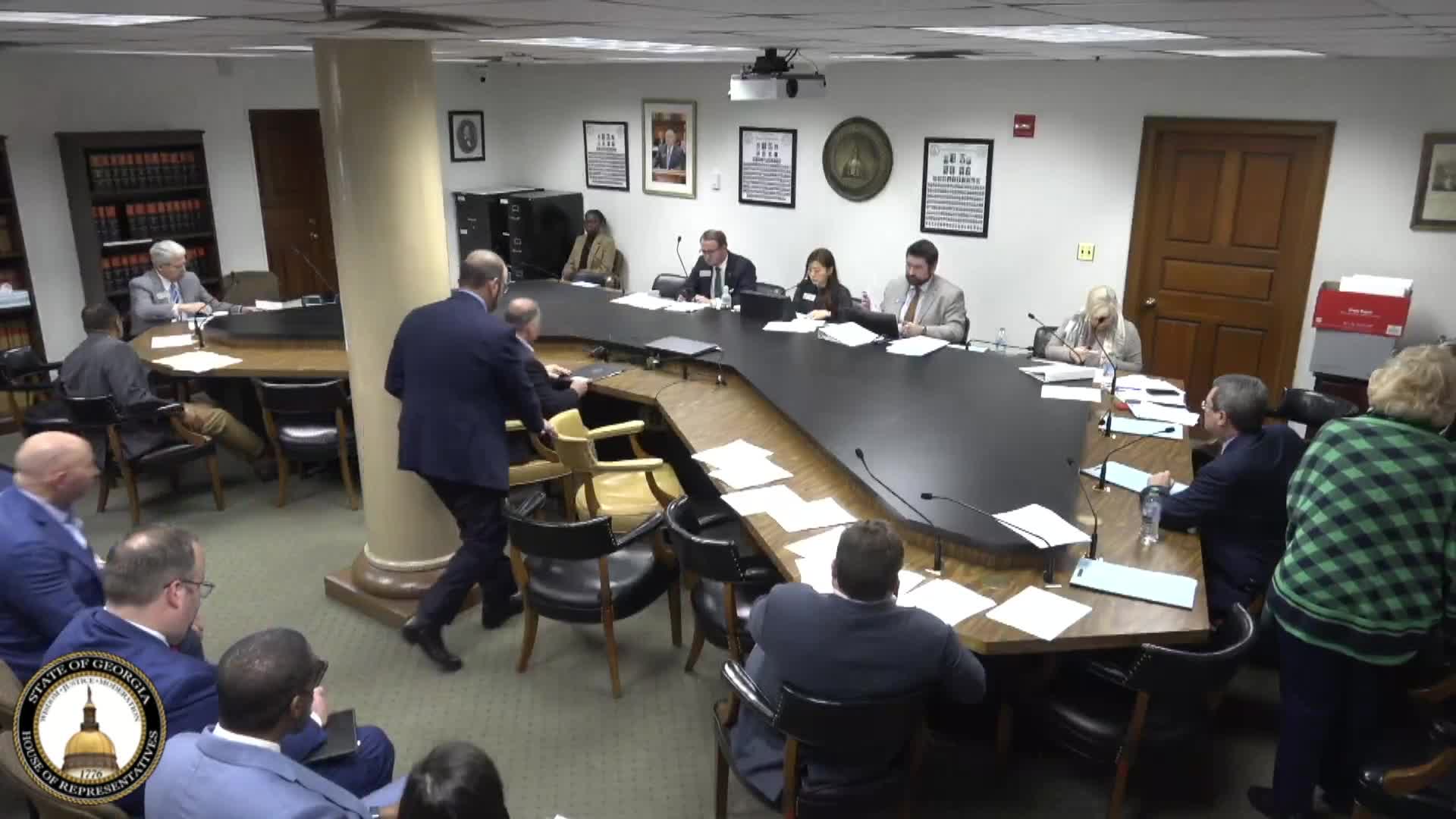
Representative Seebaugh presented House Bill 384 (LC560283), proposing a uniform oath for all Georgia peace officers and limiting criminal prosecutions under the state's violation-of-oath statute to only those oaths explicitly prescribed by state law. The sponsor said the measure would treat aspirational agency oaths as non-criminal and would prevent prosecutors from converting noncriminal policy violations into felony violations of oath.
Lance Russo, general counsel for the Fraternal Order of Police, and Mike Callahan, president of the Georgia Fraternal Order of Police, testified in support. Callahan said the bill "seeks to protect officers from making a mistake, a misdemeanor violation, and having a DA or district attorney turning that into a felony." He emphasized that officers remain subject to agency discipline and post-certification actions.
Committee members probed implications for discipline and public trust. Judge Gunner asked whether the change limits disciplinary options when officers commit misdemeanors; witnesses explained that POST (the Georgia Peace Officer Standards and Training body) can still suspend or revoke certification for crimes that involve breach of the public trust. Representative Conner and others voiced concern that officers should be held to a higher standard; opponents in the discussion argued the bill simply prevents elevation of ordinary misdemeanors to felonies solely because of an officer's public role.
The committee kept the bill as a hearing only; no vote was recorded at this meeting.
Why it matters: The proposal touches on officer accountability, agency discipline and prosecutorial discretion. Supporters say it reduces unfair felony exposure for technical policy violations; critics warn it could weaken criminal accountability for some officer misconduct. The committee did not advance the bill at this hearing.