Get Full Government Meeting Transcripts, Videos, & Alerts Forever!
Get email alerts on the Child Protection topic
No spam. Unsubscribe anytime.
Committee hears bill to make traveling across state lines to meet a minor for indecent purposes a felony
Summary
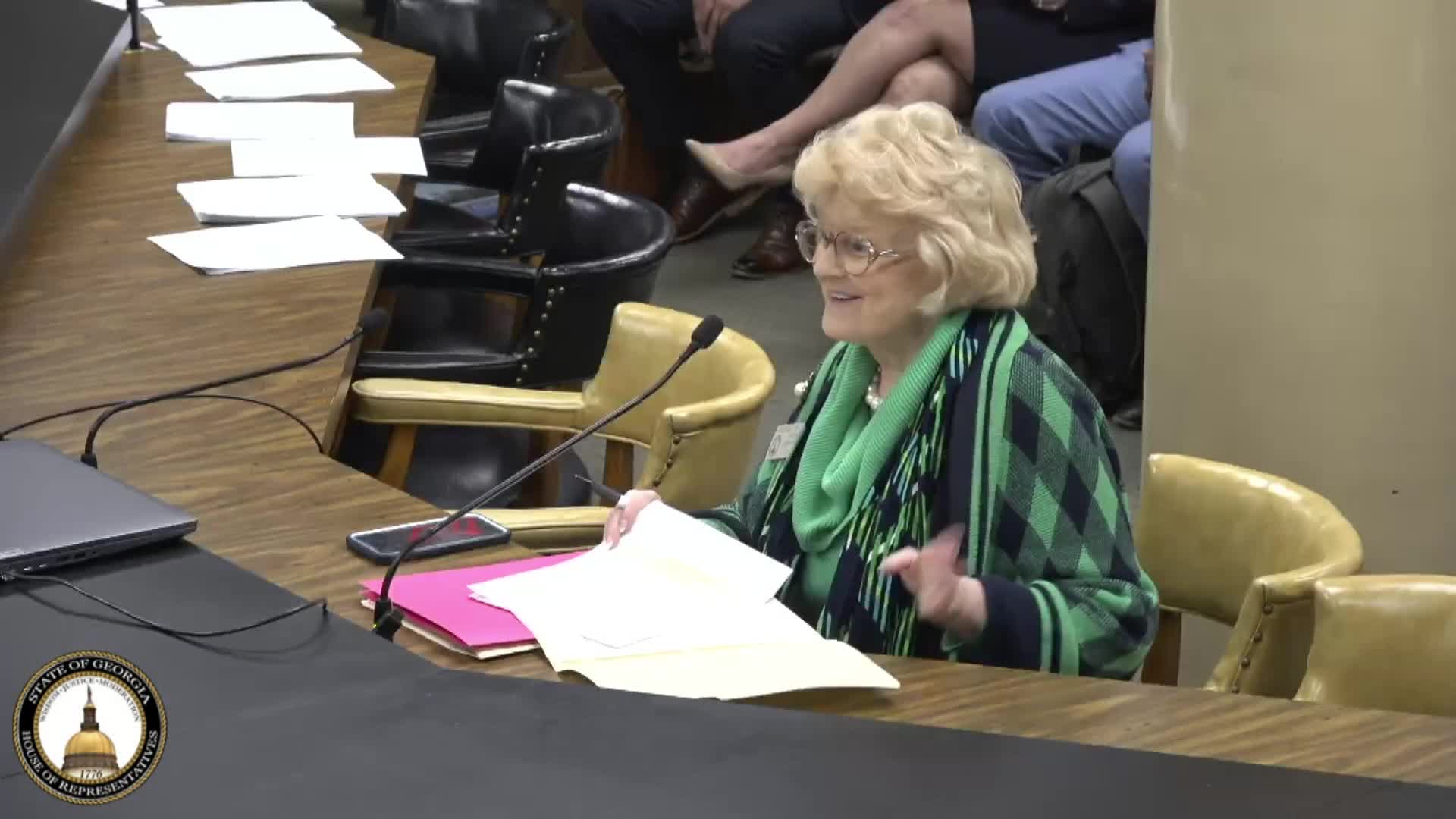
Representative Taylor presented a bill to criminalize out-of-state travel to meet a minor for indecent purposes; prosecutors and defense attorneys told the committee existing statutes may already cover the conduct and urged the committee to review the specific case that motivated the bill.
Representative Taylor introduced House Bill 421 (LC1448), describing a Thomasville incident in which a minor was allegedly targeted online by someone from another state. Taylor said the local judge dismissed that prosecution because, in the judge's view, there was no statute specifically addressing the conduct.
Taylor told the committee the bill would make it a felony to travel from another state to meet a child for indecent purposes or to solicit or entice a child for sexual activity. She said the measure is intended to protect children and mirrored language used in other states to deter out-of-state predators.
Several legal commentators urged caution. Criminal defense attorney Carlos Rodriguez told the committee statutes for attempt and electronic child-exploitation offenses already exist and may have covered the facts of the Thomasville case; he said "respectfully, there's no need for this bill to be passed" if current law already applies. District Attorney Herb Cranford and former sponsors said similar language had been worked last term and that local law enforcement supports a targeted statute, with the Coweta circuit district attorney calling the current version "way better than the last version."
Committee members asked staff to obtain records: Chair recommended obtaining the court pleadings in the Thomasville case to determine why the judge dismissed it and to compare existing statutes (including Code Section 16-6-5 and related attempt/enticing provisions) against the proposed language. The sponsor said the sheriff and local investigators had asked for the statute for many years.
The committee kept the matter a hearing only for further review; no vote was taken at this meeting.
Why it matters: The bill targets interstate travel to commit sexual offenses against minors. Committee discussion highlighted the need to confirm whether current Georgia criminal statutes already cover the described factual pattern before adding a new, overlapping felony.