Get Full Government Meeting Transcripts, Videos, & Alerts Forever!
Get email alerts on the Immigration Enforcement topic
No spam. Unsubscribe anytime.
Georgia committee hears bill to criminalize officials who harbor undocumented immigrants
Summary
House Bill 319, presented by Rep. David Clark, would require state and local officials to report or face criminal penalties for harboring, concealing or aiding undocumented immigrants; supporters said it enforces oaths of office while opponents warned it could chill essential services and discretion by local officials.
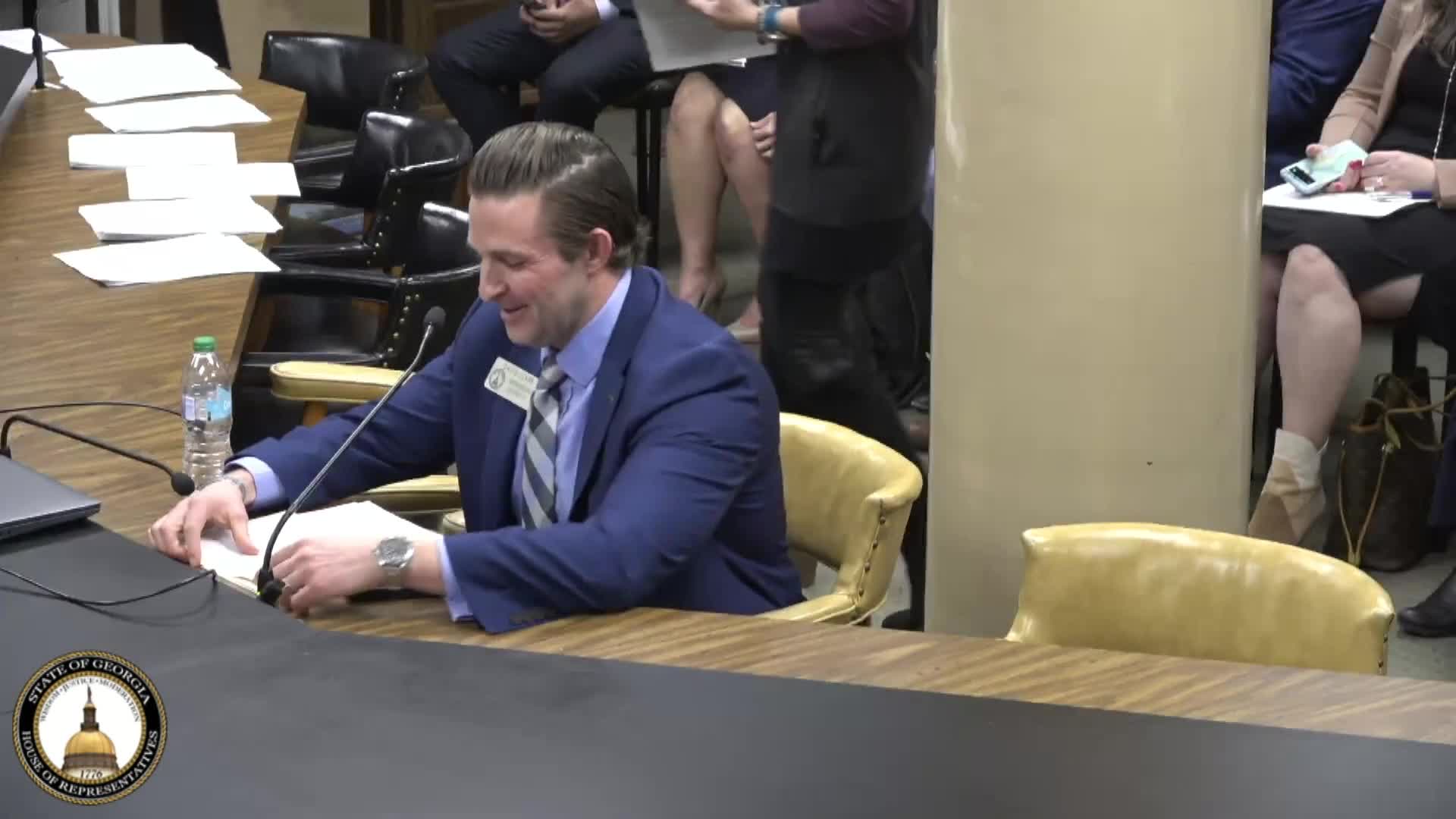
Representative David Clark introduced House Bill 319 (LC481513S) during the House Judiciary Committee hearing, saying the measure "creates a mandated reporting statute for all local and state government officials harboring, concealing, or aiding and abetting a criminal illegal alien." Clark told the committee the bill would allow Georgia prosecutors to charge officials who "harbor, conceal, or abet an illegal alien" and would authorize the governor to remove officials who violate the statute.
Clark framed the proposal as enforcing the oath to the state and federal constitutions, citing Georgia Code section 45-3-1. He said the bill includes exceptions for law enforcement, judicial officers, federal officers and people assisting an individual to appear at a governmental proceeding, and provides protections for application processes for nonimmigrant visas used for witnesses and confidential informants.
Jennifer Lee, policy director at a nonprofit legal advocacy group for Asian Americans and Pacific Islanders in Georgia, testified in opposition during public comment. Lee said local officials and employees often must exercise "individual discretion in what may be complex situations involving immigration enforcement or knowledge of someone's immigration status," and she warned the bill could create "undue fear of prosecution or litigation" that would strain community relations and interfere with delivery of public services such as schools, libraries and health programs. Lee also urged caution given instability in federal immigration programs that can change an individual's status over time.
Committee members asked legal and practical questions. Representative Panish asked whether abetting and accessory statutes already criminalize conduct the bill describes; Clark said the bill "is putting more teeth into it" and enables removal by the governor. Committee members also asked whether Georgia already defines "illegal alien" in state law; one committee member referred the group to a criminal definition in Georgia code section 16-11-202.
No vote was taken; the chair closed the hearing as "hearing only." The committee record shows no formal action at this meeting.
Why it matters: If enacted, the bill would change the legal risks for state and local personnel involved in day-to-day public services and could trigger litigation about the scope of exceptions and the meaning of statutory terms such as "harbor" and "illegal alien." The testimony raised competing policy goals: enforcing laws versus preserving officials' ability to deliver essential services without fear of criminal exposure.