Get Full Government Meeting Transcripts, Videos, & Alerts Forever!
Get email alerts on the Agricultural Practices topic
No spam. Unsubscribe anytime.
Committee designates portable sawmill operation an agricultural practice in HB413
Summary
The committee approved HB413 to add portable sawmills operating on agricultural land to the Official Code of Georgia’s definition of agricultural practices; sponsors said the change protects small farmers’ income streams and clarifies local regulatory limits.
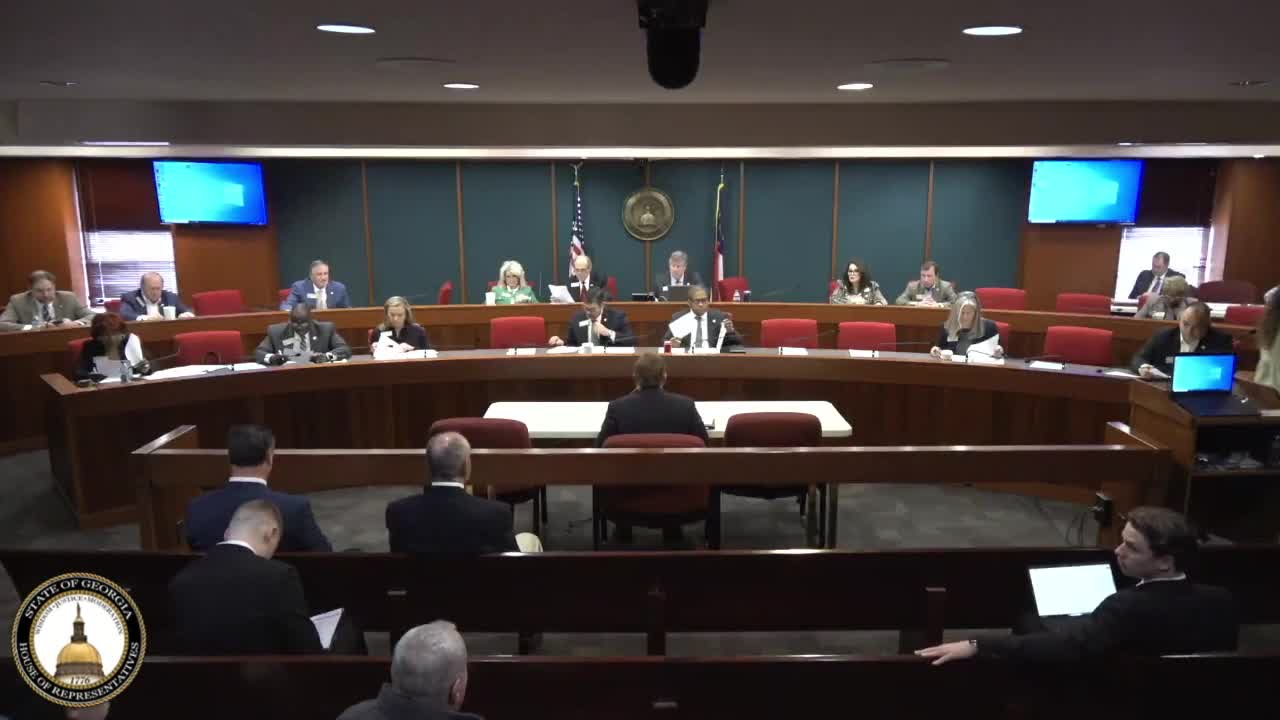
The House Agriculture and Consumer Affairs Committee on committee day voted to advance HB413, which amends Chapter 1, Title 2 of the Official Code of Georgia to designate portable (mobile) sawmills operating on agricultural land as an agricultural practice.
Sponsor Representative David Jenkins told the committee the bill clarifies that portable sawmills and the byproducts they generate are agricultural products and therefore not subject to local regulation of crop management or animal husbandry practices. Jenkins also emphasized that the bill does not affect local zoning authority: the statutory language explicitly preserves the power of local governments to adopt or enforce zoning ordinances.
Jenkins said much of the wood processed by portable sawmills comes from storm damage, clearing for construction, or other sources that would otherwise be discarded, burned, or landfilled. He described portable sawmill activity as a revenue stream many small farms rely on to remain economically viable.
A committee member asked whether waste from larger commercial mills would be treated the same; Jenkins and others said scale and developed supply chains make commercial operations materially different, and local outcomes for commercial mill byproducts vary (composting, power-plant fuel, etc.).
A motion to “do pass” HB413 was seconded and the committee approved the bill by voice vote. The transcript records the motion and verbal approval but does not include a roll-call vote.
The sponsor and committee framed the bill as protecting small farmers’ multiple income streams and recognizing portable sawmilling as part of agricultural practice; no formal opposition was recorded in the provided transcript.