Get Full Government Meeting Transcripts, Videos, & Alerts Forever!
Get email alerts on the Public University Foundations Transparency topic
No spam. Unsubscribe anytime.
Committee hears competing views on bill to apply public‑records law to public university foundations
Summary
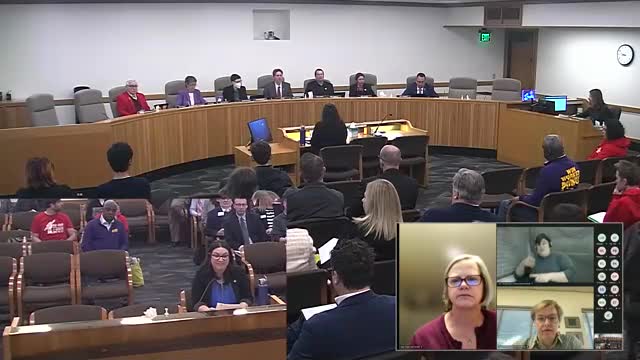
Supporters and foundation leaders offered competing testimony Feb. 25 before the House Higher Education and Workforce Development Committee on HB 3213, which would subject public university foundations to Oregon public‑records law.
SALEM, Ore. — Supporters and foundation leaders offered sharply different views Tuesday on House Bill 3213, the so‑called University Foundation Sunshine Act, which would bring public university foundations under Oregon public‑records laws.
Representative Bárbara (Bara) Chaitche (D–House District 35), the bill sponsor, said the measure would expand transparency by adding university foundations to the statutory definition of public bodies and requiring annual financial reporting, audits and disclosure of donor‑restricted terms and foundation contracts. “Shining a light on these conditions encourages open discussion on spending in the best interests of students, faculty, donors and the public,” she said.
Supporters’ case: Andrew Ducharme, a graduate student at the University of Oregon and ASUO senator, testified on behalf of education workers that foundations hold and disperse donated money “for the use of a public university” and that gift restrictions substantially shape university programs. He said many foundation activities are effectively intertwined with university operations — shared websites, shared offices, and subsidiaries that acquire and transfer property — and that, in his view, the public should be able to see gift letters and donor restrictions. Erica Thomas, chair of political action for PSU’s adjunct faculty union, cited research finding no demonstrated “chilling effect” on donations after public disclosure in other states and said transparent reporting can increase donor confidence.
Opponents’ case: Executives from several university foundations argued the bill would impose sizable administrative costs, risk donor privacy and deter giving. Kevin Harvey, chief financial officer of the Oregon State University Foundation, said foundations are private nonprofit corporations that already file IRS Form 990 and publish audited financial statements, and he warned the bill would require hiring public‑records staff and in‑house legal counsel. Katie Wilkie, vice president of advancement and executive director of the Western Oregon University Foundation, said many donors specifically request anonymity and that public disclosure of gifts or gift agreements could be a “deal breaker” for future donations. Ken Fincher of the Oregon Institute of Technology Foundation said the bill conflates government transparency expectations with private nonprofit operations and could have a “chilling effect” on giving, particularly in small or rural communities.
Points of detail and committee questions: Supporters pointed to estimates that foundations hold multi‑billion dollar endowments statewide and said roughly 93% of funds are donor‑restricted; the sponsor asked that the bill preserve protections for donor anonymity and allow confidentiality for fundraising and investment strategies. Committee members asked whether the bill would allow requesters to see individual scholarship recipients; Andrew Ducharme said the bill would require reporting of totals spent on scholarships but would not permit disclosure of individual student records. Representative Heather McDonald asked what would change if records simply confirmed that most funds are donor‑restricted; supporters said disclosure would prompt public discussion, improve shared governance and potentially broaden fundraising efforts by increasing trust.
Evidence cited and outside examples: Witnesses referenced other states (California, Washington, Nevada, Georgia, Virginia, Tennessee) and a study arguing that disclosure has not diminished fundraising at institutions cited in that research. Opposition witnesses stressed that existing nonprofit reporting and governance practices already provide accountability and that statutory treatment of private foundations as public bodies is unprecedented in Oregon.
What did not happen: The committee did not take a vote. Several witnesses on both sides asked for additional time; the chair ended the hearing at the scheduled adjournment and invited written testimony.
Next steps: The bill’s sponsor and proponents urged committee members to consider the measure as a tool to strengthen transparency and shared governance; foundation leaders urged lawmakers to weigh donor privacy and administrative impacts before changing the legal status of private nonprofit foundations.