Get Full Government Meeting Transcripts, Videos, & Alerts Forever!
Get email alerts on the Higher Education Behavioral Health topic
No spam. Unsubscribe anytime.
Committee hears support for HB 3129 to create higher education behavioral health workforce fund
Summary
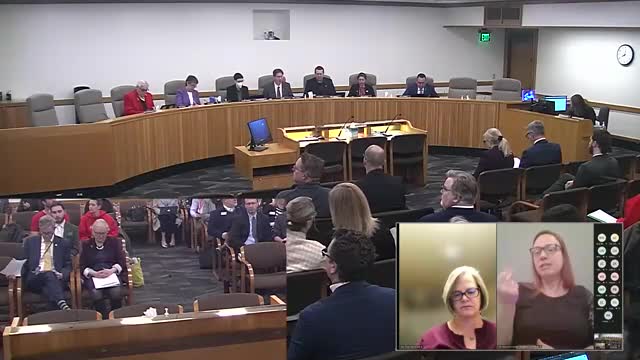
Supporters told the House Higher Education and Workforce Development Committee on Feb. 25 that House Bill 3129 would create a Higher Education Behavioral Health Workforce Expansion Fund to boost training, scholarships and faculty capacity at Oregon colleges and universities to address a statewide behavioral health provider shortage.
SALEM, Ore. — Lawmakers and higher education leaders told the House Committee on Higher Education and Workforce Development on Feb. 25 that House Bill 3129 would create a statewide fund to expand training and recruitment of behavioral health providers.
Sen. Deb Patterson (D–District 10) told the committee, “Oregon is in the midst of a behavioral health crisis,” and said a “major driver of this crisis is our severe provider shortage.” Representative Rob Nosse (D–House District 42), a bill sponsor, said many public institutions are at capacity and lack the faculty, classroom space and training sites to graduate more master’s‑level clinicians.
The bill, as described by sponsors and university representatives, would establish the Higher Education Behavioral Health Workforce Expansion Fund, to be administered by the Higher Education Coordinating Commission (HECC). Testimony said the fund would be available to public and private colleges and universities and community colleges for faculty and program capacity, scholarships and paid placements, and other supports to grow the behavioral health workforce.
Why it matters: Witnesses said Oregon’s shortage of trained behavioral health professionals has left patients with long waits or no care, especially in rural and underserved areas. Representatives of Southern Oregon University, Portland State University, Eastern Oregon University, George Fox University, Lewis & Clark College, and community colleges described local training programs and said additional, targeted funding would enable them to enroll and graduate more practitioners who are likely to remain in the communities where they trained.
Supporters and students gave details about program scale and needs. Dr. Alma Wencesuk Trinidad, interim associate dean at Portland State University’s School of Social Work, said the school “prepares over a thousand students to meet the state’s workforce needs,” and listed bachelor’s and graduate enrollments and a new online human services undergraduate program. Mark Overbeck, director of government relations at Southern Oregon University, said the bill’s sponsors plan amendments to align the measure with the governor’s priorities and to add accountability measures.
Funding and program design: Representative Nosse described the concept as “pretty straightforward,” and said institutions have requested about $7.9 million in the bill’s current form to support faculty, staff and scholarships. Several witnesses noted larger proposals from the governor: Dr. Robin Holmes Sullivan (president of Lewis & Clark College) referenced Governor Tina Kotek’s recommendation of a $25.7 million investment in behavioral health workforce development. Nosse recalled a prior, broader investment of $80 million in federal ARPA funds in 2021 that supported loan forgiveness and repayment programs.
Target populations and service commitments: Representative Mike Yonker asked whether the bill’s language that highlights culturally responsive services for specified groups would exclude others. Representative Nosse replied that the language is intended to “lift up” certain populations and not to exclude others. Representative Heather McDonald asked whether scholarships and stipends would include service commitments for graduates to work in high‑need public behavioral health settings; Mark Overbeck said forthcoming amendments will clarify that intention.
Student testimony: Multiple students described personal reasons for entering behavioral health and the effect of financial supports. Ernie (a student at the Ballmer Institute for Children’s Behavioral Health) urged support on behalf of children and families; Julissa Rios Chavez, a Portland State senior, urged funding for paid field placements, scholarships and instructor retention that she said reduce financial and academic barriers.
Community college role: John Wyckoff of the Oregon Community College Association described short‑term certificates, associate degrees and partnerships that place students into internships and said community colleges are essential access points for the behavioral health pipeline.
What did not happen: The committee did not vote on HB 3129 during the hearing; witnesses offered to submit amendments and additional data and the sponsors indicated they will return with clarifying language.
Next steps and outlook: Supporters said they will propose amendments to clarify accountability, service commitments and statutory alignment with HECC. Proponents urged funding to scale program capacity across geographies so graduates can provide care in underserved areas.
Ending note: Committee time for this bill concluded after multiple institutional and student testimonies; the committee chair invited additional written testimony from those who had not spoken.