Get Full Government Meeting Transcripts, Videos, & Alerts Forever!
Get email alerts on the Oregon Forward Program topic
No spam. Unsubscribe anytime.
DAS gives overview of Oregon Forward program for employing people with disabilities
Summary
The Department of Administrative Services (DAS) provided the committee a brief overview of the Oregon Forward program, which requires public agencies to purchase goods and services from qualified nonprofits that employ people with disabilities.
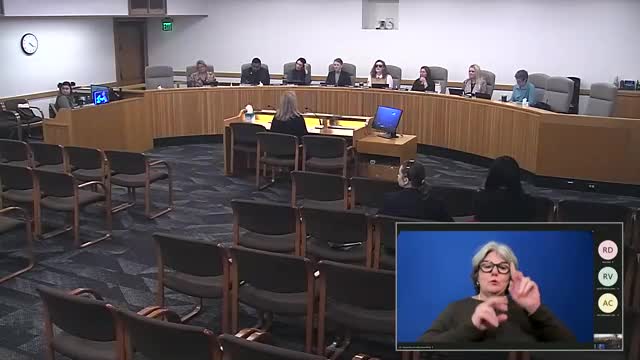
Debbie Dennis, chief administrative officer and deputy director at the Department of Administrative Services, gave a brief informational overview of the Oregon Forward program, a state program that requires public agencies to purchase products and services from qualified nonprofit organizations that employ people with disabilities.
Dennis summarized the program’s purpose and administration: Oregon Forward was established in 1977 to encourage employment and independence for individuals with disabilities; DAS certifies and maintains a list of qualified contractors and determines program suitability and cost-recovery pricing for goods and services. She said contractors must have at least 60% of direct labor performed by individuals with disabilities under the current standard (the rate was 75% prior to 2019, changed to 65% in 2019, and reduced to 60% in 2021).
Dennis provided program-scale figures: in 2024, Oregon Forward nonprofits employed nearly 2,000 individuals with disabilities and sales under Oregon Forward agreements totaled about $89 million; she said roughly 75% of those sales were with cities, counties and other local jurisdictions. Dennis described DAS responsibilities for successor contractors when an awarding agency replaces a provider: if an outgoing contractor employed affected employees at 28 hours or more per week, a successor contractor must offer wages and benefits equal to or better than those workers previously received and DAS makes the comparison and notification.
Committee members asked a clarifying question about the 60% threshold; Dennis confirmed the recent statutory change history and said DAS enforces the percentage and pricing rules. The committee said it will carry the topic forward for a more detailed informational session.