Get Full Government Meeting Transcripts, Videos, & Alerts Forever!
Get email alerts on the Prevailing Wage Off Site Fabrication topic
No spam. Unsubscribe anytime.
Prevailing-wage bill drawing wide testimony on off-site fabrication, enforcement and scope concerns
Summary
House Bill 26 88 would expand Oregon’s prevailing-wage rules to cover custom off-site fabrication and components made for public works. Proponents said the change protects workers and apprenticeships as fabrication moves off job sites; business groups and local governments warned of enforcement, interstate-commerce and supply-chain impacts.
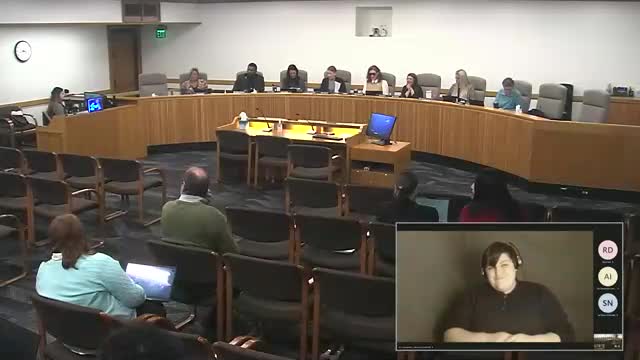
The House Committee on Labor and Workplace Standards held a lengthy public hearing on House Bill 26 88, which would expand the definition of public works for prevailing-wage purposes to include custom off-site fabrication, assembly or production of goods, modules, components, structures, supports or fixtures specifically made for a public works project.
Sponsor Zach Hudson told the committee HB 26 88 aims to preserve prevailing-wage protections as construction technology and off-site fabrication grow, ensuring that work moved off the job site remains covered. Scott Strickland of SMART Local 16 said the law is designed to secure economic benefits for workers and cited University of Oregon research his organization relies on, testifying that prevailing-wage law “creates 5,400 jobs, improves the state economy by $752,000,000 and generates $35,000,000 in state and local tax revenues every year,” and that states with prevailing-wage laws have higher apprenticeship participation and productivity measures.
Union and labor representatives argued off-site fabrication can reduce on-site hours for apprentices and skilled workers and that prevailing-wage coverage should follow the work when it is custom-made for a public project. Russ Benton of SMART Local 16 and Lauren Bowling of Ironworkers Local 29 said the bill is meant to prevent work-hour erosion and protect training opportunities as fabrication shifts off site.
Business groups, contractors and local-government associations opposed the bill as drafted, saying it is overly broad and would significantly complicate compliance. Kirsten Adams of the Associated General Contractors said the measure would impose substantial new administrative burdens on general contractors, who would have to ensure that manufacturers — potentially outside Oregon or the United States — comply with Oregon prevailing-wage requirements. Paloma Sparks of Oregon Business and Industry and Rich Angstrom of the Oregon Concrete Aggregate Producers Association gave detailed examples of manufacturing processes (batch plants, precast and pretensioning operations) where identifying a single “site of work” or tracking prevailing-wage hours would be difficult, and suggested the Bureau of Labor and Industries (BOLI) would face complex new survey and enforcement tasks.
Local-government and special-district witnesses said the bill could create procurement challenges and inventory complications. Mark Landauer of the Special Districts Association of Oregon and the Oregon Public Ports Association noted that district members sometimes inventory specialized components for emergency repairs; he said applying prevailing wage to such off-the-shelf parts after a statutory change could produce operational problems and legal uncertainty. Justin Lowe of the Association of Oregon Counties emphasized concerns for rural counties with limited vendor access and potential interstate-commerce implications.
A range of witnesses asked for clarifying amendments. Proponents signaled they would offer a dash-1 amendment to narrow scope to truly custom, project-specific fabrication (excluding catalog items) and to address enforcement and fiscal questions. Committee members asked proponents and opponents to work with BOLI and other stakeholders on precise language and fiscal effects. No committee vote was recorded during the hearing; the chair closed the public hearing and indicated amendments will be developed for future consideration.