Get Full Government Meeting Transcripts, Videos, & Alerts Forever!
Get email alerts on the Forced Labor Certification topic
No spam. Unsubscribe anytime.
Committee hears testimony on bill to require certification that public EVs and solar panels are free of forced or child labor
Summary
The House Committee on Labor and Workplace Standards heard public testimony on House Bill 2,425, which would require Oregon public bodies to obtain supplier certification that electric vehicles and solar photovoltaic systems they purchase were not produced using forced labor or oppressive child labor.
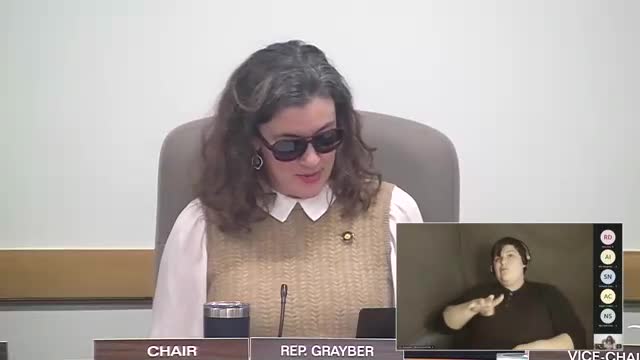
House Committee on Labor and Workplace Standards Chair Graber opened public testimony on House Bill 2,425, which would require public bodies that procure electric vehicles and solar photovoltaic systems to obtain certification from manufacturers, distributors or suppliers that production, assembly, transportation or sale of those materials did not involve forced labor or oppressive child labor.
Supporters told the committee the state’s green procurement and electrification mandates create demand that can drive labor abuses in global supply chains and that certification is a feasible step to avoid complicity. Representative Ed Deal (House District 17) said Oregon’s green mandates “create an artificial demand that is fueling labor abuses,” and described cobalt mining in the Democratic Republic of the Congo and polysilicon production linked to forced labor in China’s Xinjiang region.
The bill’s sponsor and proponents framed HB 2,425 as targeted to public procurement rather than a ban on electric vehicles. Nick Stark, executive director of Oregon Freedom Coalition, said HB 2,425 “does not ban electric vehicles. It simply ensures that Oregon does not procure EVs from manufacturers that cannot verify ethical supply chains.” Sal Nuzzo of Consumers Defense echoed that federal laws and enforcement are incomplete and called the bill a state-level accountability measure. Angela Crowley of the Oregon Solar and Storage Industries Association said the solar industry opposes forced and child labor and supports the intent of the bill but warned state-level certification could duplicate federal enforcement and add compliance complexity.
Committee members asked about which federal agencies or laws would be relevant and how verification would work. Several members noted existing federal tools including the Uyghur Forced Labor Prevention Act and U.S. Customs enforcement mechanisms; others raised concerns about which federal agency would handle certification and whether that capacity exists. Representative Scharf, who said she has experience with ISO traceability standards, asked whether the bill specifies which verification systems suppliers must use; Representative Deal said the bill requires suppliers to “certify and then provide probative evidence” but leaves technical standards open for follow-up with the Department of Administrative Services.
Proponents and committee members discussed tradeoffs between maintaining clean-energy mandates and ensuring ethical supply chains. Representative Deal argued certification is feasible and that, if suppliers cannot provide credible proof, Oregon should “pause and reassess our mandates.” Industry witnesses described national traceability work: the Solar Energy Industries Association (SEIA) has a traceability protocol and Customs and Border Protection enforces forced-labor import rules, which industry witnesses said could be coordinated with state requirements.
Committee members also pressed for data and noted federal actions. A member cited academic and industry analyses about mineral demand and supply constraints that underscore the scale of global sourcing challenges for electrification. No committee action on HB 2,425 was recorded during this session; the public hearing closed after several panelists had testified and committee members asked follow-ups.
Ending: Committee members asked proponents for written testimony and technical follow-up on traceability and enforcement. The committee closed the public hearing on HB 2,425 and moved to other agenda items.