Get Full Government Meeting Transcripts, Videos, & Alerts Forever!
Get email alerts on the Traffic Safety Criminal Law topic
No spam. Unsubscribe anytime.
Committee hears bill to increase penalties for fleeing police when conduct injures others or repeats
Summary
House Bill 3097 would raise the crime seriousness for felony fleeing or attempting to elude an officer when aggravating factors are present, including injury to others, a passenger under 18, property damage or prior convictions. Prosecutors, law enforcement and defense counsel gave opposing views at the public hearing.
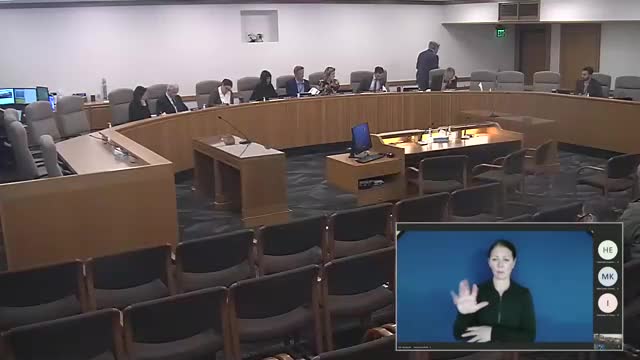
The House Judiciary Committee took testimony on House Bill 3097, which would increase criminal seriousness and create sentencing enhancements for fleeing or attempting to elude a police officer under ORS 811.54 when certain aggravating circumstances are present.
Representative Rick Lewis, sponsor of the bill, told the committee the measure would add "common-sense sentencing enhancements" for cases that involve aggravating circumstances such as a passenger under 18, resulting injury to another person, or prior convictions. "Fleeing or attempting to elude a police officer not only puts the suspect and the officer at risk, but everyone else on the road as well," Lewis said.
Mariel Moda, a prosecutor from the Multnomah County District Attorney's Office, described repeated elude offenders in local courts: she recounted a case where an individual was charged with felony elude 13 times across multiple counties but was never convicted on elude charges because prosecutors opted for other counts. "Out of every 4 people convicted of felony attempt to elude, 1 had been charged with another elude within 10 years of the first conviction," Moda said, highlighting the high recidivism she found in Multnomah County data and arguing that current law gives prosecutors limited tools to deter repeat offenders.
Law enforcement representatives supported the bill. A witness identified as Chief Krantz, testifying for the Oregon Association of Chiefs of Police and the Oregon State Sheriff's Association, said current law "does not differentiate based on the severity" of the conduct and urged amendments to classify repeated elude conduct as a higher crime category when there are prior convictions or serious injury.
Defense witnesses urged caution about expanding prison penalties. Zach Stern, a criminal defense attorney with the Oregon Criminal Defense Lawyers Association, agreed that high-speed dangerous driving is a serious public-safety problem but said existing statutes already allow for harsher punishments when additional harms occur. He told the committee: "We already have solutions that can be harsher in the appropriate circumstance...We're just adding on to additional punishments." Stern warned the bill could ratchet up incarceration without fixing prosecution or enforcement practices.
Committee members asked whether probation is the only available punishment under current law; witnesses said felony elude typically results in probationary dispositions but that more serious associated offenses can yield prison time. The committee closed the public hearing on House Bill 3097 without taking a vote and returned later to other bills on the agenda.
No committee votes were recorded at the hearing; proponents said they will work on narrowed amendments to address scope concerns and to align offense classification with the Criminal Justice Commission guidelines.