Get Full Government Meeting Transcripts, Videos, & Alerts Forever!
Get email alerts on the Landfill Methane Monitoring topic
No spam. Unsubscribe anytime.
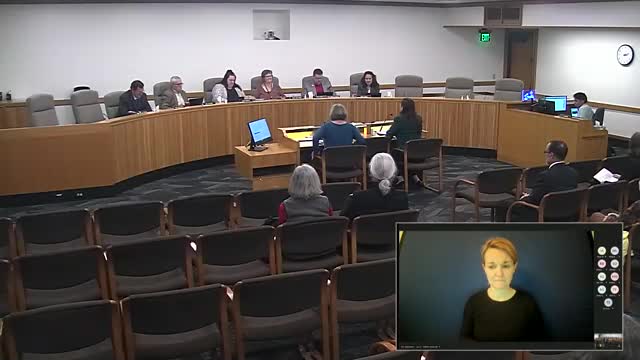
Committee hears testimony on SB 726 to require advanced methane monitoring and GIS reporting at landfills
Summary
Senate Bill 726 would require municipal solid-waste landfill owners/operators to conduct surface emissions monitoring using advanced methane detection technologies and to report monitoring data in GIS formats to the Department of Environmental Quality; the Senate Energy and Environment Committee heard extensive testimony for and against the bill on Feb. 24.
Senate Bill 726, which would require municipal solid-waste landfill operators to conduct surface emissions monitoring and report the data to the Oregon Department of Environmental Quality in GIS formats, drew extensive testimony on Feb. 24 before the Senate Energy and Environment Committee.
Sponsor Senator Sarah Gelser Bluhin told the committee the measure aims to modernize how landfill methane is measured and shared so the public, operators and regulators have better information. She said current monitoring requires technicians to walk landfill surfaces in transects — a slow and sometimes unsafe process that can leave portions of a site unmonitored. The bill would encourage use of advanced monitoring technologies, such as drones, aircraft, satellites and fixed sensors, and require that monitoring data be reported in mapping formats (shapefile or GeoJSON) so DEQ and others can view and analyze emissions spatially. The bill does not change emission limits or mitigation triggers; advocates said it improves transparency and helps prioritize follow-up actions.
Proponents included environmental-justice and research organizations and technical experts. Mason Levitt of Beyond Toxics emphasized that GIS-formatted data allows DEQ and communities to verify monitoring coverage and to combine datasets for a fuller “methane map” of landfills. Tom Frankewitz of the Rocky Mountain Institute told the committee that aerial, drone and satellite monitoring can cost-effectively survey more of a landfill more often, reduce the risk to workers, and help operators find and fix leaks. Carbonmapper's Dr. Tia Carpelli described airborne and satellite remote sensing projects that identified large methane emissions at over 200 facilities nationwide and documented cases where follow-up airborne surveys guided mitigation efforts and reduced reported emissions. Catherine Blauvelt of Industrious Labs cited EPA findings and state examples and said advanced monitoring can reduce human error in site inspections and build public trust.
Several residents living near Coffin Butte Landfill described odor events and health and safety concerns. Major Kate Harris, who said Adair Village is 1.5 miles south of Coffin Butte, reported dozens of “dump days” in which landfill odors were noticeable and said children at local schools spend significant time outdoors. Dan Hurley, Lane County public-works director, who has conducted the walking surveys, said the current manual method is “a joke” and that EPA has approved at least one alternative methodology (OTM-51) for regulatory use; he urged the state to move to modern technologies.
Industry groups and local governments opposed parts of the bill or urged caution. Anne Germaine of the National Waste and Recycling Association said landfills are dynamic and conditions such as topography and weather affect emissions; she and Craig Campbell of the Oregon Refuse and Recycling Association urged more standardization and validation before requiring advanced technologies for regulatory monitoring. Campbell noted a multi-part study that evaluated 14 technologies and concluded drone methods were promising but require more evaluation for wind, rain and topography. Tim Dooley of the Association of Working Counties said the bill’s definition of municipal solid-waste landfill is too broad and could sweep in transfer stations, composting facilities and small county operations with limited budgets; he warned of potential fiscal impacts for small rural landfills.
DEQ’s senior legislative analyst, Erin Tverba, said EPA has been conducting inspections and that at least one landfill (Coffin Butte) has an ongoing EPA compliance investigation; because enforcement matters are ongoing she did not comment on specifics. She confirmed the bill would direct the Environmental Quality Commission to adopt implementing rules and that a rules advisory committee would allow public input; the bill envisions rulemaking with an effective date tied to a later timeline so the state can work through technical details.
Committee members asked technical and policy questions about readiness of technologies, how EPA’s existing approved methods (Method 21 and OTM-51 for a vendor-provided service) relate to the bill, vendor availability, and the cost and access implications for small landfills. Proponents and several county officials said advanced monitoring is already being used voluntarily by some operators and in other states and that it can be more affordable per survey than quarterly manual walking. Opponents said only a single vendor currently offers a validated alternative for regulatory use, and that broader vendor availability and standardized methodologies are needed to avoid regulatory gaps and supply constraints.
No committee vote was taken; the hearing concluded with the chair asking for written testimony and indicating the committee will consider amendments and the rulemaking pathway if the bill advances.