Get Full Government Meeting Transcripts, Videos, & Alerts Forever!
Get email alerts on the Court Capacity Judges topic
No spam. Unsubscribe anytime.
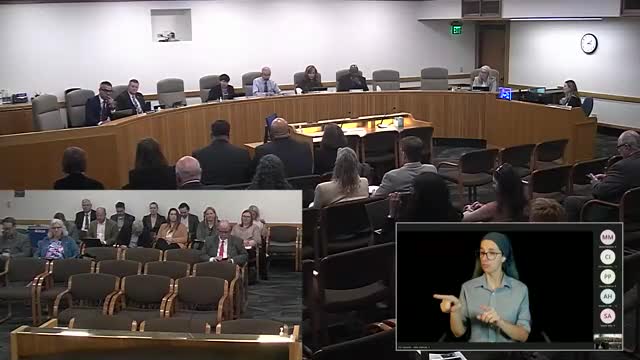
Senate Judiciary committee hears request to add six circuit judges to under-resourced counties
Summary
Chief Justice Megan Flynn and county judges urged the Senate Judiciary Committee to approve Senate Bill 95 adding six circuit court judges across seven counties, citing rising caseloads, behavioral-health demands and long delays for hearings and trials.
Chief Justice Megan Flynn asked the Senate Judiciary Committee to approve Senate Bill 95 to add six circuit court judges in counties with the greatest need.
"I'm Megan Flynn. I'm the Chief Justice of the Oregon Supreme Court. I'm here today to ask for your support for our request to add 6 judicial positions to our circuit courts in order to improve the quality and timeliness of justice in the counties with the greatest need," Flynn told committee members.
The bill, as presented, would add two judges in Lane County; one in Clackamas County; one in Douglas County; one for the district serving Crook and Jefferson counties; and one for the district serving Umatilla and Morrow counties, with varying effective dates and an emergency clause for immediate effect upon passage. Flynn said the request responds to a 2017 workload study by the National Center for State Courts and subsequent updates showing Oregon courts remain substantially under-resourced.
Presiding Judge Jay McAlpin of Lane County described local impacts and provided data showing a 63 percent increase in the county's "aid and assist" dockets between 2022 and 2025 and long delays for some jury trials. "We have 15 judges, the same amount as were allocated in 1983," McAlpin said, adding that Lane County had created multiple treatment courts since then that increase judicial time per case.
Douglas County Judge Robert Johnson told the committee that his courtroom was scheduling out-of-custody civil jury trials seven months out and that the county serves a widely dispersed population. "Our bench is spread thin and our dockets are stretched far," he said, and noted the county has used treatment courts that county records say in 2024 deferred roughly 69 years of prison time by shifting people to supervised probation and treatment.
Annette Hillman, presiding judge for Jefferson and Crook counties, said space and staff exist in her district to put a new judge to work quickly but that parties face delays of 90 days for basic settlement conferences and miss statutorily required timelines in juvenile and protective-order cases. "We're desperate in needing your help and meeting the needs of our community," Hillman said.
Clackamas County Judge Ann Leininger gave a courtroom-level description of how multiple dockets and frequent protective-order hearings combine into a long, shift-filled day for judges, and she said limited time reduces the court's ability to provide what she called procedural justice to victims and defendants.
Committee Chair Floyd Prozanski thanked the witnesses and closed the public hearing on SB 95. No formal committee vote on the bill was taken during the hearing.
Why it matters: Witnesses tied the request to specific, measurable strains — growth in certain dockets, treatment-court workloads and long waits for jury trials — and asked for targeted judicial capacity in counties that could immediately use new judges. Several presenters emphasized both community impacts and cost offsets tied to treatment courts.
What happens next: The committee closed the public hearing and said additional work sessions and votes could follow as bills are scheduled.