Get Full Government Meeting Transcripts, Videos, & Alerts Forever!
Get email alerts on the Housing And Development topic
No spam. Unsubscribe anytime.
Senate committee screens film and hears testimony on rising senior homelessness in Oregon
Summary
The Senate Housing and Development Committee on Feb. 24 screened No Place to Grow Old and heard testimony from service providers and people featured in the film about a growing population of older Oregonians experiencing homelessness.
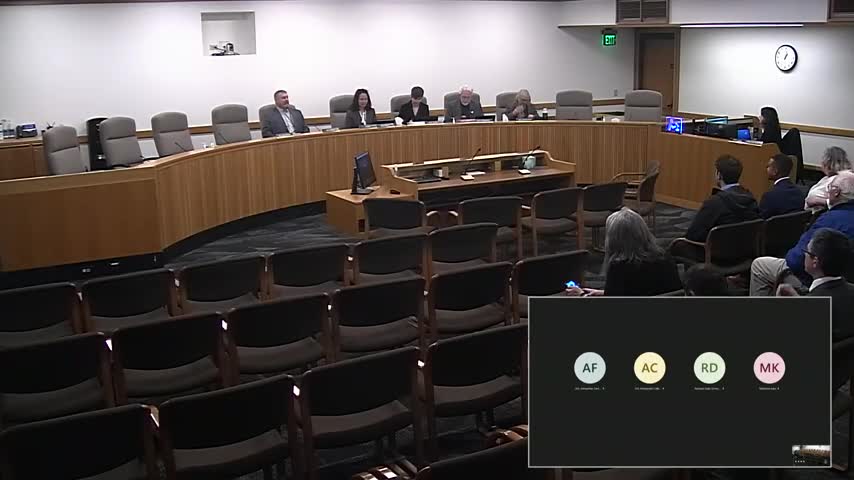
Salem — The Senate Housing and Development Committee on Feb. 24 held an informational meeting on rising elder homelessness in Oregon, screening the documentary No Place to Grow Old and hearing testimony from the film’s producers, people featured in the film and local service providers about immediate needs and longer-term policy options.
Committee members heard that older adults — many entering homelessness for the first time — are a rapidly growing share of people without stable housing and that the primary driver is lack of available affordable housing. "This is the fastest growing demographic entering into homelessness today," Michael Larson, executive director of the nonprofit Humans for Housing and an executive producer of the film, told the committee.
The film and witnesses described how fixed incomes, job loss, predatory lending and rising rents have left some older Oregonians unable to afford housing. "The Housing First model truly works," Bronwyn Carver, who appears in the film and spoke to the committee about her experience, said. Service providers urged a two-track approach: scale up long-term supportive housing for people with chronic health and behavioral needs and expand shallow rent subsidies and prevention supports for people recently priced out.
Why this matters: Witnesses said preventing homelessness in later life can reduce acute health costs and avoid the higher needs associated with prolonged unsheltered living. Yoni Khan, director of advocacy at Northwest Pilot Project, told the committee that many older clients arrive without identification or reliable income and that 95% of the project’s clients are at or below 30% of area median income. "Prevention is the best strategy here," Khan said, stressing coordination across housing, health and social services.
Service providers outlined current efforts and gaps. Church of the Park, a Salem-based outreach and shelter operator, reported noncongregate shelter capacity and waiting lists in Marion and Polk counties, and said roughly half of the people they served in recent years were age 55 or older. Community Partners for Affordable Housing described a mix of affordable units and permanent supportive housing targeted to older adults and said stronger supports are needed for people who require assisted living or group-home level care.
Several presenters urged that state housing production be accelerated to address the long-term shortfall. "The long term answer here is to fix the housing market. Accelerate housing production in every corner of the state, and especially a push at the lower levels and the more affordable housing," a presenter said during the film screening. One figure cited in testimony and the film: roughly 550,000 housing units would be needed in Oregon over the next 20 years to cover current deficits and new arrivals, according to the projection shown in the documentary.
Policy highlights mentioned to the committee included Senate Bill 444 (accessibility-focused legislation referenced during testimony), House Bill 3497 (multi-sector aging plan), Representative Pam Marsh’s HB 3589 (a proposal to stimulate senior housing development), and a forthcoming shelter-focused bill referenced as "3644" by a witness. Witnesses also described partnerships with HealthShare of Oregon and coordinated care organizations (CCOs) to pair housing assistance with health supports, and noted the role of federal Section 8 vouchers in placing some individuals in housing.
What providers said would help now: witnesses recommended expanding rapid rehousing and shallow rent subsidies, increasing noncongregate shelter capacity that preserves safety and dignity (including options for people with trauma and pets), and scaling permanent supportive housing tied to behavioral-health and home-health services. Alan Dela Torre, a gerontologist and policy advocate, urged multiagency planning and flagged bills before the Legislature that could help shape an aging-ready housing system.
Committee discussion was brief and supportive. Senator comments emphasized that Oregon’s relative wealth and resources make the rise in elder homelessness a policy and moral failure that lawmakers should address through a combination of housing production and service investments.
The meeting was informational; the committee did not take formal action at the session. Committee staff and several witnesses said they would remain available to provide data and further policy recommendations as legislation on senior housing and shelter advances this session.