Get Full Government Meeting Transcripts, Videos, & Alerts Forever!
Get email alerts on the Childcare And Workforce Development topic
No spam. Unsubscribe anytime.
Childcare wait list, vocational rehab match and UI fraud top TWC hearing as providers press for $1.8B
Summary
The Texas Workforce Commission presented the agency’s 2026–27 funding request, including a vocational rehabilitation match request and several exceptional items for apprenticeships, veterans programs, and childcare support. Providers and advocates sharply pressed representatives to address a 95,000‑child wait list for the
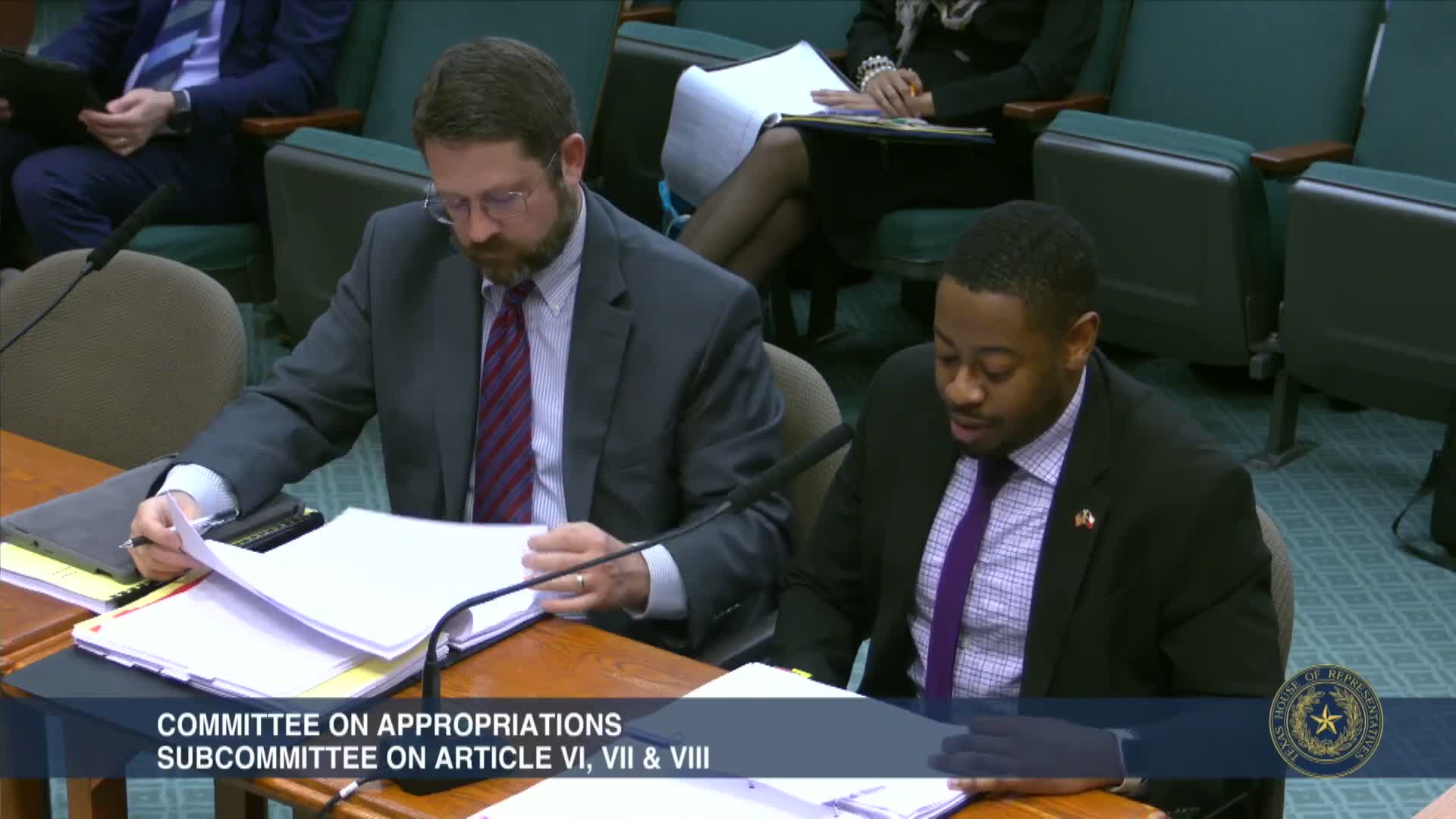
The House Appropriations Subcommittee heard the Legislative Budget Board summary and presentations from the Texas Workforce Commission on the agency’s 2026–27 budget pattern and several exceptional items.
LBB staff recommended an all‑funds appropriation for TWC of approximately $5.54 billion and explained the recommended federal fund level would decline from 2024–25 as COVID‑related temporary funds are spent down. The LBB summary flagged the VR federal match issue: TWC requested about $70.4 million in general revenue to satisfy the VR maintenance of effort and unlock roughly $260.2 million in federal vocational rehabilitation funds to serve substantially more Texans with disabilities.
TWC leaders told the subcommittee demand is up across multiple programs: childcare assistance grew to serving roughly 150,000 children per day in 2024 but the agency reported a wait list approaching 95,000 families. Executive Director Ed Serna and CFO Chris Nelson highlighted the VR match shortfall and the need to add staff in district operations (TxDOT‑style FTE request for delivery) and funding for apprenticeship expansion and veteran workforce services.
Public testimony focused almost entirely on the childcare crisis. Providers, associations and advocacy groups urged a large infusion of state funds for the TWC childcare subsidy program and/or an employer‑matching program. Providers described multi‑week payment delays, reimbursement rates that under‑pay the actual cost of infant and toddler care, and operational losses when centers serve subsidized children at current rates. Several providers and operators urged $1.8 billion (industry coalition figure) to reduce the wait list and increase infant/toddler rates so providers can pay living wages and stabilize staffing.
Other TWC topics: the agency also requested targeted funding for veterans’ workforce services, older‑individuals‑who‑are‑blind programs, IT modernization for unemployment insurance and labor law case management, and increases to labor market information and civil rights investigation capacity.
Ending: Committee members pressed TWC on payment timing, program design for childcare, and the urgency of the VR match. Members asked TWC to provide additional cost and implementation detail for childcare proposals, and TWC agreed to follow up on voucher usage, payment timeliness and VR match scenarios.