Get Full Government Meeting Transcripts, Videos, & Alerts Forever!
Get email alerts on the Behavioral Health topic
No spam. Unsubscribe anytime.
Trillium outlines Medicaid "tailored plan" services; commissioners press for Moore County data and outreach
Summary
Trillium Health Resources briefed the Moore County Board of Commissioners on Medicaid "tailored plan" services, enrollment and early operational issues. Commissioners pressed for Moore-specific data, better advertising and school outreach to connect residents to behavioral-health and IDD services.
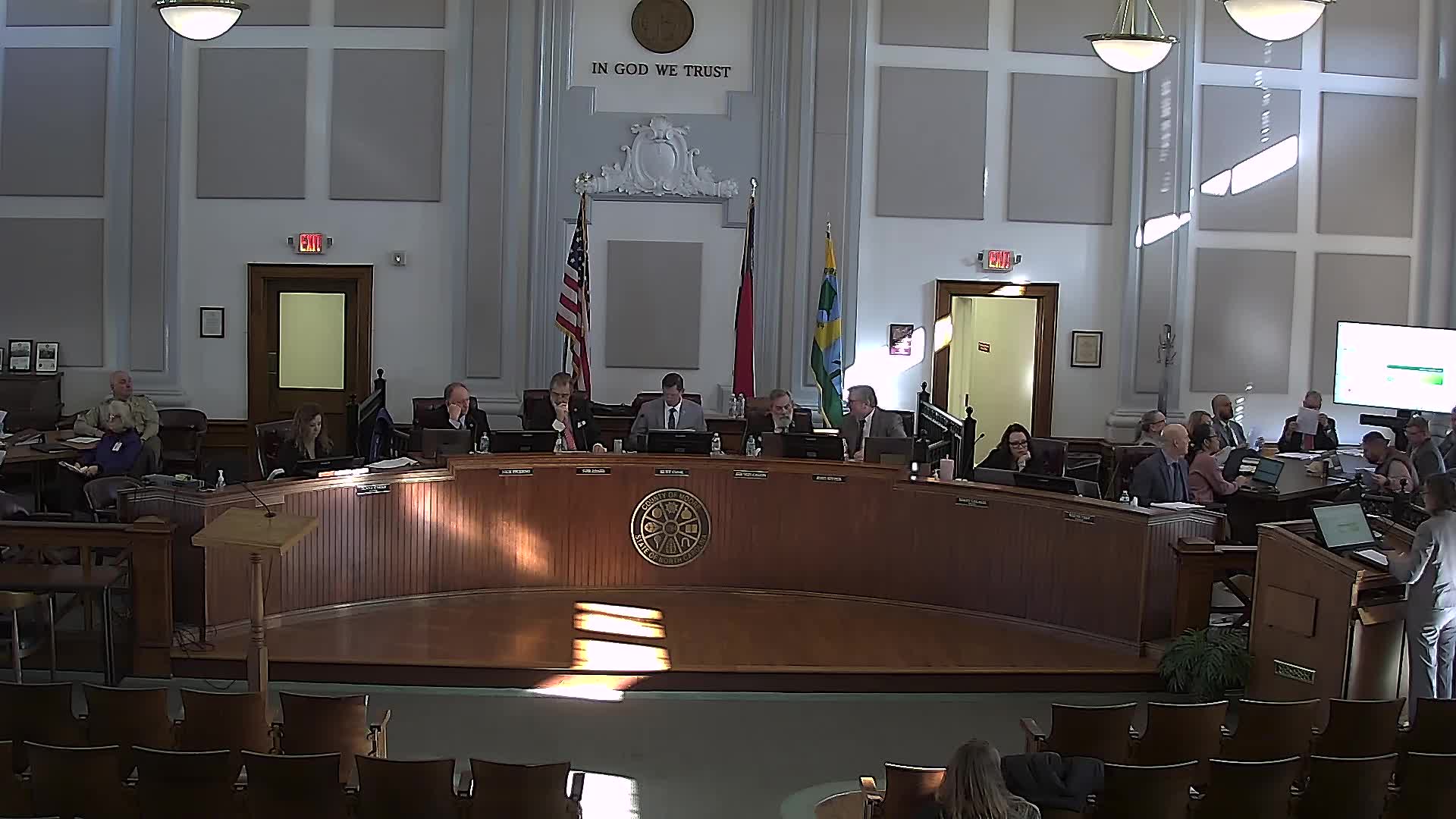
Cecilia Pierce, regional vice president of Trillium Health Resources, told the Moore County Board of Commissioners on Jan. 7 that Trillium is now operating as a "tailored plan" under North Carolina's Medicaid transformation and serves people with serious behavioral health, substance-use and intellectual or developmental disability needs.
Pierce said Trillium covers both behavioral and physical health benefits for its tailored-plan members and provides nonmedical supports such as transportation, housing assistance and pharmacy benefits. "Trillium Health Resources is your local managed care and managed local management entity and managed care organization," she said.
The presentation described differences between standard Medicaid plans (for mild-to-moderate needs) and tailored plans (for people who require enhanced services such as intensive in-home therapy, assertive community treatment, residential services and certain waiver services). Pierce said Trillium covers about 29% of the county's Medicaid population — "just under 6,000 members in Moore County" as of July of the previous year — and that standard plans cover the remainder.
Why it matters: Commissioners said the county needs local numbers and clearer outreach because many residents who could use services do not know Trillium exists or how to reach it. Commissioner comments emphasized frequent local encounters by law enforcement and EMS with people experiencing overdose or psychiatric crises and asked for faster, visible referrals and school-based outreach.
Key details from the briefing
- Enrollment and scope: Pierce said about 21,000 people in Moore County were enrolled in Medicaid as of July of the prior year; Trillium served roughly 29% of those. She said the tailored-plan designation typically applies to people with qualifying diagnoses (for example, schizophrenia or bipolar disorder), multiple crisis visits, or prior use of enhanced services.
- Operational impacts: Call-center volume nearly doubled in July after Trillium became a tailored plan; Pierce said claims payments were strong ("we are paying claims within 30 days at 99.9%") but call wait times rose and additional staff were hired to restore service levels.
- Transportation and nonmedical supports: Trillium contracts with MotiveCare for nonemergency transportation and has a "neighborhood connections" team to link members to housing, food access and other stabilizing services. Pierce said Trillium proactively contacted 900 members who regularly used transportation services around the tailored-plan launch to ensure continuity.
- Specialized benefits: Pierce described innovations-waiver and similar home- and community-based (1915i) benefits for people with IDD, and said North Carolina is expanding traumatic-brain-injury waiver services beyond a single initial service area.
Commissioner requests and Trillium response
Commissioners repeatedly asked for Moore County–specific performance and utilization data: numbers of GED vouchers, one-time move-in assistance, transportation rides and county-level pharmacy claims. Pierce said she did not have county-by-county detail in the presentation but agreed to provide Moore County figures for the board and to include updated enrollment counts in a forthcoming annual report. "I'll work on getting that before the next presentation, in a, in an veil within a week or so," she said.
Multiple commissioners urged expanded public awareness campaigns and school outreach. One commissioner said, "you need to be advertised and spend your budget," and urged Trillium to work with the county and schools to reach youth and parents. Pierce said Trillium conducts mailings, texts, community liaison outreach and can provide school presentations; she named Anne Kimball as head of community engagement.
Local concerns about consolidation and capacity
Several commissioners expressed concern that consolidation of regional providers left gaps as Trillium expanded to cover more counties (Pierce said the plan now covers 46 counties). Commissioners suggested the county ask state legislators for additional resources and raised the possibility of local crisis or 24-hour behavioral-health centers as alternatives to emergency rooms.
What was not decided
The board did not take any formal action on Trillium's presentation. Commissioners asked staff and Trillium to return with Moore County–specific metrics and recommended exploring outreach partnerships with the Board of Education, sheriff's office and health department.
Ending
Pierce said she would return with more localized data and that Trillium is willing to partner on school and community outreach.