Get Full Government Meeting Transcripts, Videos, & Alerts Forever!
Get email alerts on the Transportation Infrastructure topic
No spam. Unsubscribe anytime.
TxDOT seeks continued highway, port and safety funding as subcommittee eyes bond and revenue assumptions
Summary
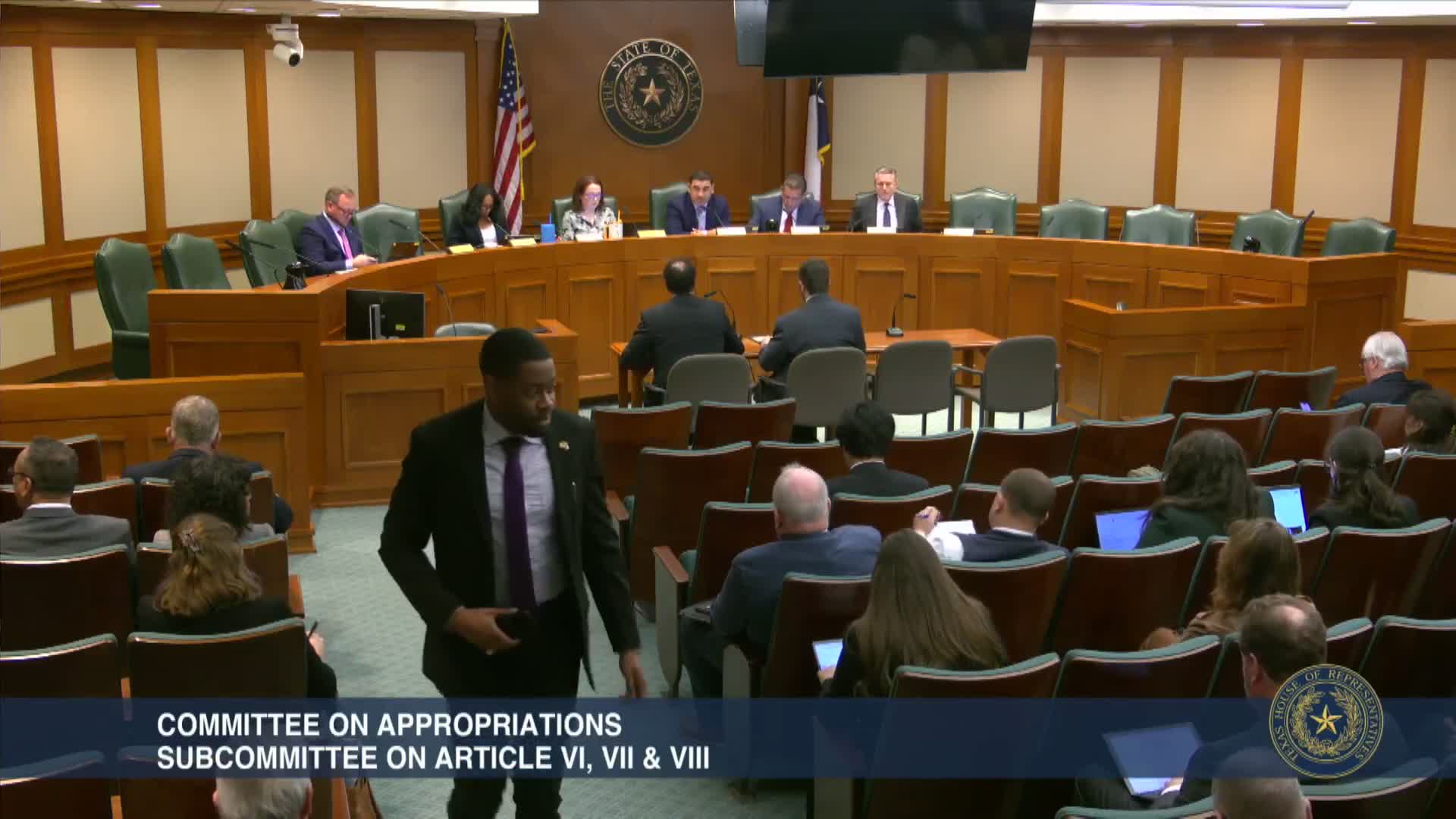
The Legislative Budget Board recommended an approximately $40.3 billion all‑funds budget for TxDOT in 2026–27, with the department asking for several large exceptional items — including $900 million for maritime/port capital and $350 million for grade‑separation projects — while lawmakers pressed for more detail on revenue assumptions, inflation effects and delivery timetables.
The Legislative Budget Board briefed the committee on recommended funding for the Texas Department of Transportation (TxDOT) for the 2026–27 biennium, including a recommended all‑funds total of roughly $40.3 billion and an increase in FTE cap to 13,175. The LBB summary notes the recommendations rely heavily on State Highway Fund revenues, including projections tied to Proposition 7 sales tax and motor vehicle sales tax allocations as well as Proposition 1 oil and gas transfers.
TxDOT Executive Director Mark Williams told the subcommittee the agency is managing a record $57 billion in currently active construction contracts and a 10‑year Unified Transportation Plan of about $104 billion. Williams highlighted inflation as a major driver of cost increases: a highway cost index up roughly 62% since 2020 and a near‑10% increase in the last 12 months alone. Chief Financial Officer Stephen Stewart described the department’s funding mix and said approximately 89% of TxDOT’s capital budget supports project development, construction and maintenance.
The LBB and TxDOT outlined key items and differences between agency estimates and comptroller revenue forecasts, noting that Proposition 7 motor vehicle sales tax allocations used by TxDOT may differ from the Comptroller’s biennial revenue estimate. The LBB document also outlines reductions of one‑time appropriations included in the 2024–25 base, including ship channel and maritime project funds TxDOT requested to recapitalize.
TxDOT requested supplemental and exceptional items not included in LBB recommendations: a $200 million request to recapitalize the ship channel improvement revolving fund; a $900 million request to recapitalize port capital/maritime infrastructure funding; a requested $300.8 million for airport grants and $350 million for local rail‑highway grade separations. LBB explained some extraordinary items are premised on the agency substituting general revenue for previously used State Highway Fund sources.
Subcommittee members questioned TxDOT about implementation risks, cash balances and how bond and revenue assumptions affect project delivery. Williams said cash balances have declined from roughly $10 billion to under $5 billion and urged that the committee consider front‑loading project funds to accelerate delivery and attract qualified vendors. Lawmakers pressed the department about telework, FTE increases (the agency requested roughly 299 additional FTEs), and the real cost of major projects, with TxDOT describing phasing options and a desire to attract more talent if funding is available.
Safety and local concerns: Several members pressed TxDOT on safety programs, a proposed state rail‑highway crossing separation fund and projects near ports. TxDOT supported funding for ports, noted the Port Authority Advisory Committee’s guidance, and recommended continuing port access and maritime investment to maintain economic competitiveness.
Ending: The subcommittee did not adopt a final recommendation. LBB will continue to coordinate comptroller revenue estimates with TxDOT assumptions and the department will provide follow‑up detail on timing and financing options for the large exceptional items and the requested additional FTEs.