Get Full Government Meeting Transcripts, Videos, & Alerts Forever!
Get email alerts on the Technology Modernization topic
No spam. Unsubscribe anytime.
Lawmakers Hear Push for $175M to Replace Texas DMV’s 30‑Year Registration System amid Questions on Executive Pay
Summary
The Texas Department of Motor Vehicles asked the House appropriations subcommittee for $175 million to replace its 30‑year registration and titling system, saying the legacy application causes frequent outages and slows routine transactions; county tax offices and DMV officials urged the funding but lawmakers sought more detail on testing, timeline and a separate request to increase the executive director’s pay ceiling.
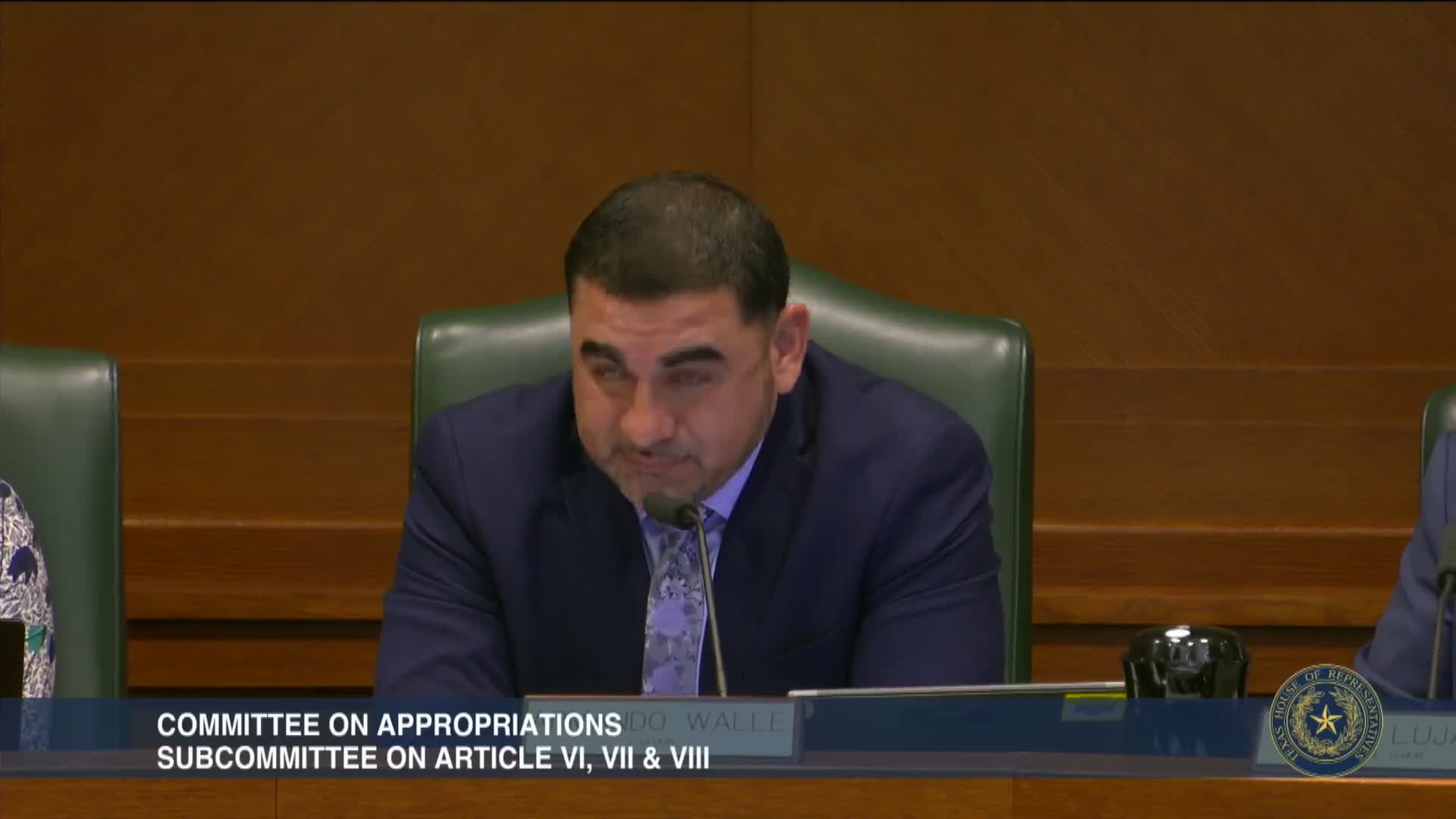
The Texas Department of Motor Vehicles asked the House Appropriations Subcommittee on Articles VI, VII & VIII to include $175 million in the 2026–27 budget to replace its Registration and Titling System (RTS), a legacy application the department said is 30 years old and increasingly unable to support modern operations.
The department’s executive director, Daniel Avedhea, told the panel RTS “is now more than 30 years old” and creates “inefficiencies that contribute to backlogs and extended times it takes to complete customer transactions.” He said the agency received $6.8 million in the prior session for system evaluation and is requesting the larger amount to fully replace the core system and integrate stakeholders including county tax offices and vehicle dealers.
LBB staff and several county tax assessors told the committee they support RTS replacement. Williamson County Tax Assessor-Collector Larry Gaddis said the system’s age forces county offices to call technical staff frequently and “it is imperative that funding be provided to modernize the system so that we can continue to serve Texans.”
Committee members pressed DMV officials on the scope, timeline and testing of a modernization effort. Deputy Executive Director Roland Luna said the department expects a multiyear sourcing and implementation effort and estimated about a five‑ to six‑year rollout depending on the vendor and approach. Luna said the department will use beta testing and work groups with counties, dealers and law enforcement to phase the change and avoid disruptions.
Lawmakers also asked about recent DMV requests and agency practices. Multiple members raised the department’s LAR entry seeking authorization to increase the executive director’s salary ceiling to as much as $270,000. Chief Financial Officer Glenna Bowman said the LAR requests a ceiling that would allow the board room to retain competitive pay; she emphasized it is a maximum authorization, not an automatic raise, and said the request would not add a separate line item to the bill but provide optional authorization.
Several legislators—most critically Representative Harrison—questioned the size of the proposed cap and whether it was justified for an agency of fewer than 1,000 FTEs and a base budget under $400 million. Bowman told the committee the board compared peer agency salaries in Texas and recommended the higher maximum for future salary flexibility.
The department also defended policy and operational requests that surfaced in floor discussion: the collection and accounting of the new electric vehicle registration fee (DMV CFO Glenna Bowman told lawmakers FY24 collections were about $49.6 million and revenues go to the State Highway Fund), the status of a digital license plate program (no vendor contracted and no appropriation requested), and ongoing MVCPA and catalytic converter theft prevention grants.
Where the request goes next: lawmakers gave extensive technical and policy questions but did not take a vote in the subcommittee hearing. County leaders and DMV stakeholders urged inclusion of the $175 million RTS modernization item, and the department said it will provide further detail on vendor selection, phased testing and cost refinement if the funds are authorized.
Ending: The subcommittee asked DMV to submit further cost refinement, a testing plan, and a detailed transition plan for tax assessor‑collector offices. Several members said they may seek amendments or budget language clarifying how any compensation ceilings would be used or constrained if included in the bill.