Get Full Government Meeting Transcripts, Videos, & Alerts Forever!
Get email alerts on the Substance Use Policy topic
No spam. Unsubscribe anytime.
Committee advances broad opioid and substance-use bill with harm-reduction and enforcement changes
Summary
House Bill 199, a wide-ranging substance-use policy bill covering harm reduction, expanded treatment access including mobile MAT, prohibition of supervised injection sites, needle-exchange restrictions, and updates to nuisance laws, was favorably recommended by the committee after stakeholder testimony.
A Senate committee on Feb. 20 favorably recommended House Bill 199, a comprehensive package of changes to Utah’s substance-use policy that combines harm-reduction regulation, expanded treatment options and updates to nuisance and enforcement tools.
Sponsor’s overview: the bill sponsor described HB 199 as the product of a long collaborative process intended to “hit every step of the way for our drug policy in Utah.” Key provisions spelled out in committee testimony include inserting harm-reduction pathways and mission language into statute; prohibiting supervised injection facilities; restricting delivery of needle-exchange supplies to homeless shelters and permanent supportive housing; expanding overdose-response options to link first responders to immediate treatment pathways; and piloting mobile medication‑assisted‑treatment (MAT) clinics aimed at homeless populations and rural residents.
Public and stakeholder input: Criminal-justice and harm-reduction groups testified in support. Elizabeth Kelch, criminal-justice policy director at the Commission on Criminal and Juvenile Justice (CCJJ), and Stephanie Ammit of the Utah Harm Reduction Coalition said the measure improves pathways to recovery. A representative of the Cicero Institute cited national overdose trends to support the bill’s broader treatment and regulation strategies.
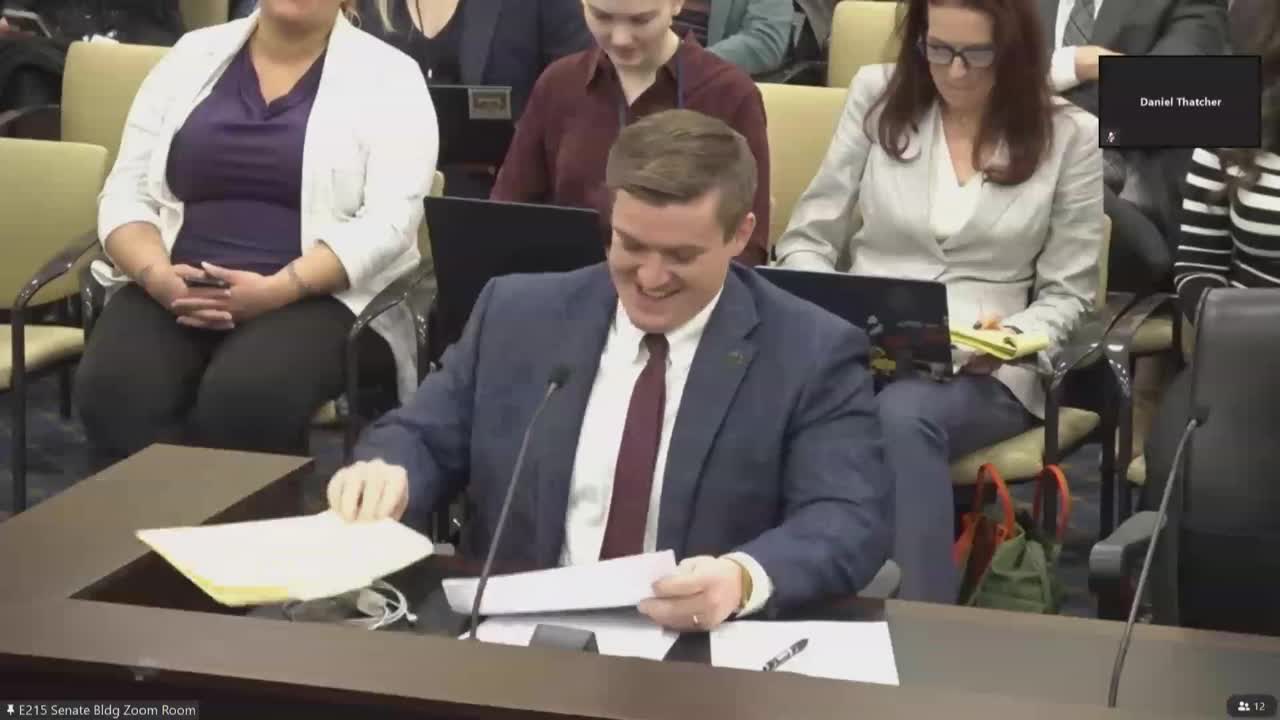
Committee action: Senator Plumb moved that the committee favorably recommend the second substitute of HB 199 to the full Senate. The committee voted to pass the bill favorably to the Senate; the committee record shows a unanimous committee vote in favor of the substitute as presented.
What the bill changes: among other items, HB 199— - Adds statutory language to recognize harm reduction as a pathway to recovery and aligns program goals with best practices; - Prohibits supervised injection sites and restricts needle-exchange delivery in certain residential settings; - Mandates improved overdose-response linkages so first responders can offer immediate treatment options after reversal using naloxone/Narcan; - Enables and funds mobile MAT clinics to reach homeless and rural populations; - Updates nuisance law definitions so statutes better reflect modern drug-related disorder patterns.
Next steps: committee members advanced the second substitute with a favorable recommendation to the full Senate.