Get Full Government Meeting Transcripts, Videos, & Alerts Forever!
Get email alerts on the Accessibility Parking topic
No spam. Unsubscribe anytime.
Council unanimously approves free on-street metered parking for vehicles displaying disability plates
Summary
Lincoln amended Municipal Code 10.32 to allow drivers displaying valid disability plates or placards to park at on-street metered spaces without paying meter fees while observing posted time limits; council approved the amendment and the ordinance 7-0.
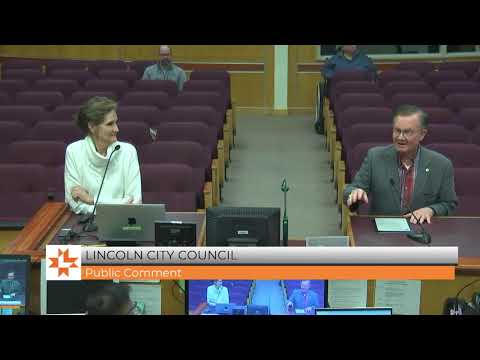
The Lincoln City Council unanimously approved an amendment and ordinance Monday to allow vehicles displaying valid disability license plates or placards to park in city-owned on-street metered spaces without paying the meter fee, while still obeying posted time limits.
Councilmember Benny Bowers introduced the ordinance as a step toward accessibility, saying the measure "is a step to help alleviate these barriers" faced by residents with mobility challenges. He credited input from Aging Partners, Disability Rights Nebraska and the Arc of Nebraska and thanked former Councilwoman Tammy Ward for earlier work on the issue.
The council first voted 7-0 to amend the ordinance language to clarify that the exemption applies to "on-street" city-owned metered spaces. After the amendment passed unanimously, the council called the final vote on the ordinance, which passed 7-0 as well. Roll-call yes votes were recorded for Weber, Bowers, Carlson, Doodin, Schaub, Beckius and Washington.
According to sponsors, the policy leaves posted time limits in place; it waives only the meter fee for qualifying vehicles. Supporters told the council that some parking meters are physically hard to reach for people with mobility disabilities, and the exemption is intended to remove a modest barrier without removing posted time restrictions.
The change amends Lincoln Municipal Code section 10.32 and has no immediate fiscal estimate attached in the council discussion; sponsors described it as a low-cost policy that increases accessibility for residents who rely on disability plates or placards.