Get Full Government Meeting Transcripts, Videos, & Alerts Forever!
Get email alerts on the Long Range Financial Forecast topic
No spam. Unsubscribe anytime.
Tempe projects revenue shortfalls; staff recommends drawing reserves and pausing supplementals
Summary
City staff reported slowing local tax revenues, outlined impacts from the repeal of the residential rental tax and potential food‑tax changes, and recommended using reserve drawdowns and pausing supplementals to balance the long‑range forecast.
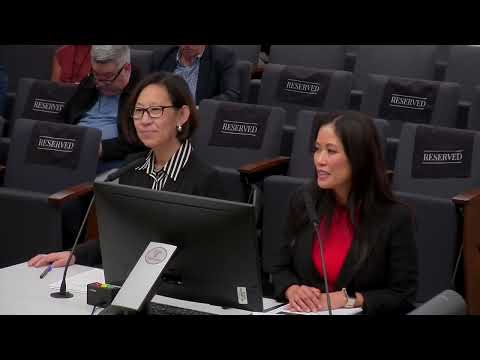
City of Tempe staff told the council on Feb. 24 that local tax revenues have slowed and recommended several near‑term budget balancing strategies, including pausing recurring and one‑time supplementals and drawing on dedicated reserves for public safety pension and post‑employment health benefits.
Lisette Camacho, deputy city manager, and Julie Heider, interim budget director, presented the long‑range financial forecast and the staff recommendations to keep the general fund within fund‑balance policy to protect the city’s bond rating.
Heider said the elimination of the residential rental sales tax took effect Jan. 1, 2025. Staff estimated a roughly $10,000,000 revenue loss across three operating funds for the current fiscal year (half year), and an estimated $21,000,000 loss beginning in fiscal year 2026, distributed as about $14,000,000 to the general fund, $6,000,000 to the transit fund and $1,000,000 to the arts and culture fund.
Staff also described a proposed state measure to prohibit cities from taxing food for home consumption. Heider noted the Arizona House had passed a version with an amendment capping the food tax at 2 percent; under that cap Tempe’s existing 1.8 percent food‑tax rate would not be affected, she said, but many smaller Arizona cities would be affected. “If that amendment passes then the food tax elimination would not affect Tempe,” Heider said. Staff characterized the food‑tax legislation as fluid and said they were presenting a worst‑case scenario to the council.
To address the revenue shortfall, staff recommended: suspending recurring and nonrecurring supplementals for two additional years; suspending cash funding of capital projects; using a portion of the Public Safety Personnel Retirement System (PSPRS) reserves to cover pension contributions for police and fire; and drawing on other post‑employment benefit (OPEB) reserves to fund retiree health benefits. Camacho told the council that PSPRS reserves total approximately $25,000,000 and staff proposed using about $4,000,000 in the forecast; OPEB reserves total about $20,000,000 with roughly $2,000,000 proposed for drawdown in the plan.
The presentation showed general fund balance was projected at about 35 percent at the end of fiscal 2025, declining to about 23 percent by fiscal 2029 under the forecasted drawdowns. Staff emphasized the drawdowns are planned and that they expect revenue recovery; they also listed additional tools such as hiring freezes, service prioritization and potential tax‑rate changes.
The presentation included illustrative comparisons: staff said a $8,300,000 general‑fund loss is equivalent to the annual salary cost of 113 firefighters or 99 police officers, and that a $3,500,000 transit loss would equate to more than two routes. The council asked several clarifying questions about the food‑tax ballot thresholds, charter requirements for tax increases and sources of the estimates.
Staff also reviewed enterprise and special revenue funds: water, wastewater and solid waste funds were described as stable; the transit fund faces ongoing operational losses despite anticipated regional revenue increases tied to a transportation proposition, and transportation staff are working with a consultant on long‑term measures. The arts and culture fund was presented as stable for now. Staff will return with additional details in future budget review sessions.